


What should I look for in a rapid prototyping partner that can transition designs into injection molding?
I lost weeks once on a good-looking prototype. It printed fast. It failed in mold review. I had to start over.
Look for design-to-production integration. Pick a partner with early DFM, mold-flow study, multi-process shops, matched materials, and a clear path to aluminum or steel tooling.
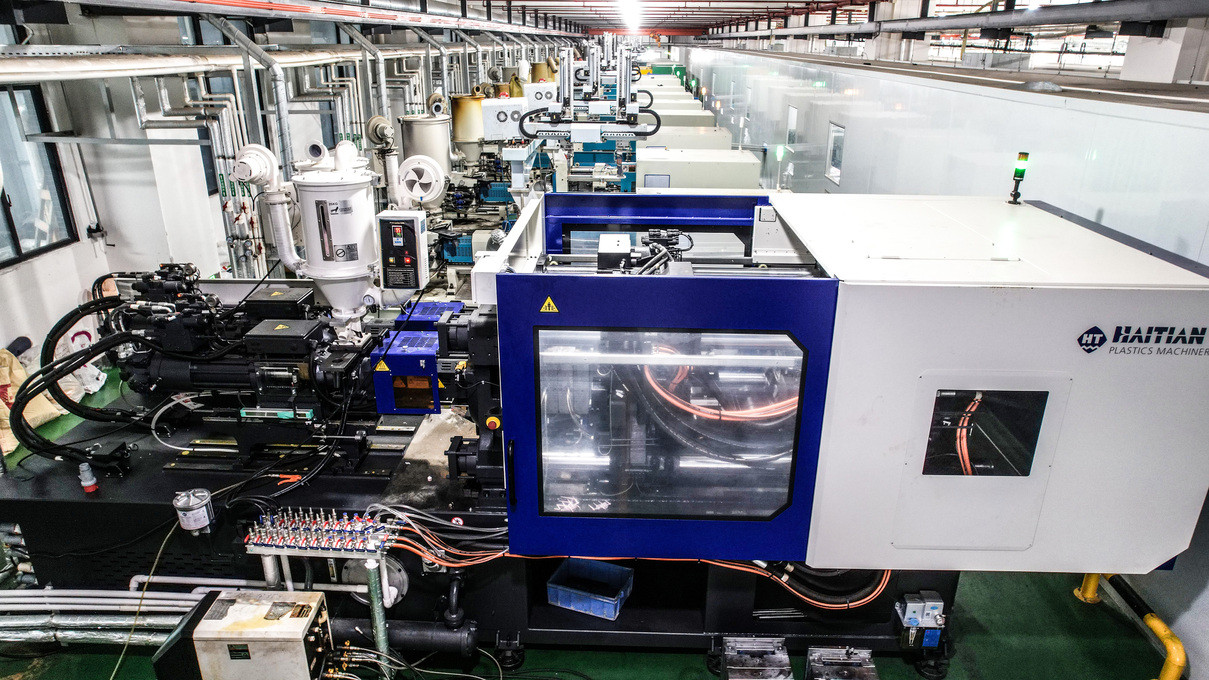
I learned this the hard way. Speed means little if the part cannot be molded. I now check one thing first. Can they take my file from print to mold without a reset? If yes, I keep talking. If no, I walk away.
What are the best materials for rapid prototyping?
I picked PLA once for a snap-fit test. It cracked on day one. I wasted time. I learned to match material to test goal.
There is no single best material. Use PLA or SLA resin for looks. Use Nylon PA12, ABS, PC, or Aluminum 6061 for function. Use glass-filled nylon, PEEK, or metal prints for heat and load.
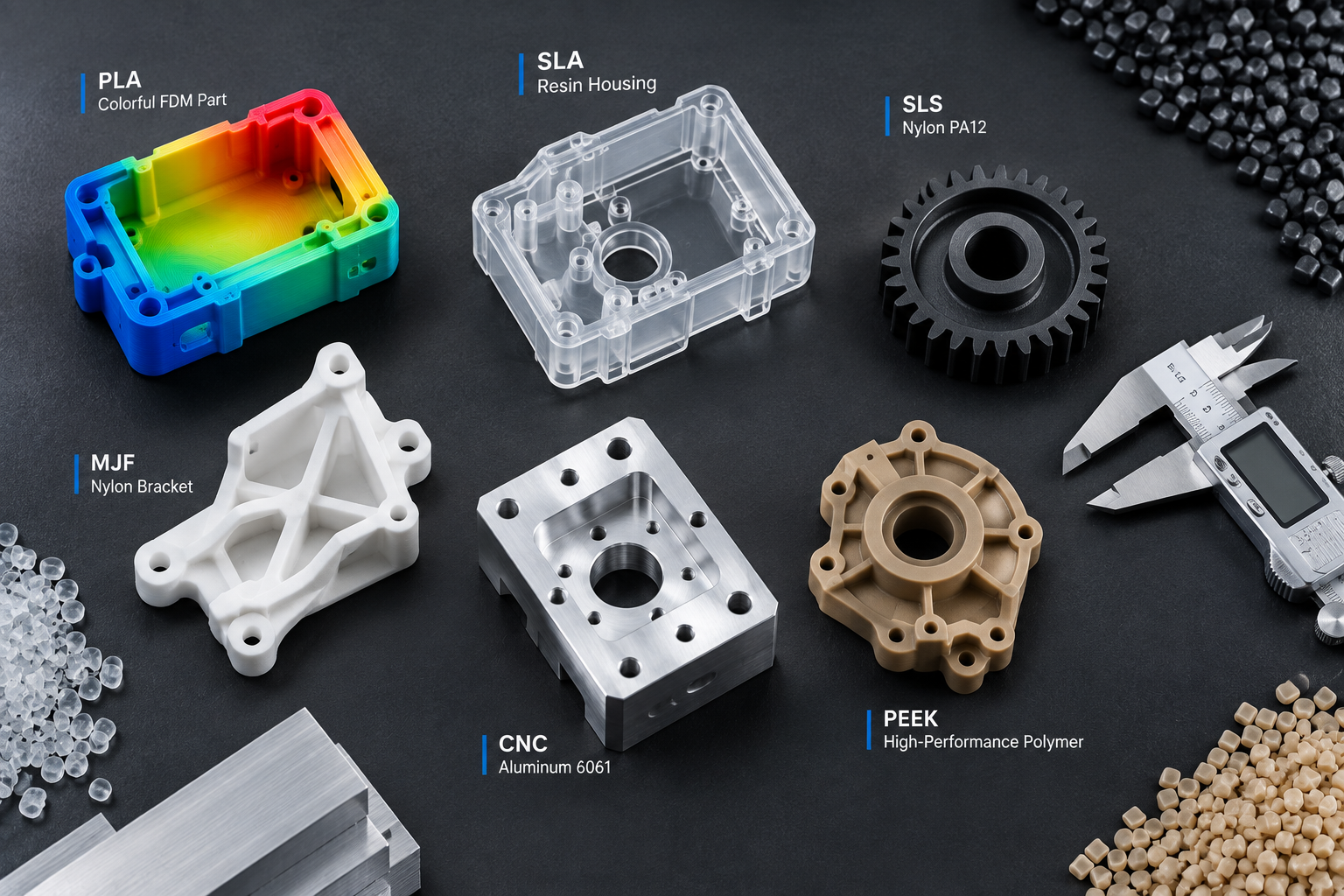
Match Material To Test Goal
I group my tests into three boxes. Looks, function, and harsh use. Each box needs its own pick.
| Test Goal | I Often Use | Why I Use It |
|---|---|---|
| Look and feel | PLA, SLA resin | Low cost, smooth skin, fast print |
| Fit and strength | SLS Nylon PA12, MJF Nylon, ABS, PC | Tough, wears well, close to molded plastic |
| Heat and load | Glass-filled nylon, PEEK, DMLS steel/titanium, CNC Aluminum 6061 | Holds shape in heat, takes load |
I keep one rule in mind. I ask myself what the molded part will use. Then I pick a prototype stock that acts like it. I ran ABS-like prints before real ABS molding. The test data lined up well. I also use CNC when I need true engineering plastic or metal. It costs more. It tells the truth. For small runs, I use vacuum casting or silicone sample molds. I get 10 to 50 parts fast. I check fit and finish before I cut steel.
What are the four types of prototyping?
I used to call every model a prototype. My team got confused. A look model is not a working model. I needed clear words.
The four types are Role, Look-and-feel, Implementation, and Integration. Role tests user need. Look tests feel. Implementation tests tech. Integration tests all three near final.
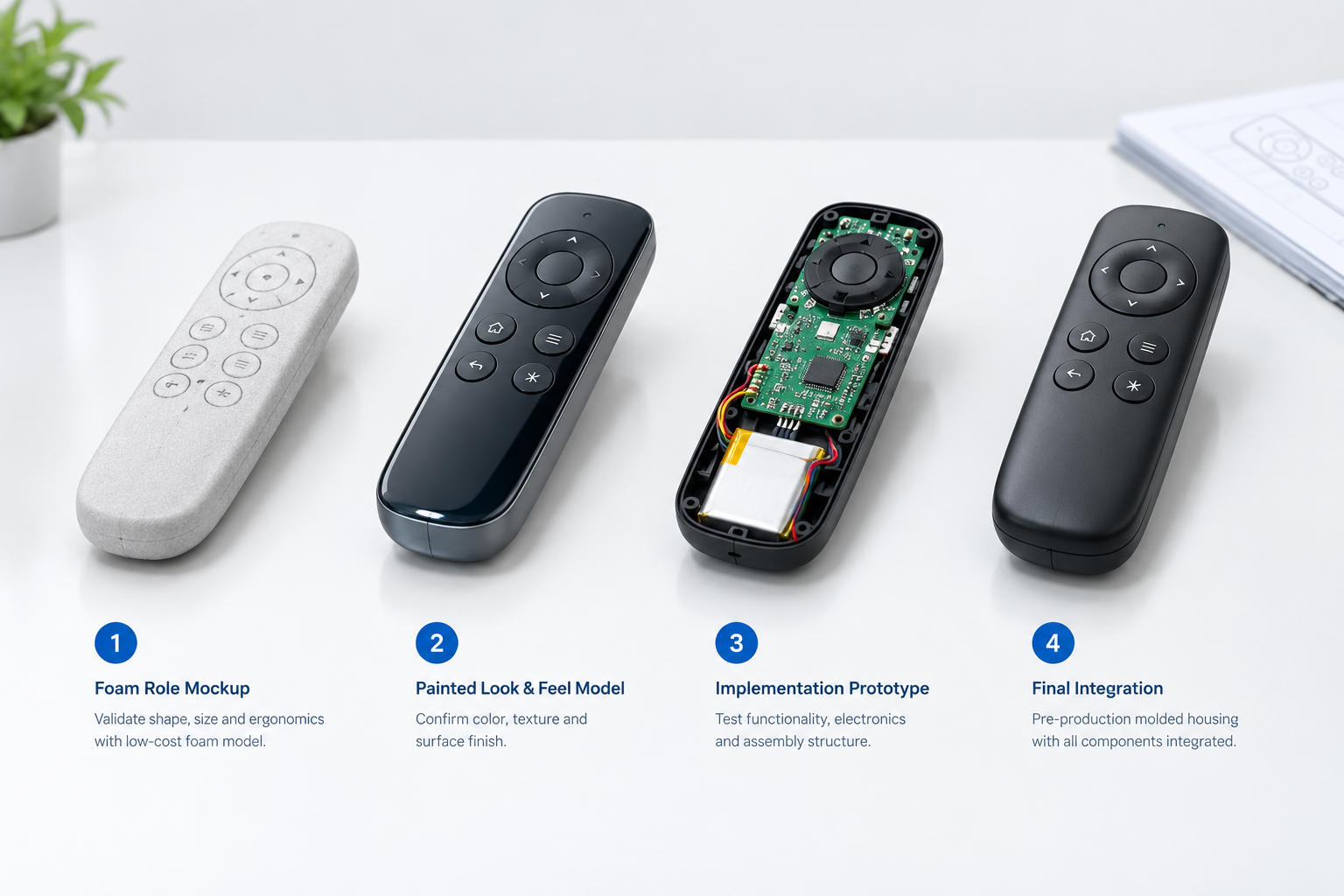
Use Each Type At The Right Time
I use this old frame from Houde and Hill. It still works for me. It saves fights in reviews.
| Type | Question I Ask | My Example |
|---|---|---|
| Role | Will users want it? | Foam remote for TV tests |
| Look-and-feel | Does it feel right? | SLA housing with paint and texture |
| Implementation | Can we build it? | 3D board fit plus CNC snap joints |
| Integration | Does it all work as one? | Bridge-tool molded parts in real resin |
I also work by level. Low, mid, and high truth. I start rough. I end close to molded parts. In my shop, we move from concept print to working unit to pre-production run. At KENVOX, I push DFM early. We check draft, wall stock, gates, parting lines, and ejector spots in the print stage. This stops late shock. My prototypes then act like a rehearsal for molding.
What is additive manufacturing that prints objects capable of transformation and self-assembly?
I saw a flat print fold in hot water. No hands touched it. I thought it was a trick. It was real science.
It is 4D printing. The part changes shape after print. Heat, water, or light triggers the shift. It uses stress, smart layers, or tiny self-lock blocks.
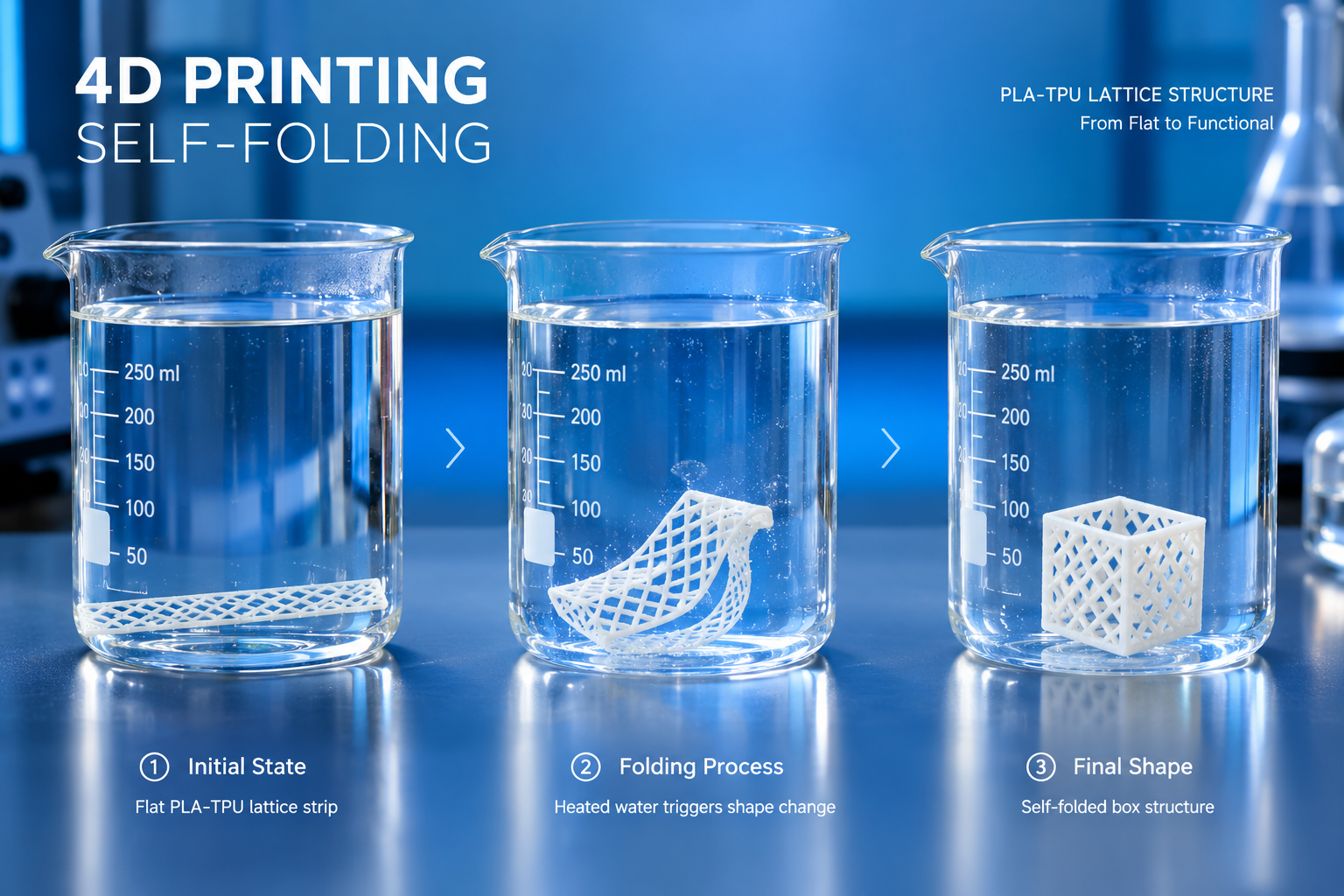
How It Works And Where I Would Use It
I keep it simple in my head. 3D builds shape. 4D adds change over time. I watch three paths most.
| Path | How I See It | Present Use |
|---|---|---|
| Shape-memory layers | PLA plus TPU bends in hot water, Thermorphs self-fold | Flat-pack parts, vents, clips |
| Stimulus skins | Swells or curls with water, heat, or light | Soft robots, medical stents |
| Self-lock blocks | Voxels or DNA parts join into set forms | Space frames, micro tools |
I do not use this for daily molding jobs. It is still lab-grade for most buyers. I track it for smart vents, deployable frames, and small medical aids. For my consumer housings, I stay with FDM, SLA, SLS, MJF, and CNC. Then I bridge to vacuum casting or aluminum tools. That path gives me 50 to 500 true-resin parts fast. I get real test proof before mass molds.
What tools are used for rapid prototype development?
I once owned only a small FDM printer. My parts looked rough. My fits were off. I added more tools and my hit rate rose.
I use FDM for speed, SLA for fine looks, SLS and MJF for tough nylon, CNC for true precision, and vacuum casting for small runs. I design in CAD and check flow with mold study tools.
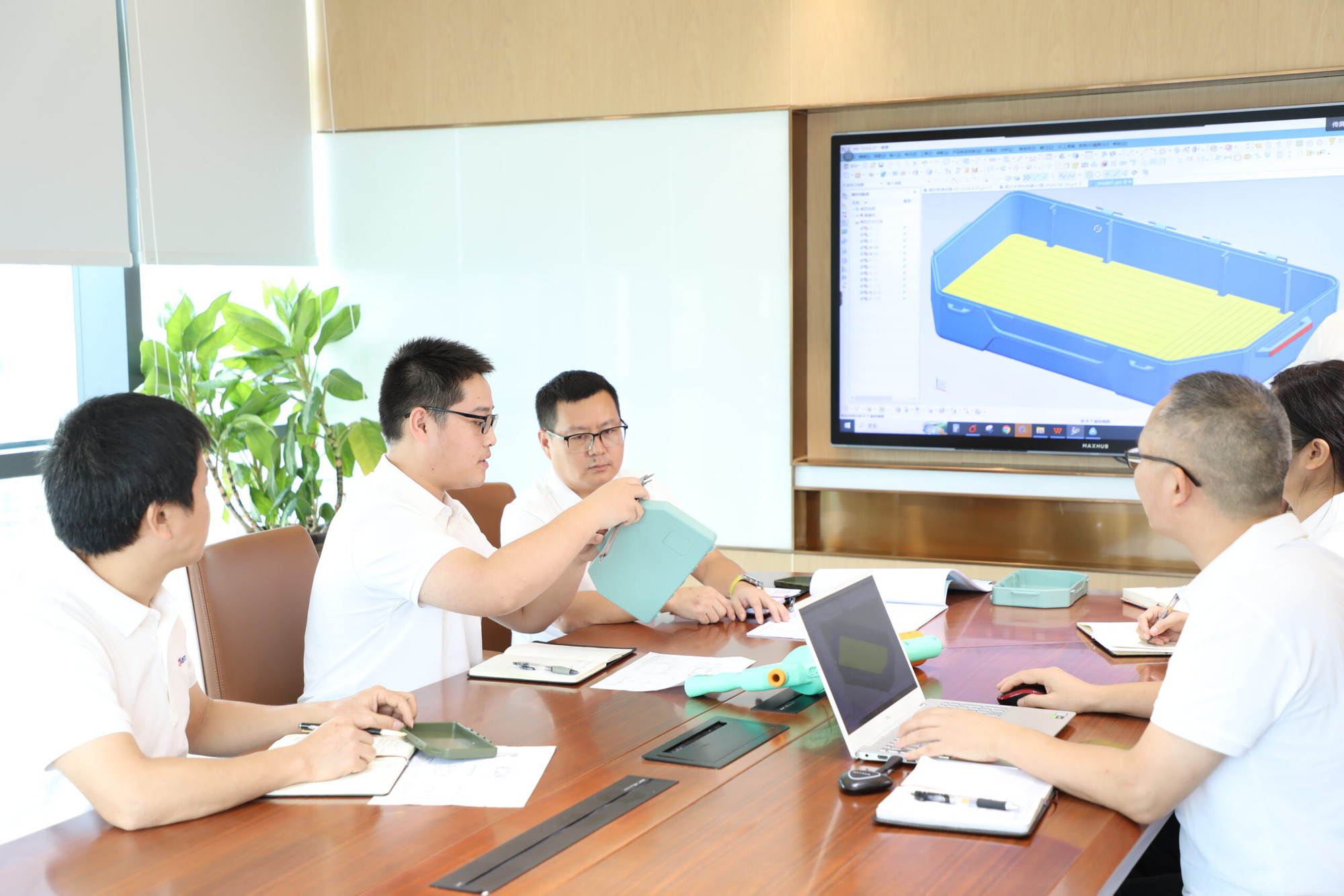
My Stack From File To Mold-Ready Part
I run hardware plus software as one line. One team owns both ends. That cuts drift.
| Tool | I Use It For | Watch Out |
|---|---|---|
| FDM | Fast checks, jigs | Lines show, weak in Z |
| SLA | Clear and smooth show models | Brittle unless tough resin |
| SLS / MJF | Strong nylon parts, living hinges | Grain skin, size limits |
| CNC | Tight fits, PC, ABS, POM, Aluminum 6061 | Higher cost, longer time |
| Vacuum casting | 10 to 50 urethane copies | Mold wears out fast |
| CAD plus mold-flow | Fusion 360, SolidWorks, flow check | Bad mesh gives false calm |
I ask for DFM notes in 1 to 2 days. I ask for ISO 9001 proof and Cpk data. I once skipped this and paid for a gate shift and sink marks. Now I demand trial records like T0 and T1. I also ask for gold samples. At KENVOX we run CNC, sample molds, overmolding, and bridge runs in-house. Then we cut production molds with high-speed CNC, EDM, wire cut, and CMM checks. My path stays short. My risk stays low.
Conclusion
I do not chase the fastest print. I chase a smooth path to molded parts. I test true, fix early, and scale with proof.