


How Do Rapid Prototyping and 3D Printing Compare for Functional Prototypes and Production Validation?
Choosing the wrong prototype method ruins schedules and burns through budget fast. If you confuse rapid prototyping with 3D printing, you risk launching failed parts into true production validation.
Rapid prototyping is the overarching product development strategy to iterate designs quickly, while 3D printing is one additive manufacturing tool used within that strategy. Rapid prototyping includes CNC machining, urethane casting, and soft tooling alongside 3D printing.
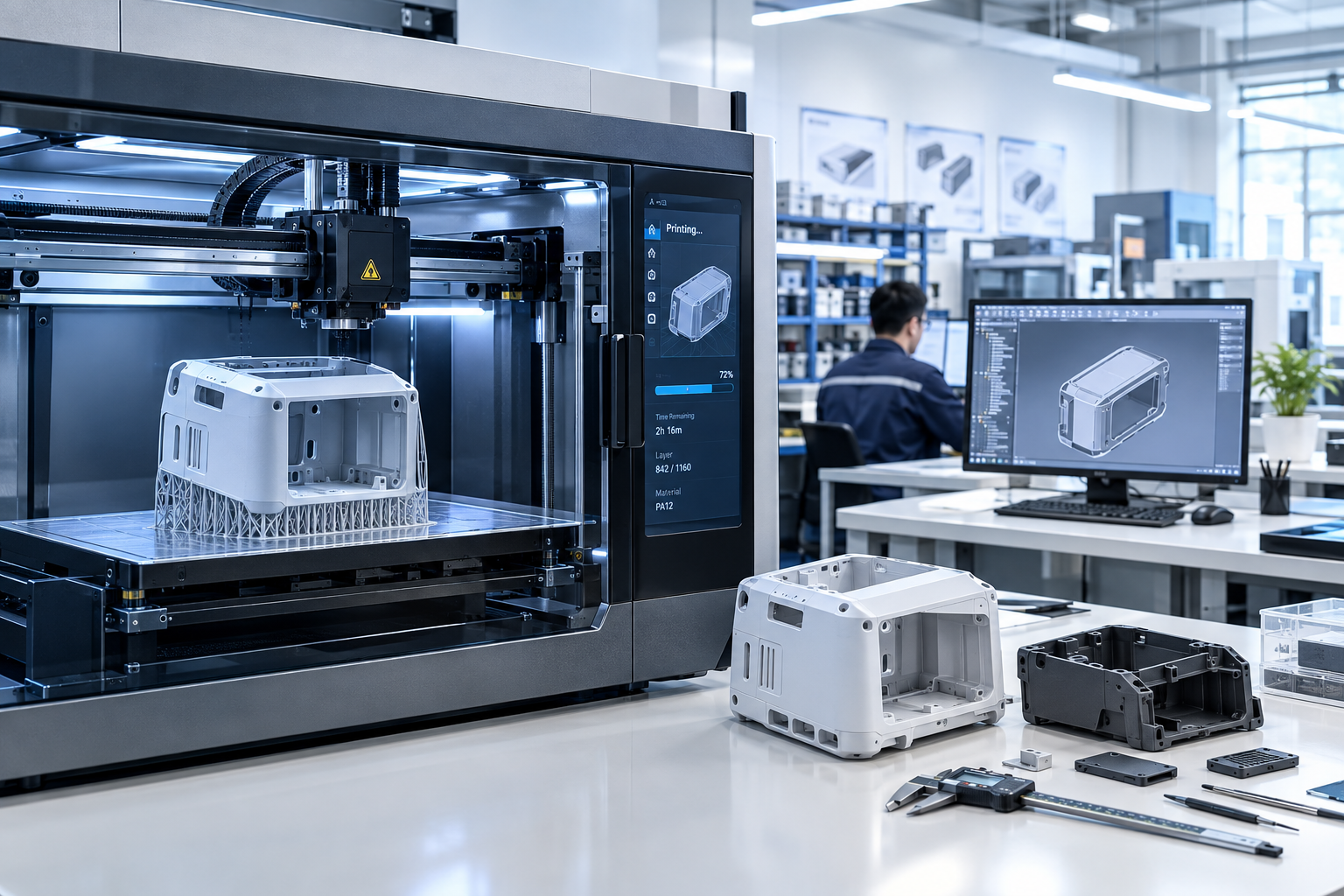
I see teams mix up these two concepts on almost every hardware project. They print a part, expect it to behave like an injection-molded component, and then get surprised when it snaps during a drop test. Let us break down how these methods actually work together so you can make the right call for your product.
What Is the Difference Between Rapid Prototyping and 3D Printing?
You pick 3D printing for a functional test, but the part fails under light load. You wasted a full week of testing because you picked a specific tool instead of a clear strategy.
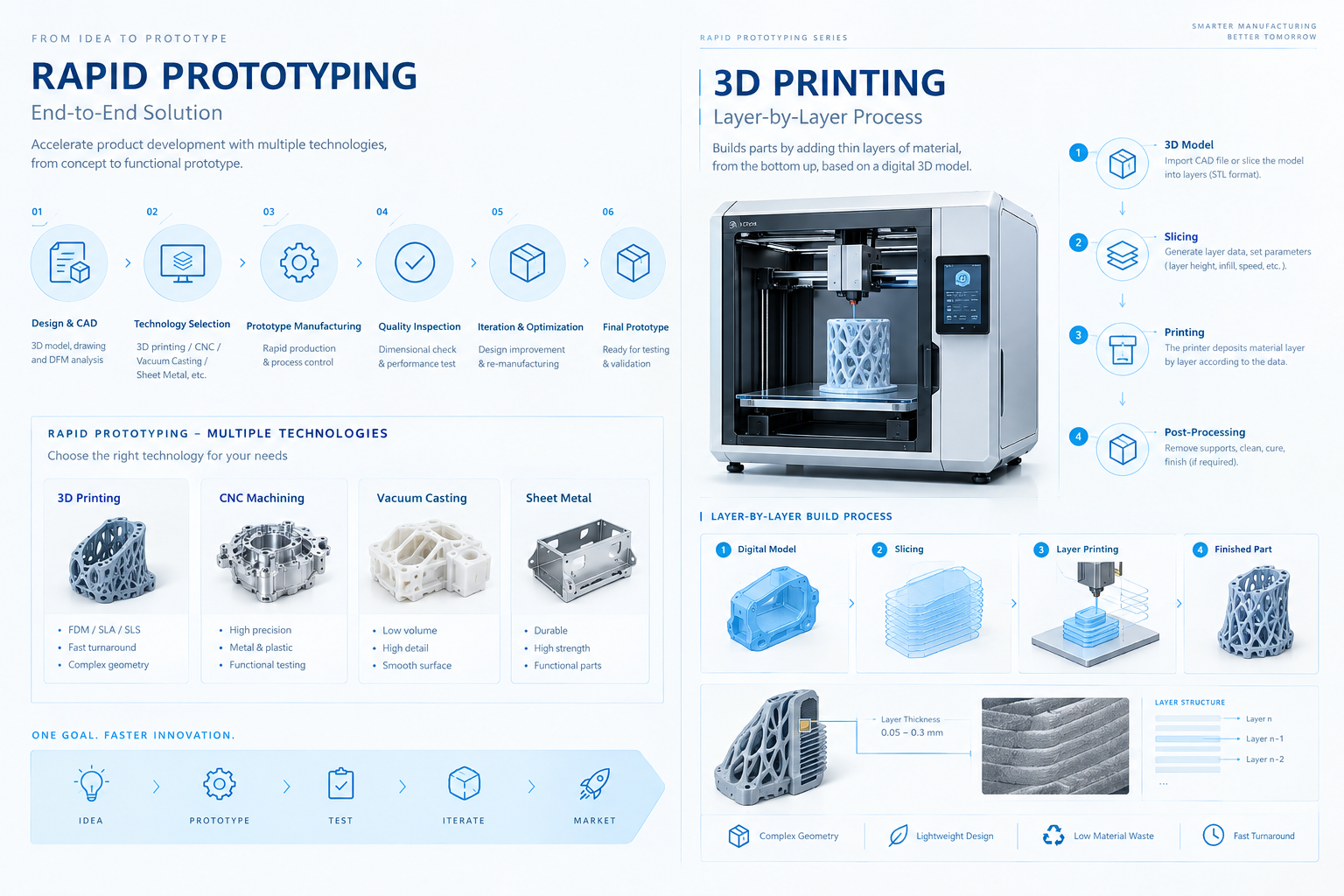
Rapid prototyping is the full process of turning CAD designs into physical models to test form, fit, and function. 3D printing is a specific additive manufacturing technology that builds parts layer by layer without tooling.
Understanding the Big Picture Strategy
When I work on consumer electronics, I always remind my team that rapid prototyping is the strategy. It is the "why" behind what we do. We need to answer design questions quickly before we pay for expensive steel molds. Rapid prototyping covers many different manufacturing paths. We use additive methods like 3D printing, subtractive methods like CNC machining, and quick tooling like silicone sample molds.
3D printing is just one specific tool in that toolbox. It takes digital CAD data and stacks material layer by layer. It gives you physical parts fast because you do not need to build hard tooling first. But it is not always the right choice for every test phase.
| Concept | Scope | Primary Goal | Key Methods Used |
|---|---|---|---|
| Rapid Prototyping | Entire development strategy | Reduce design risk and speed up time to market | 3D printing, CNC machining, silicone molds, bridge tooling |
| 3D Printing | Specific manufacturing process | Create complex geometries without hard tooling | FDM, SLA, SLS, MJF, Metal Powder Bed Fusion |
What Is Rapid Prototyping in 3D Printing?
Your team prints a complex enclosure, but the snap-fit tabs break on the first assembly try. You realize that your digital CAD model does not match the real-world strength of a 3D printed layer.
Rapid prototyping in 3D printing means using additive manufacturing to build quick physical models straight from CAD files. This process allows fast design iterations, low upfront costs, and easy visual checks without mold tooling.
The Additive Workflow and Its Trade-offs
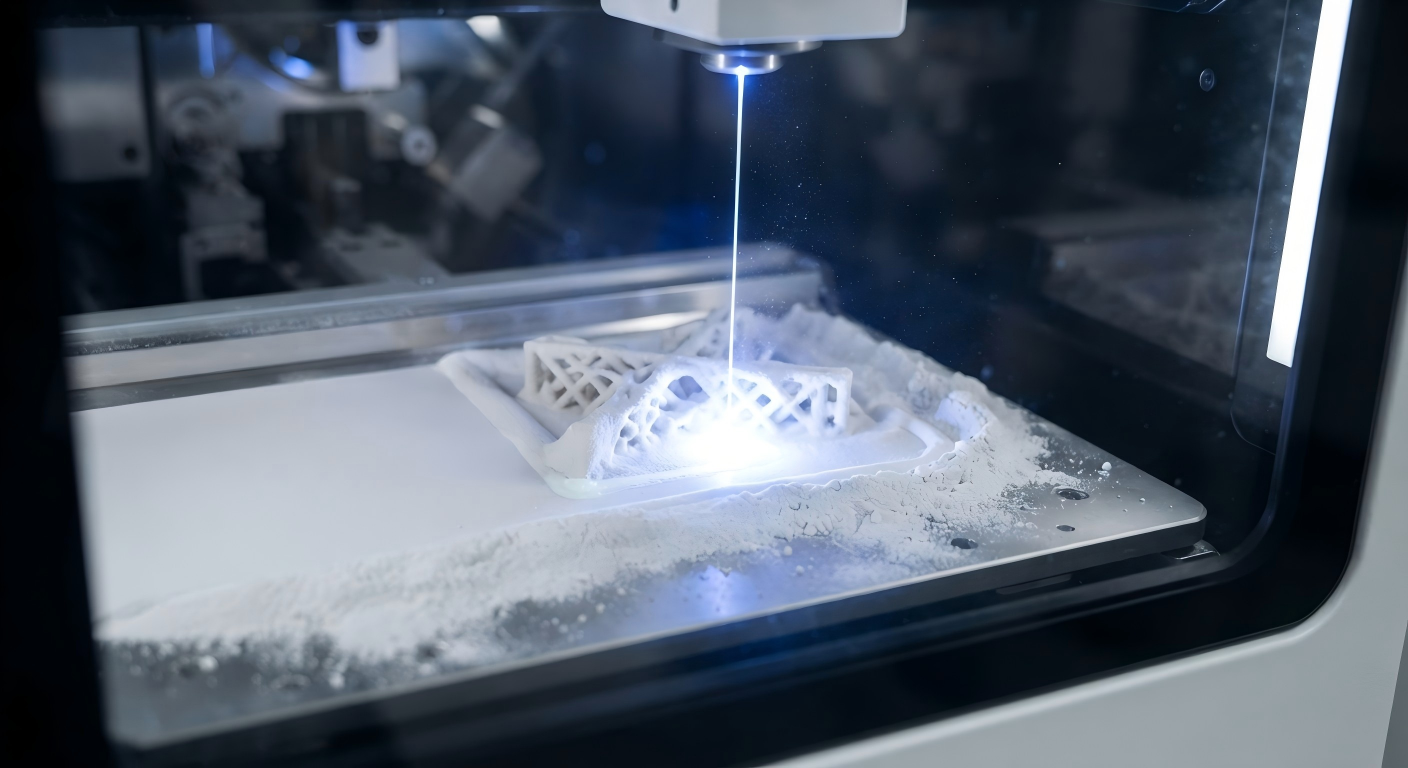
I often rely on 3D printing during the early stages of a project. The workflow is direct. I design the part in CAD, slice the file, and send it to the printer overnight. By morning, I hold a physical model in my hand. I clean the part, check the fit with other components, and update the design file.
Different 3D printing technologies serve different goals. FDM works well for quick shape checks. SLA gives smooth surfaces for visual reviews. SLS and MJF use nylon powders to create stronger parts for light mechanical checks.
Technology Selection and Mechanical Limits
FDM (Fused Deposition Modeling)
- Fast and cheap for early physical models.
- Good for basic spatial and fit checks.
- Weak layer bonding makes it poor for load tests.
SLA / DLP (Stereolithography)
- High surface detail and smooth finishes.
- Ideal for aesthetic models and light assembly.
- Resins can be brittle and degrade under UV light.
SLS / MJF (Selective Laser Sintering)
- Tough nylon parts with near-isotropic strength.
- Great for early functional testing and complex shapes.
- Rough surface finish and looser dimensional tolerances.
However, 3D printing has real mechanical limits. The layers create natural weak planes in the part. If I apply force along those layer lines, the part splits. The materials also do not fully match real production plastics like molded ABS or PC.
What Are the Four Types of Prototyping?
You build a final-looking prototype, but it fails instantly in environmental testing. You spent thousands of dollars on high-end finishes before testing if the internal clip mechanism actually works.
The four types of prototyping are concept proofing, visual models, functional prototypes, and production validation prototypes. Each stage targets a specific design risk to control project costs and project timelines.
Step 1: Proof-of-Concept Prototypes
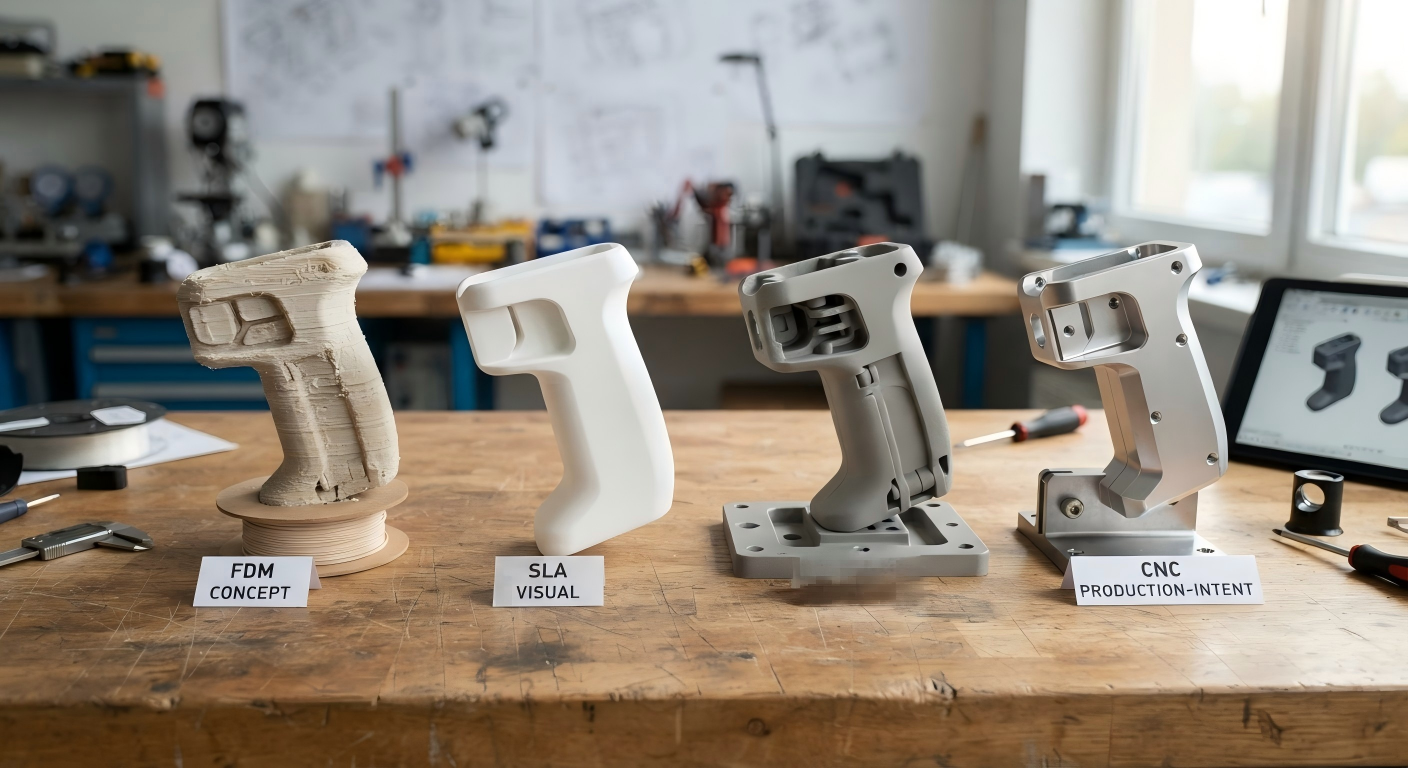
In the first phase, I only care about core function. I ask myself if the mechanism actually works. I use rough FDM prints, foam, or stock plastic pieces. The appearance does not matter here. I just need to validate the basic physics of the design.
Step 2: Visual and Aesthetics Prototypes
Next, I focus on how the product looks and feels. I use SLA printing or hand-finished CNC parts. I add paint, texture, and corporate logos. These models help sales teams and executives judge aesthetics, ergonomics, and color options. They look real, but they lack mechanical strength.
Step 3: Functional Prototypes
Now I test real loads, heat resistance, and snap actions. I move away from standard 3D resin prints. I use SLS nylon, CNC-machined engineering plastics, or silicone sample molds for soft rubber parts. These components must withstand real forces during drop tests and fit checks.
Step 4: Production Validation Prototypes
In this final phase, I validate actual manufacturing conditions. I use production-grade resins, CNC parts from real plastic stock, or soft aluminum injection molds. This stage exposes mold shrinkage, warpage, gate locations, and wall thickness issues before we cut expensive steel production tools.
How Do They Compare for Functional Prototypes and Production Validation?
You launch expensive steel tooling based only on 3D printed samples. The first molded parts warp, shrink, and fail assembly because the 3D print hid critical plastic behavior.
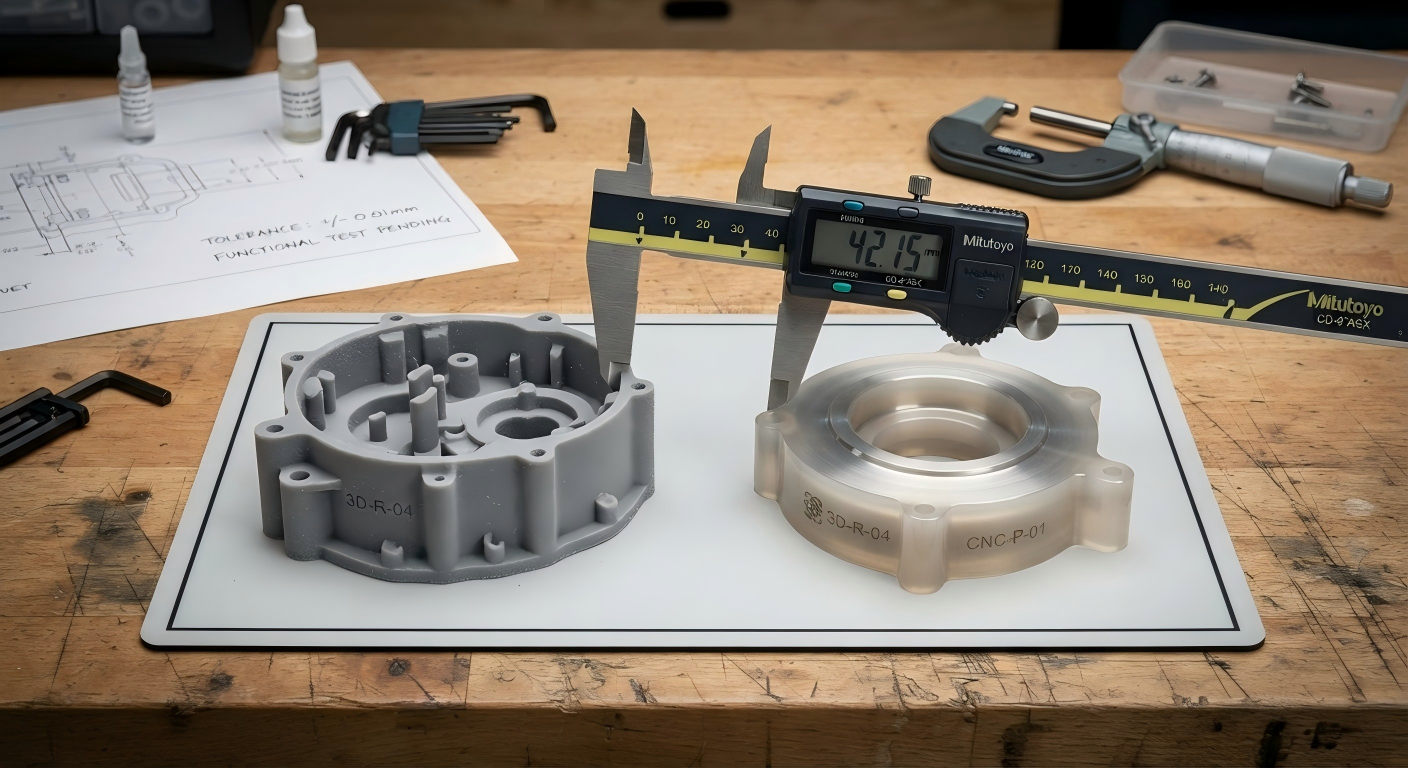
3D printing offers fast, cheap iterations for early functional checks, but CNC machining and soft tooling are essential for production validation because they test real production materials, precise tolerances, and mold flow dynamics.
Functional Testing Reality
When I test snap-fits, drop resistance, or fluid seals, SLS printing or tough resins give me a great quick check. They are fast and cheap for five parts. But when I need precise tolerances, isotropic strength, or real thermal limits, I turn to CNC machining. Machining parts from actual extruded plastic stock gives me accurate mechanical data that prints cannot duplicate.
| Evaluation Metric | Advanced 3D Printing (SLS / MJF / Resins) | CNC Machining & Soft Injection Tooling |
|---|---|---|
| Material Behavior | Good approximation; anisotropic layer strength | Exact production material; fully isotropic |
| Part Tolerances | Typical range of ±0.1 mm to ±0.3 mm | Tight precision down to ±0.025 mm |
| Surface Quality | Matte, grainy, or visible layer lines | Smooth production-grade finish and textures |
| Geometry Limits | Excellent for internal voids and lattice structures | Limited by cutting tool reach and draft angles |
| Mold Insights | Zero data on shrinkage, gates, or weld lines | Direct data on flow, shrinkage, and warpage |
Production Validation Requirements
True validation requires more than correct geometry. I need to know how the molten resin flows into a cavity. I need to see where weld lines form and how the plastic shrinks as it cools. 3D printing cannot show me these mold-flow facts.
For full validation, I always recommend silicone sample molds or quick aluminum prototype tooling. These methods give us real molded parts, clear shrinkage data, and reliable secondary operations like overmolding or sonic welding.
Conclusion
Rapid prototyping is your overall design strategy, while 3D printing is simply one fast additive tool. Use 3D printing for quick early iterations, but switch to CNC machining or soft prototype molds when you need real mechanical strength and accurate production validation.
About Me
KENVOX INDUSTRIAL (HONGKONG) CO., LTD is a Hong Kong–based contract manufacturing group (est. 1989) focused on plastic, silicone, and metal tooling and finished parts, with OEM/ODM, design support, and one-stop turnkey project delivery from concept through mold, production, secondary processes, assembly, packaging, and export logistics. The group operates wholly owned and partner facilities in Dongguan, Huizhou, Shenzhen (commercial/engineering), and Vietnam (plastic, silicone, and precision metal), and promotes primarily as a manufacturer platform rather than a generic trading broker. Website: www.kenvox.com.
Services Offered:
- Product & engineering design: Component design, reverse engineering, DFM/DFMA, tooling/fixture/gauge design, and drawing refinement for manufacturability.
- Prototyping: CNC prototypes (plastic/metal), silicone sample molds, silicone overmolding for small plastic prototype runs, and engineering/appearance validation before production tooling.
- Injection mold design & manufacturing: Plastic injection molds (including gas-assisted, insert, precision, and two-shot / overmolding), plus related mold flow analysis and DFM reporting.
- Custom manufacturing — plastic: High- and low-volume injection molding, dual-color injection, overmolding, insert molding; support for clean-room medical molding (up to Class 10,000 where applicable).
- Custom manufacturing — silicone: Compression molding, LSR (liquid silicone) injection, dispensing/epoxy, and related finished silicone parts.
- Custom manufacturing — metal: CNC machining, die casting, stamping (sheet metal), and coordinated metal supply through JV/partner metal operations.
- Secondary processing & assembly: Silk screen and pad printing, laser engraving, painting/UV coating, sand blast texturing, vacuum plating, ultrasonic welding, simple structural assembly, and coordination of anodizing, electroplating, powder coating, and other outsourced finishes.
- Supply chain & project operations: Sourcing of related components (electronics/EMS, packaging, standard parts, wood/glass/textiles via vetted suppliers), warehousing, multi-destination shipping, and testing/certification coordination (e.g. CE, FCC, UL, FDA, LFGB as required by product/market).
Certifications and Quality Assurance:
KENVOX operates under ISO 9001, IATF/TS 16949 (automotive quality), and ISO 14001, with incoming-to-outgoing QC, dedicated QA resources, and ERP-backed documentation and traceability for molds and production.
Team and Communication:
Sales and project staff are positioned for direct English communication with overseas clients; foreign-trade engineers typically bring 10+ years of industry experience, with appointed project leaders per case for faster quotations (streamlined internal approval vs. typical factory hierarchies), online technical reviews, and ongoing follow-up through mold trials (T0/T1…), golden samples, and mass production.
Production Capabilities:
Group scale (figures vary by document/year—use ranges when speaking to customers): roughly 600–1,300+ employees, ~30,000–40,000+ m² manufacturing footprint, 70–80% export orientation. Plastic injection capacity includes 190+ injection machines (about 75–1,000 ton class across the network, with dual-color capability and partner access to ~1,000 ton machines), 1300+ tons/year plastic processing capacity cited for major plastic sites, and 60+ silicone-related machines (compression, transfer, LSR, dispensing). Mold shop highlights include high-speed CNC (e.g. Mikron), EDM / mirror EDM, slow-wire EDM, grinding, and CMM measurement; Huizhou-scale plastic operations cite on the order of ~400 molds/year and ~5,000 T injection parts (site-dependent).
Global Reach:
Primary markets: North America, South America, Western/Eastern Europe, East Asia, Middle East, and Australia, with reference customers/brands including CASIO, BROTHER, BBK, KINPO, LADA, and automotive/industrial names (e.g. VAZ, GAZ). U.S. sales support is referenced (California); European branch is planned rather than fully established. KENVOX targets mid-to-high-end buyers—especially industrial/product design firms, brand owners, contract manufacturers/assemblers, sourcing firms, and regional mold shops subcontracting to China/Vietnam—who value turnkey execution, dual-material molding, medical/clean-room options, and responsive project management over lowest-unit-price-only sourcing.