


How Can You Reduce Your Commercial Silicone Injection Molding Cost?
Commercial silicone injection molding can look expensive at first. I have seen many teams focus only on unit price, and then they lose money in tooling, scrap, and slow changes.
I reduce commercial silicone injection molding cost by planning for manufacturability early, choosing the right silicone grade for the job, and working with a manufacturer who helps improve the design and process, not just make parts.
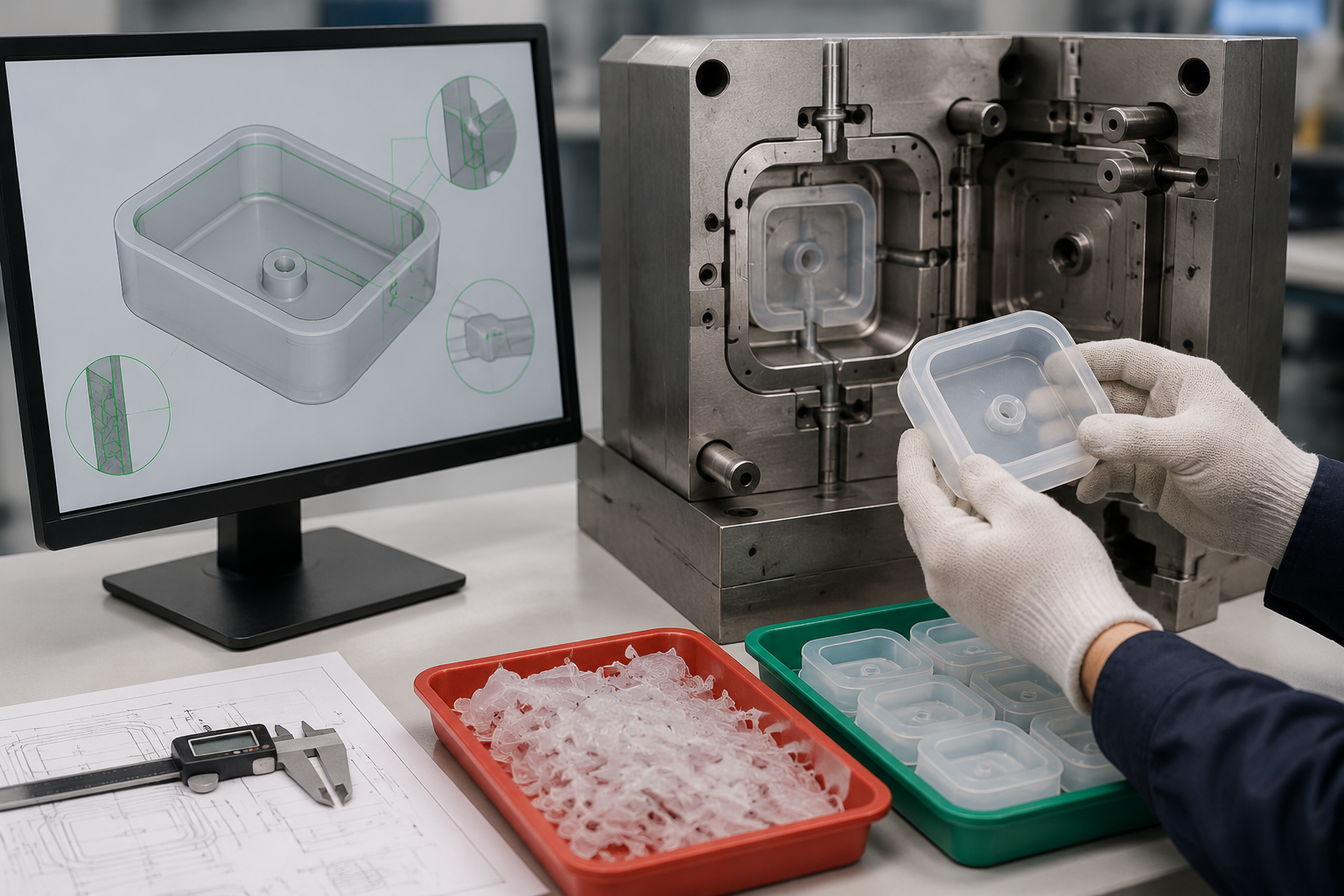
If you want lower cost, you do not start with the cheapest quote. I always start with the product design, the mold structure, and the material choice. That is where the real savings begin.
What is plastic molding injection?
When I first explain injection molding to a new client, I keep it simple. I say it is a process where melted material goes into a mold, cools, and then takes the shape of the cavity. Many people know this process from plastic parts, but the idea also helps people understand silicone molding. The same basic logic applies. The material is forced into a tool, and the tool controls the shape, size, and repeatability. If the design is clean, the process is efficient. If the design is weak, the process becomes costly.
Injection molding is popular because it supports high volume, stable quality, and low unit cost after the mold is ready. That is why I always tell designers to think about the mold before they think about mass production. I also tell them to think about wall thickness, draft angle, undercuts, and parting lines. These choices can change the whole project cost. A small design change can reduce cycle time, cut waste, and make the mold simpler. When I work with a customer early, I often save them more money than any supplier discount ever could.
Why does early design planning matter?
I have learned that a good first drawing can save a project. A bad first drawing can keep adding cost for months. When I review a design, I look for hidden cost drivers. I check if the part has sharp corners, uneven wall thickness, deep cores, or too many complex features. Each one can raise risk and tool cost. I also check if the part can be made with fewer actions in the mold. A simple structure often means fewer slides, fewer repairs, and less time on the machine. That is real cost control. I also ask if the part can be designed with stable dimensions from the start. If the shape is stable, then the production run is smoother. If the shape is unstable, then the factory spends more time on trial runs and rework. In my view, this is why design for manufacturing is not a nice extra. It is one of the main ways to reduce commercial silicone injection molding cost.
How does injection molding connect to silicone projects?
Many people compare plastic injection molding and silicone molding as if they are the same. They are related, but they are not identical. Plastic injection molding usually uses thermoplastics, while silicone molding often uses LSR or compression processes. Still, both need good mold design and clear process control. When I help a client move from a plastic concept to a silicone part, I pay attention to shrinkage, release, and curing behavior. I also look at whether the part needs sealing, softness, heat resistance, or electrical insulation. Those needs affect material selection and mold design. If a client uses a plastic mindset only, they may miss silicone-specific cost issues. For example, some silicone parts need precise flow paths, while others need special venting or careful gating. These details affect the final price. So I always tell teams to understand the molding process first. Once they understand it, they can make better cost decisions.
How much does a plastic injection mold cost?
I get this question often, and I always answer the same way. The cost of a mold depends on the part design, the cavity count, the tool steel, the surface finish, and the expected life of the tool. A simple mold can cost much less than a complex one. A small part with clean geometry can be affordable. A large part with tight tolerance, moving actions, and special textures can cost much more. That is why a single price range never tells the full story.
I also tell clients that the mold price is only part of the total cost. A cheaper mold can create more scrap, slower cycles, and more maintenance later. A better mold may cost more upfront, but it can save money over time. That is why I treat mold cost as a long-term number, not a one-time number. I also remind clients that design changes after mold cutting are expensive. If the team changes the wall thickness or the sealing structure late in the project, the mold price can rise fast. So the best way to control cost is to lock the design early and keep the tool as simple as possible.
What makes a mold expensive?
A mold becomes expensive when the part asks too much from the tool. Deep ribs, tight tolerances, complex undercuts, and fine cosmetic requirements all add cost. The mold maker may need more machining time, more polishing, more testing, and more steel. If the part needs many slides or lifters, the price rises again. I also see cost go up when a team does not think about maintenance. A mold that is hard to clean or hard to repair will cost more across its life. I often tell customers that a mold should not only make one good sample. It should make thousands of good parts with low effort. That is the real target. When I review a project, I try to simplify the shape, reduce the number of special actions, and make the cooling system efficient. These steps help lower the cost without hurting the function.
How can I control mold cost without losing quality?
I control mold cost by making smart choices before steel is cut. First, I ask if the part can meet its function with a simpler shape. Second, I check if the tolerances are truly needed. Third, I compare different gate and cavity layouts. Fourth, I ask the factory to give feedback on manufacturability before the final tool starts. This process helps avoid waste. It also helps keep quality stable. I have seen projects where one small design change saved a lot of money because it removed a slide or reduced polishing work. I have also seen projects where a team accepted a slightly longer cycle time in exchange for a much simpler mold. That can be a good trade. My point is simple. Mold cost is not only about the quote. It is about the total shape of the project.
Can you do plastic injection molding at home?
People ask this because they want to save money or test an idea fast. I understand that goal. I also think it is important to be realistic. You can do small-scale molding at home for learning, testing, or very simple parts. But home setups are not the same as commercial production. They usually have limits in temperature control, pressure control, safety, and repeatability. That means the parts may look okay, but they may not be stable enough for real market use.
I often tell product designers that home molding is useful for early proof of concept. It can help them check size, fit, and basic function. But it is not a full replacement for a real manufacturing process. If the final product must meet strict quality, then a proper factory process is better. This matters even more for silicone. Silicone molding needs careful control of curing and material behavior. A home setup may not give the same result every time. So if the goal is to save money, I suggest using home testing only as a learning tool. I would not use it as the final answer for commercial production.
When is home molding useful?
I think home molding is useful when the goal is speed, not volume. A designer can use it to test form, feel, and simple fit. A small team can also use it to explain an idea to investors or customers. That can be valuable. However, I do not think it is wise to use home molding for a product that needs real durability, exact size, or repeated output. The equipment is limited, and the process control is limited too. In my experience, the main value of home molding is early learning. It helps remove unknowns before a company spends money on tooling. So I see it as a low-cost step in development, not a full manufacturing path.
What are the risks of home molding?
The biggest risk is false confidence. A part that works once may fail in real use. Another risk is poor safety. Heat, pressure, and chemicals can create problems if the setup is not proper. I also see repeatability as a major issue. A commercial line must produce the same part many times with the same quality. A home setup usually cannot do that well. For that reason, I always tell teams to use home molding carefully. It can support early design work, but it should not replace serious production planning. If the product will be sold in the market, the team should move to a real manufacturing partner as soon as the design is stable.
What types of plastic can be injection molded?
I usually answer this by saying that many common plastics can be injection molded, but not every plastic is right for every part. The material choice depends on the product need. Some plastics are strong. Some are flexible. Some resist heat. Some resist impact. Some look better on the outside. When I choose a material, I do not ask only what it can do. I ask what it should do at the lowest useful cost.
| Plastic Type | Main Strength | Common Use | Cost Note |
|---|---|---|---|
| PP | Light and tough | Housings, caps, containers | Often cost-friendly |
| ABS | Good balance of strength and finish | Electronics parts | Good for many consumer products |
| PC | High impact resistance | Clear or durable parts | Usually higher cost |
| PA (Nylon) | Strong and wear-resistant | Mechanical parts | May need moisture control |
| PE | Flexible and chemical-resistant | Simple molded items | Often economical |
| POM | Low friction and stable | Gears, moving parts | Good performance, moderate cost |
I use this kind of thinking for silicone too. The right material is not always the highest grade. The right material is the one that meets the need without extra cost. This is where many projects lose money. A designer may choose a premium material too early. That can push up the price for no real benefit. I prefer a balanced choice. I look at function, life span, appearance, and processing behavior. Then I select the material that fits the job.
How do I choose the right material for cost control?
I choose the material by asking a few direct questions. Does the part need heat resistance? Does it need softness? Does it need chemical stability? Does it need food contact safety? Does it need long service life? Once I answer those questions, I can narrow the options. I also compare processing difficulty. Some materials are cheap on paper, but they are hard to mold. That can increase scrap and cycle time. Other materials cost more per kilogram, but they run more smoothly and reduce total cost. I think this is the best way to see the full picture. The cheapest raw material is not always the cheapest final part. In commercial silicone injection molding, this point matters a lot.
Conclusion
I reduce silicone injection molding cost by planning early, choosing material wisely, and working with a strong manufacturer that supports design, process, and production improvement.