


What Are the Advantages of Rubber Molding in Manufacturing?
I have seen many products fail because the material looked strong but could not flex, seal, or last. That is where rubber molding often proves its value.
Rubber molding gives me flexible design choices, lower long-term cost, faster production, and strong durability. I use it when a product needs sealing, shock absorption, or stable performance in real use.
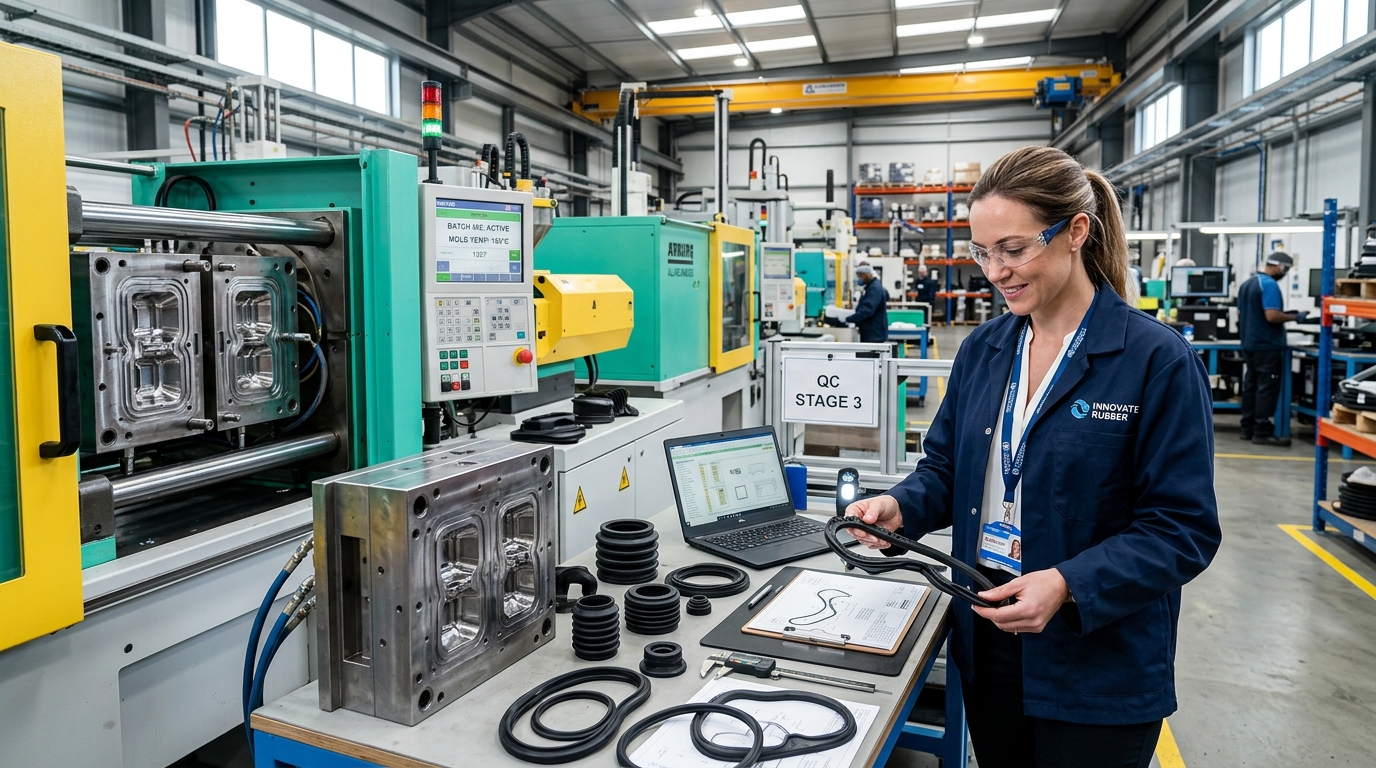
I often see teams focus only on shape at first. I think that is a mistake. I have learned that the real value of rubber molding shows up after the first test, when the part must fit, bend, seal, and survive daily use.
Why Rubber Molding Offers Superior Design Flexibility?
I like rubber molding because it gives me more room to solve real design problems. I do not need to force the product to stay rigid when the job needs movement, sealing, or soft contact. That freedom matters a lot in modern product design.
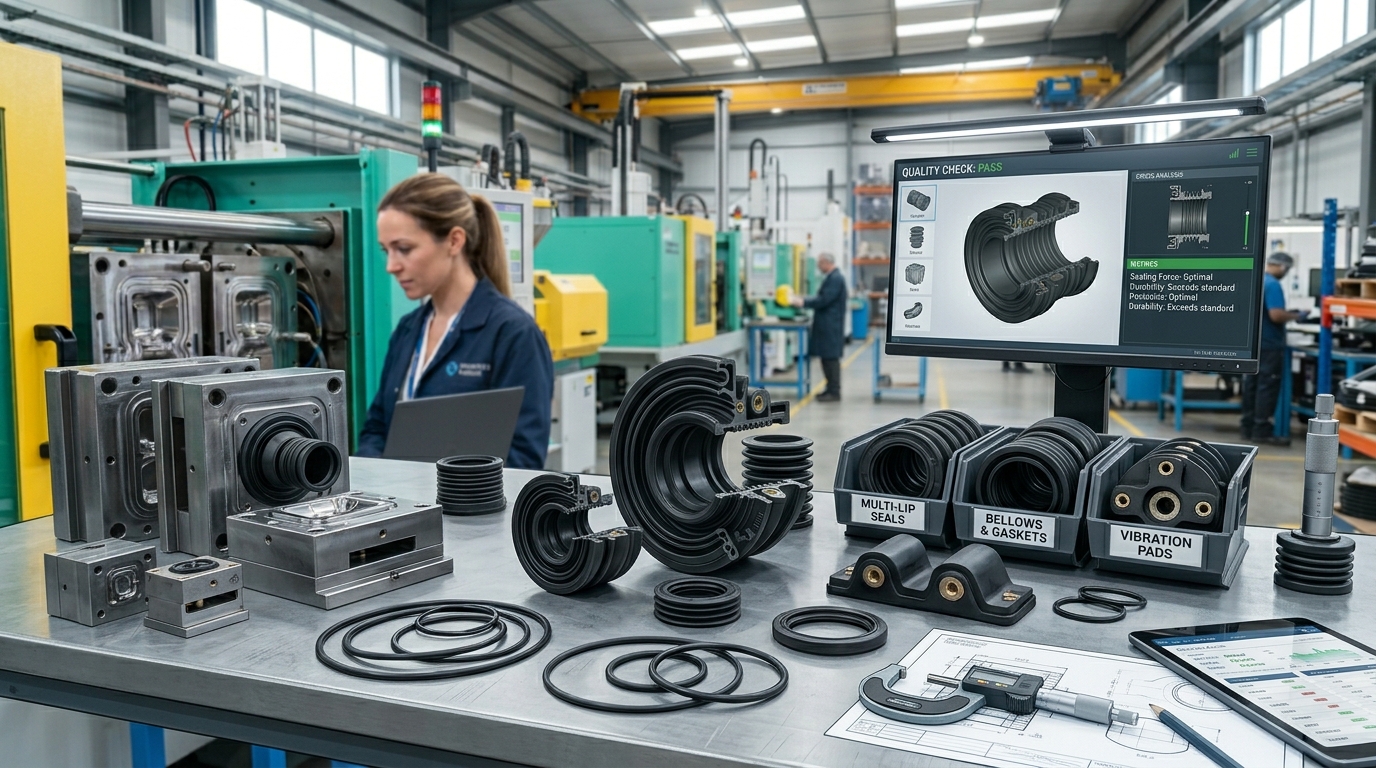
Rubber molding supports complex shapes, thin walls, embedded inserts, and custom features that many hard materials cannot handle well. It helps me make parts that can follow uneven surfaces, absorb vibration, and keep a tight seal. I use it when the product must do more than just look good. I use it when the product must perform in a real and often harsh environment.
Complex shapes are easier to manage
I often need parts with curves, grooves, lips, and small sealing edges. Rubber molding lets me form these details with better control. I do not need to break the design into many separate parts. That saves me time in both design and assembly.
I can combine functions in one part
I also like that I can build more than one function into a single molded part. A rubber part can seal, cushion, and protect at the same time. This helps me reduce part count. It also helps me simplify the final assembly.
I can match the product’s real use
I always design with the end use in mind. A soft grip, a waterproof seal, or a vibration pad all need different behavior. Rubber molding gives me the freedom to tune the design around those needs.
| Flexibility Factor | What I Get From Rubber Molding | Why It Helps Me |
|---|---|---|
| Shape complexity | Grooves, lips, curves, and thin sections | Better fit and function |
| Multi-function design | Sealing, cushioning, and protection in one part | Fewer parts and lower assembly effort |
| Material behavior | Softness, rebound, and flexibility | Better user experience |
| Custom fit | Size and shape made for the product | Better performance in the final assembly |
Cost Efficiency and Production Speed Advantages
I have learned that rubber molding is not only about technical performance. It also gives me a strong business case. When the process is well matched to the product, I can reduce waste, improve output, and keep the whole project more stable.
Rubber molding often gives me lower total cost over time because I can reduce extra parts, lower assembly steps, and improve first-pass quality. I also get good production speed once the mold is ready. For higher volume work, that speed matters a lot. I have seen a small increase in tooling cost pay back many times later through better efficiency and fewer quality problems.
I save money by reducing part count
I prefer one molded rubber part that does several jobs instead of three separate parts that need extra labor. That lowers assembly cost. It also lowers the chance of error during final build.
I save time in production
I also value the repeatable cycle of rubber molding. Once the process is stable, I can make parts with consistent results. This helps me plan production more safely and support larger orders with less risk.
I reduce rework and scrap
I always try to avoid rework. Rework takes time and it eats profit. Rubber molding helps me control form and function better when I choose the right process, so I can reduce waste and improve yield.
| Cost and Speed Factor | Rubber Molding Benefit | Result for My Project |
|---|---|---|
| Fewer parts | One part can do several jobs | Lower assembly cost |
| Stable cycles | Repeated production with less variation | Better planning |
| Less rework | Better fit and shape from the start | Lower scrap loss |
| Higher output | Good for medium and large batches | Faster delivery |
My practical view on cost
I do not judge cost by tool price alone. I look at the full life of the product. A slightly higher upfront cost can still be the better choice if it lowers defect rate and speeds up output. I have seen this many times in real projects.
Durability and Performance Benefits Compared to Other Materials
I think durability is one of the strongest reasons to use rubber molding. Many products need more than stiffness. They need flex, rebound, sealing, and resistance to wear. Rubber gives me that balance in a way that plastics and metals often cannot.
Rubber molded parts can handle shock, vibration, moisture, and repeated movement very well. I use them when the product needs a long service life and stable performance under stress. I also use them when a part must keep working after many open-close cycles or repeated pressure. In those cases, a hard material may crack, loosen, or fail sooner.
Rubber performs well in sealing jobs
I often rely on rubber for seals and gaskets. A seal must hold shape and still press tightly against another surface. Rubber is very good at this because it can compress and return to shape.
Rubber resists aging in the right material choice
I always match the rubber type to the environment. Some rubber types handle heat, sunlight, oil, and chemicals better than others. When I choose well, the part stays useful for a long time.
Rubber handles impact and vibration
I also use rubber when I want to reduce noise or absorb shock. This is very useful in consumer products, automotive parts, and industrial equipment. It helps protect both the product and the user.
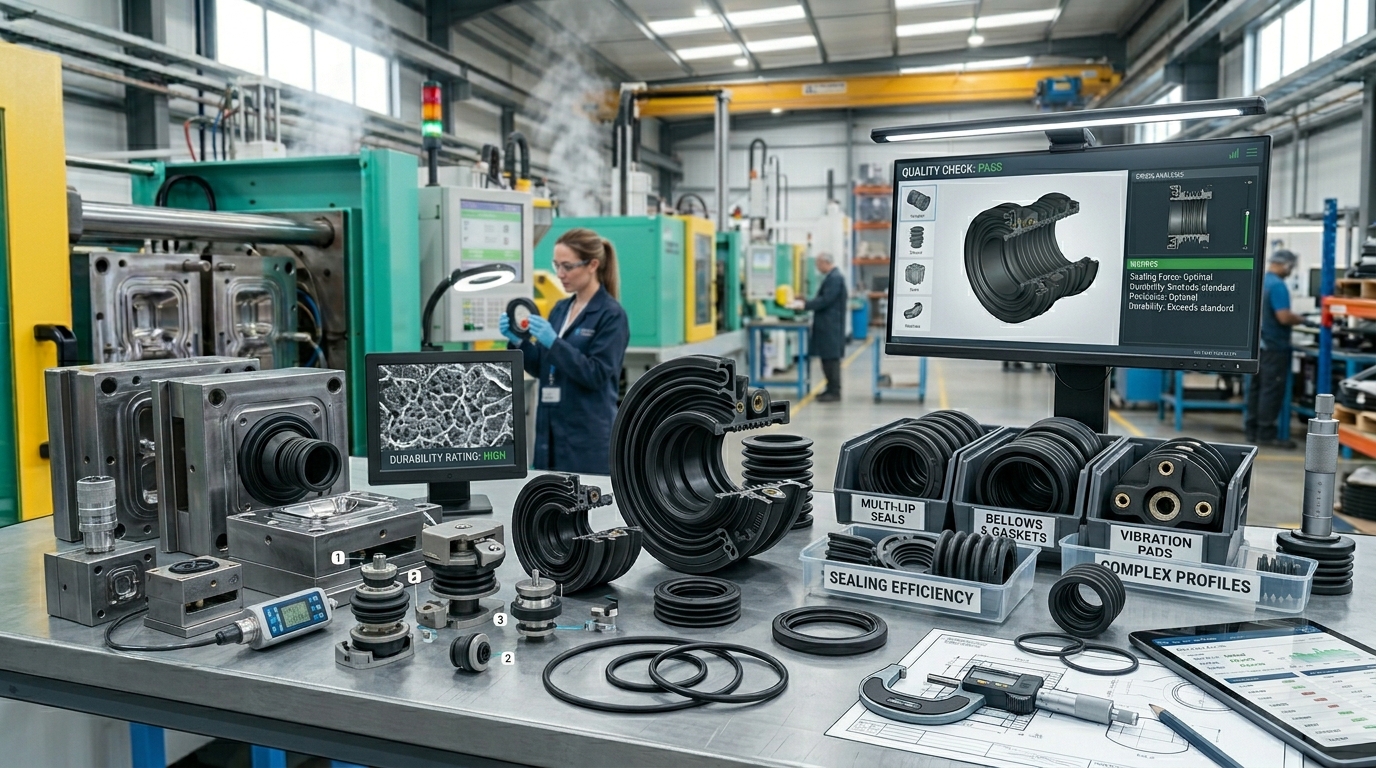
| Performance Factor | Rubber Molding Result | Compared With Hard Materials |
|---|---|---|
| Sealing | Strong compression and recovery | Better seal than rigid parts |
| Shock absorption | Good damping and soft contact | Less impact transfer |
| Wear resistance | Long life in moving contact | Better in flexible use cases |
| Environmental resistance | Material can be matched to the use | More suitable for harsh conditions |
My insight on material limits
I agree with a simple idea. Rubber is not always the best answer for every part, but it is often the best answer for the right part. Amid the current manufacturing trend that values lightweight design and high performance, I see the advantages of rubber molding becoming even more clear. Rubber can form complex geometry, and it can also bring strong elasticity, aging resistance, and sealing power. I believe plastics and metals cannot replace it in many of these jobs. I also believe liquid silicone rubber, or LSR, will expand this field even more. As LSR technology improves, I expect more products to use rubber molding for clean, precise, and high-performance parts.
Conclusion
I see rubber molding as a smart manufacturing choice because it combines design freedom, lower total cost, and strong real-world performance in one process.