


Why is Silicone Biocompatible? The Ultimate Guide for Medical Device Design?
You picked silicone for a wearable seal—and then QA asked for biocompatibility proof. I felt the deadline tighten before we even ran a mold trial.
Silicone is biocompatible because its siloxane backbone (alternating silicon and oxygen) stays stable in the body. Its hydrophobic surface resists fluids and limits leaching, so tissue contact stays low-risk when grades and testing match the use case.
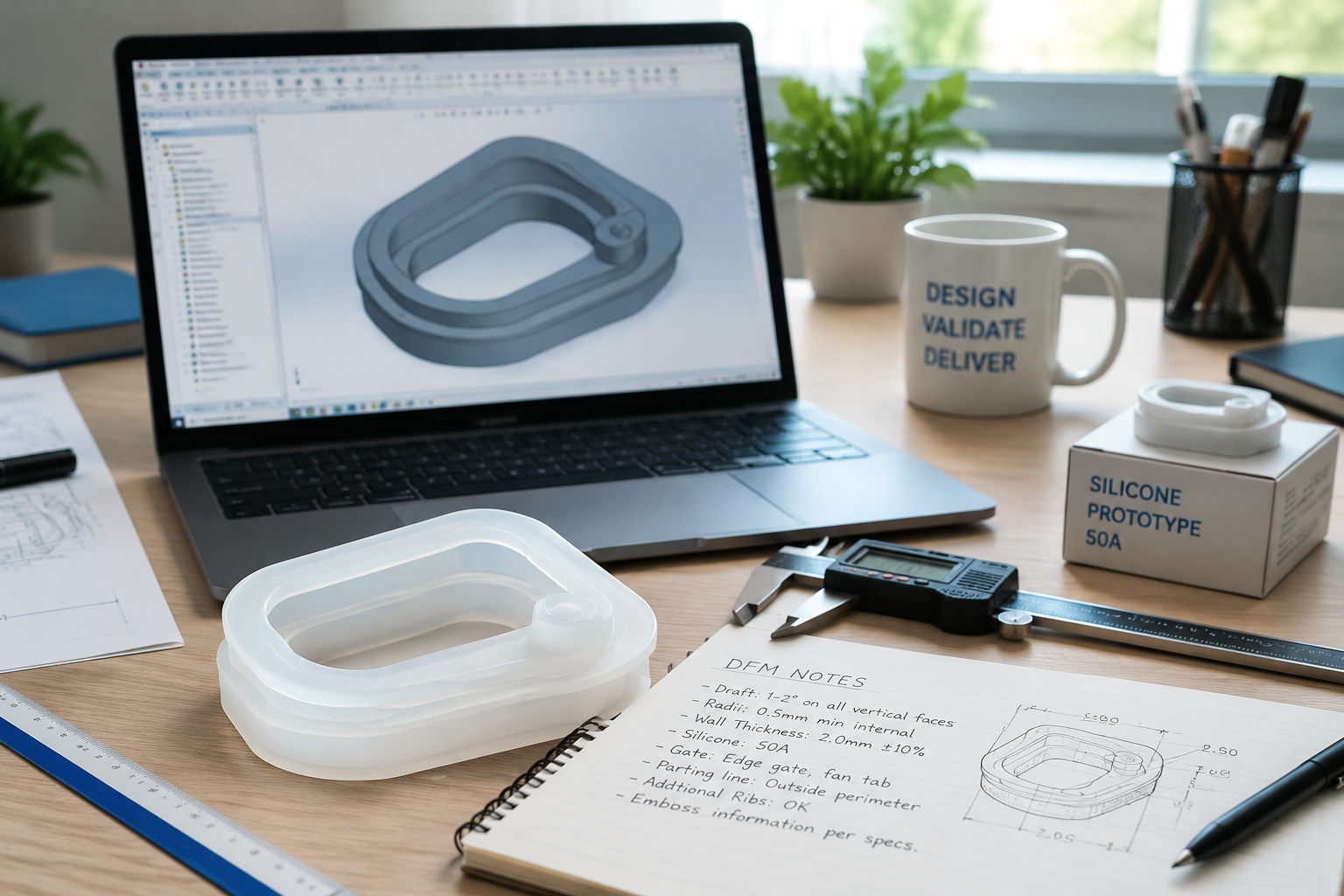
That answer sounds simple until you open a customer drawing with “medical grade silicone” and no ASTM or ISO line item. I have seen teams lose weeks on the wrong polymer family. The sections below follow the questions I ask on every DFM review—so you can spec material, tests, and mold process in one pass.
Why are silicones biocompatible?
Your prototype passed bench tests, but the pilot lot triggered a skin reaction. I stopped blaming assembly and started at the polymer chemistry.
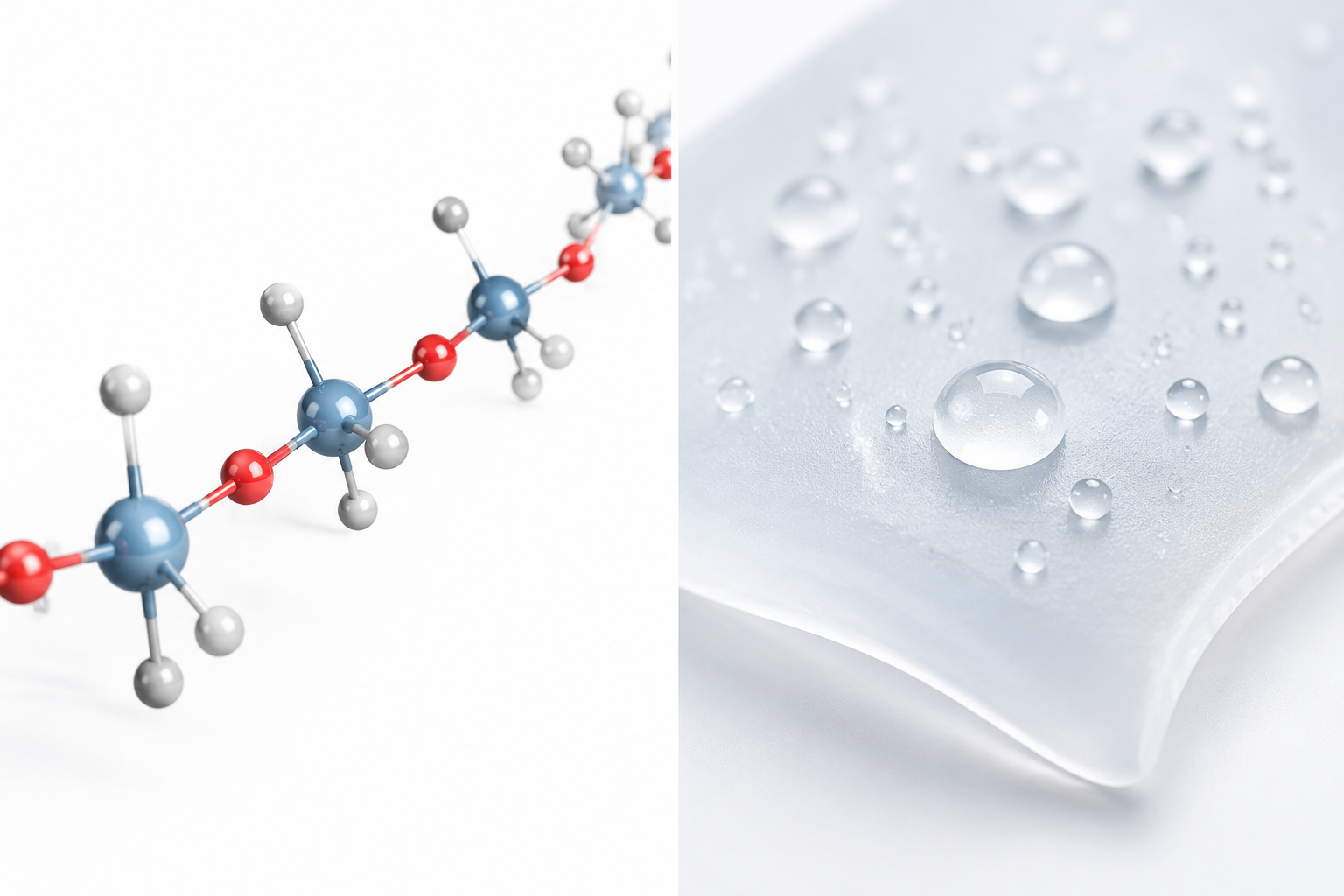
Silicones resist breakdown in moist, salty environments because Si–O bonds are strong and flexible. Hydrophobic surfaces reduce protein adsorption. With clean compounding and the right platinum-cure LSR, the material stays inert instead of leaching irritants.
What “inert” really means on a drawing
When I say biocompatible, I do not mean “magic.” I mean the device contact layer behaves predictably under blood, sweat, or mucosa. Silicone helps because the bulk polymer is not a protein that enzymes chew up fast.
Mechanism checklist
| Factor | What it does | Design takeaway |
|---|---|---|
| Siloxane (Si–O) backbone | High bond energy; resists hydrolysis in many body fluids | Prefer medical-grade silicone over generic rubber for long implant or wear time |
| Hydrophobic surface | Less water and protein stick | Easier to clean; fewer niches for biofilm if geometry is smooth |
| Low extractables (when controlled) | Fewer migrants into tissue | Specify cure system and restrict unknown fillers |
| Mechanical softness | Less point loading on tissue | Match durometer to anatomy; do not over-compress seals |
Where I still watch out
Peroxide-cured gum silicones and some additives can add volatiles if the supplier is vague. I ask for lot traceability and whether the compound is built for healthcare—not just “food contact.” At KENVOX we often pair LSR injection with documented incoming QC because a biocompatible intent fails when secondary oils or pigments slip in without a control plan.
Which material has the best biocompatibility for medical applications?
The surgeon wants soft. Marketing wants clear. Finance wants the cheapest elastomer on the sheet. I sat in that triangle more than once.
No single material wins every case. For long-term soft tissue contact, platinum-cure silicone and certain medical polyurethanes often lead after ISO 10993 testing. Metals and ceramics win for wear surfaces. “Best” means pass the test matrix for your contact type and duration.
Match material to contact duration
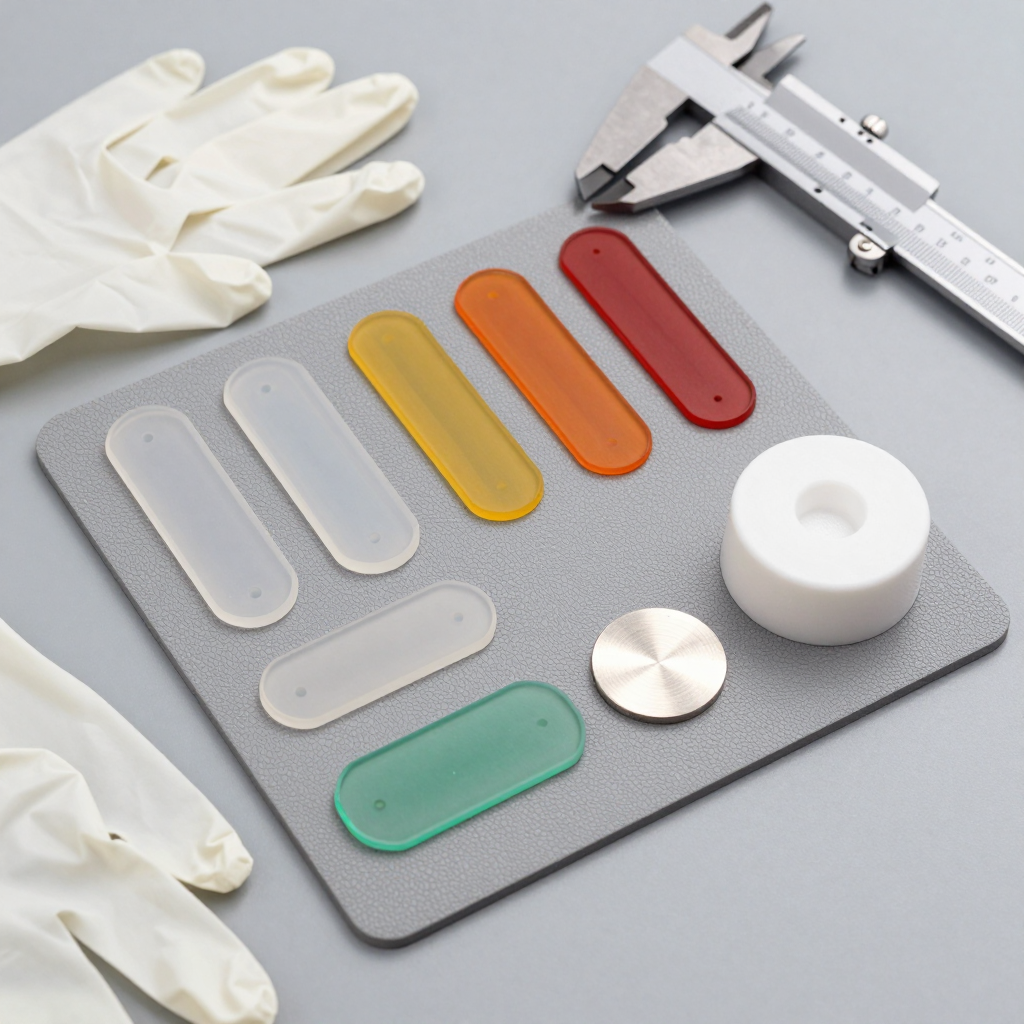
I break the question into how long and where the part touches the patient. A toothbrush grip and a chronic wound dressing do not share one material rule.
Quick comparison (starting point, not a certificate)
| Material | Typical strengths | Typical limits | When I reach for it |
|---|---|---|---|
| Platinum-cure silicone (LSR) | Soft, stable, heat-processable, good sealing | Not for high abrasive wear alone | Valves, seals, masks, long-wear consumer medical |
| Peroxide-cure silicone | Lower tool cost in some setups | More batch variation; watch residuals | Short-contact parts with tight validation |
| Medical TPE | Easy overmold to plastic | Can creep or extractables vary by grade | Grips, cables, drug-delivery peripherals |
| PEEK / PE / PP (rigid) | Sterilizable, stiff interfaces | Not soft tissue padding | Housings, fluid paths with separate soft seals |
| Titanium / Co-Cr (metal) | Load bearing, osseointegration contexts | Stiff, costly machining | Implants, instruments—not soft seals |
How I decide with Kyle-style DFM
I list contact category (surface, breached surface, blood path), sterilization (gamma, EtO, autoclave), and production (LSR vs compression vs overmold). Silicone often wins when you need elastic recovery + steam or radiation without melting a plastic substrate. If the part is mostly rigid with a soft grip, two-shot overmolding can keep the biocompatible layer where tissue actually touches.
Is silicone FDA approved?
A buyer emailed: “Send the FDA certificate for silicone.” I knew we needed to talk about clearances, not a rubber stamp on the periodic table.
The FDA does not “approve silicone” as a generic substance. It clears specific medical devices and recognizes material biocompatibility through standards (e.g., USP Class VI, ISO 10993) and your device submission path—510(k), De Novo, or PMA depending on risk class.
Language that saves RFQ time
| Term | What people think it means | What I use in specs |
|---|---|---|
| “FDA approved silicone” | One global rubber license | Medical-grade compound + documented tests |
| USP Class VI | Passed classic biological reactivity screens | Good signal for many contacts; still map to ISO 10993 |
| ISO 10993 | Modern biocompatibility battery | Required framing for most serious medical programs |
| Master file (MAF/DMF) | Supplier toxicology held by agency | Ask resin/compound vendors if available |
What I expect from manufacturing partners
For OEM work I want material COA, change control on color or catalyst, and clean-room discipline when the drawing says Class 10,000. KENVOX coordinates testing with third-party labs when the brand owner owns the final filing; we do not substitute our factory ISO for your device clearance. Silicone is widely used because suppliers built traceable healthcare grades—not because the word “silicone” alone satisfies FDA.
Why is silicone rubber so widely used in medical applications?
Walk any med-tech trade show and you see silicone in masks, tubing, gaskets, and baby-care niches. I used to think it was habit. It is mostly physics plus process fit.
Silicone rubber combines flexibility over a wide temperature range, repeatable LSR molding, radiation and autoclave tolerance (grade-dependent), and decades of clinical use—so designers get predictable seals and soft interfaces without reinventing material science each program.

Production realities I care about
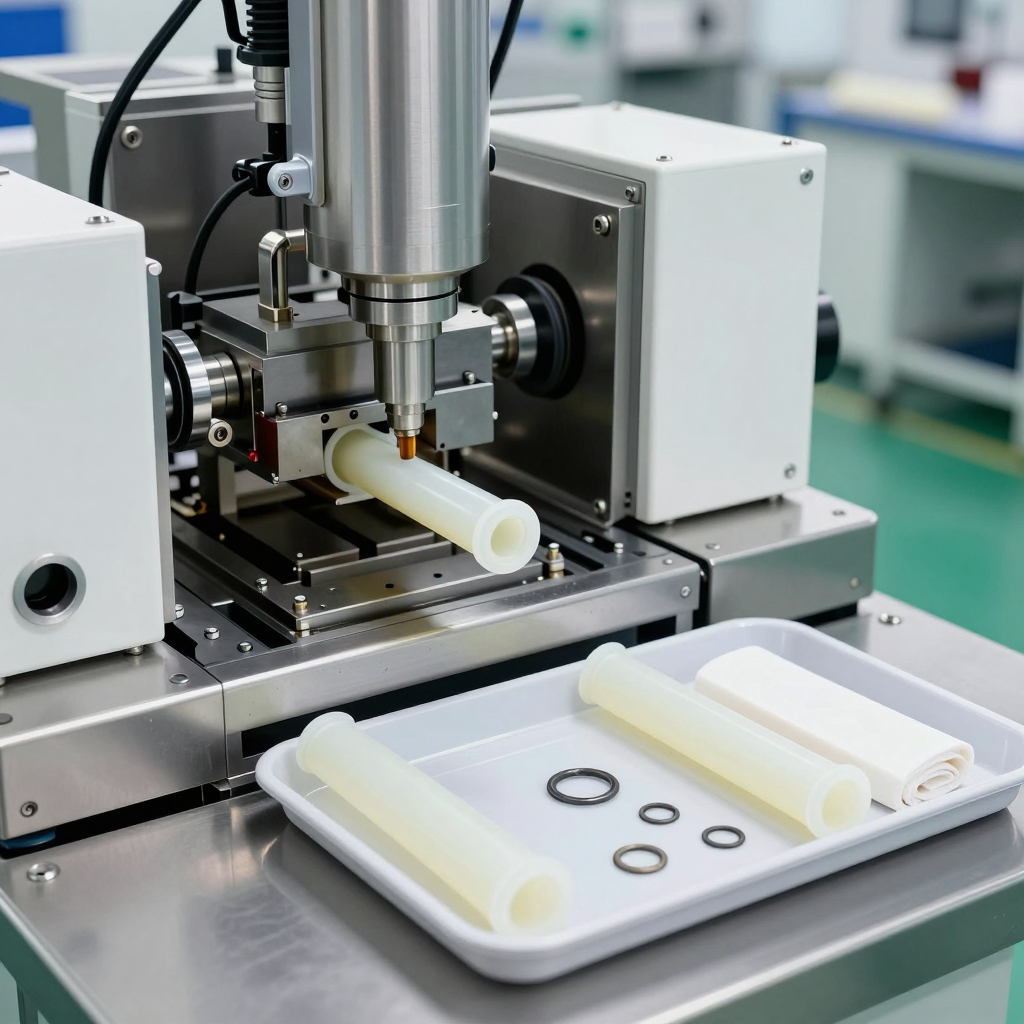
LSR injection gives Kyle the cavity-to-cavity repeat he needs for multi-cavity seals. Compression molding still fits large pads or low-volume legacy tools. Overmolding lets one assembly bond a PC housing to a skin-contact lip—if bond chemistry and shrink are modeled early.
Why teams standardize on it
| Need | Silicone response |
|---|---|
| Soft compliance | Wide durometer range without sharp plastic edges |
| Sterilization cycles | Many grades survive common hospital methods when validated |
| Fluid resistance | Hydrophobicity helps in wet environments (design still matters) |
| Aging in use | Stable backbone vs many commodity elastomers |
| Supply chain | Multiple global compounders; easier than exotic one-off polymers |
I still run parallel quotes with TPE when the device life is short and cost dominates. But when a nurse pulls a mask strap ten thousand times, I bet on silicone because the fatigue and skin-contact story is already written in validation libraries—and our mold shop can tune cold runner LSR before T1.
Conclusion
Silicone earns trust through stable siloxane chemistry, test-backed grades, and manufacturing paths like LSR—not through vague “medical” labels. Spec contact, sterilization, and compliance early; your mold and your filing will thank you.