


What are the Best Materials for Medical Injection Molding to Ensure Biocompatibility and Durability?
Choosing the wrong plastic for medical devices can lead to patient rejection or device failure. This risk creates huge liability and safety concerns for any manufacturer.
The best materials for medical injection molding include PEEK, PPSU, PEI, and medical-grade Silicone. These polymers are chosen because they offer high biocompatibility, resist harsh sterilization chemicals, and maintain mechanical strength under stress, ensuring the device is safe for human contact.
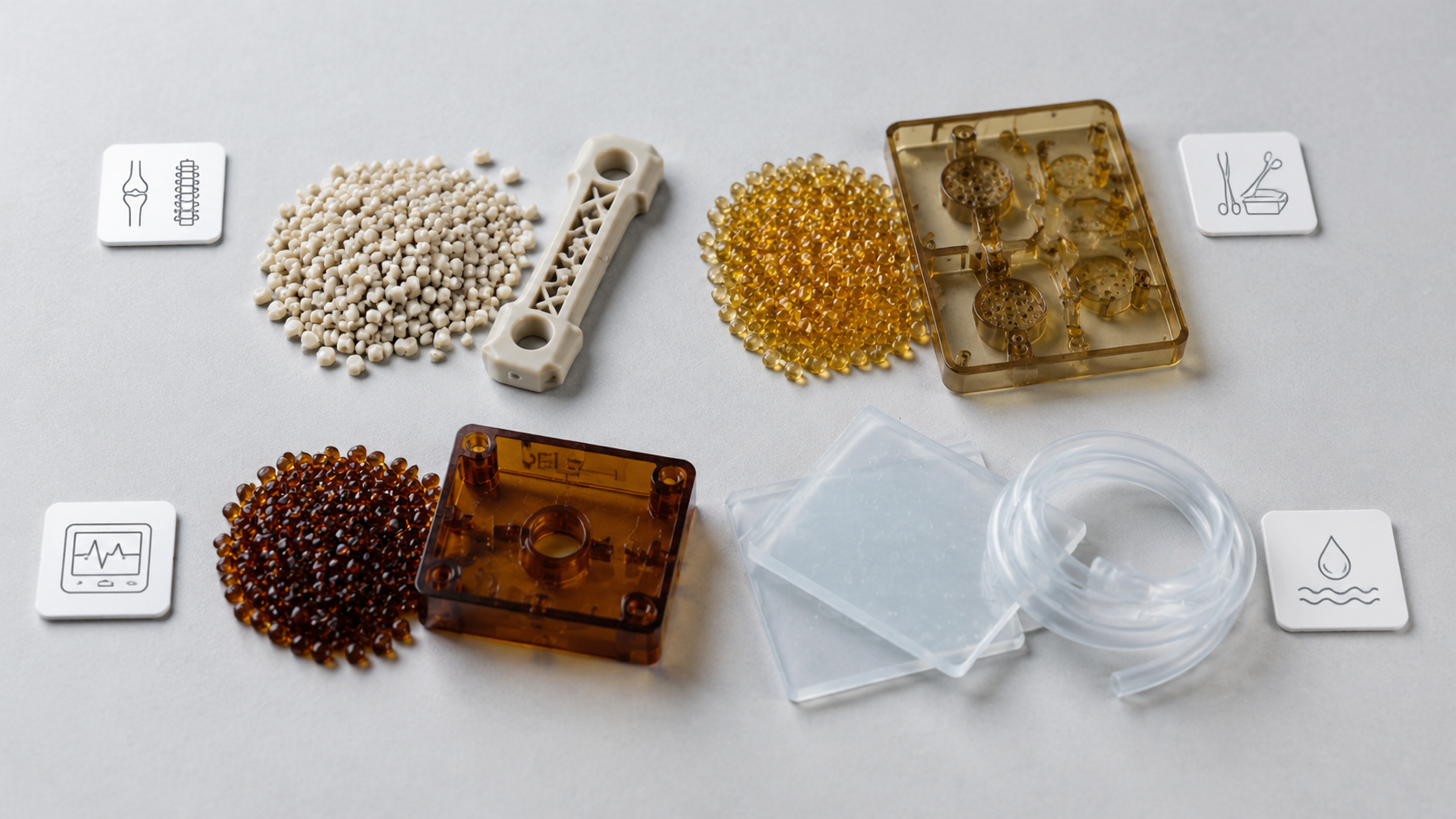
I have spent years helping clients turn sketches into real products. I know how stressful it is to pick a material that must be both safe and strong. Read on to see how to make the right choice for your project.
Which material has the best biocompatibility for medical applications?
Using materials that react with human tissue can cause inflammation or toxicity. This failure can stop a product launch in its tracks and risk patient health.
Medical-grade Silicone and PEEK (Polyether ether ketone) offer the highest biocompatibility. Silicone is ideal for soft-tissue contact, while PEEK is the top choice for permanent implants due to its chemical inertness and bone-like mechanical properties.
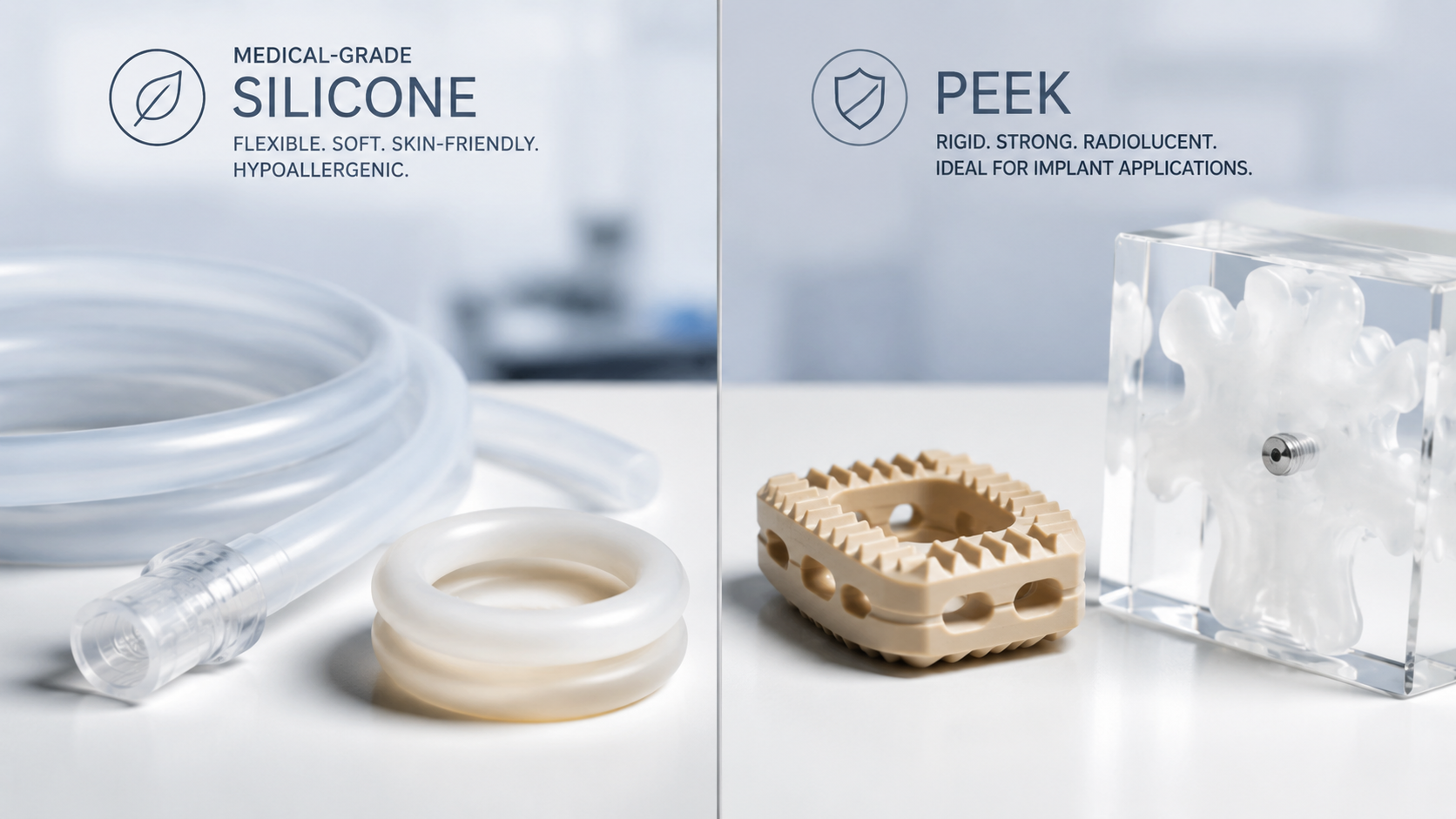
When I look at biocompatibility, I don’t just look at a datasheet. I think about where the part goes in the body. Some parts stay on the skin, and some go deep into the bone. This is why we divide materials by their "contact duration." Short-term contact allows for more options, but long-term implants require very strict standards like ISO 10993.
I often see designers struggle between flexibility and safety. For example, if you need a seal that touches skin, Silicone is the winner because it is hypoallergenic. But if you are making a spinal cage, PEEK is the only way to go. It does not trigger an immune response and lets X-rays pass through so doctors can see the healing process.
| Material | Biocompatibility Level | Common Use Case | Key Benefit |
|---|---|---|---|
| Silicone | Excellent (Soft) | Catheters, Tubing | Flexibility & Inertness |
| PEEK | Excellent (Hard) | Orthopedic Implants | Bone-like Strength |
| TPU | Good | Wearables, Seals | Abrasion Resistance |
| PP | Fair/Good | Syringes, Labware | Chemical Stability |
What is the best material for injection molding?
Picking a general "best" material is hard because every project has different goals. Choosing based on a trend rather than specs leads to costly mold redesigns later.
There is no single best material, but PEEK and PPSU are leaders for high-performance medical parts. For low-cost, disposable items, Polypropylene (PP) is the best choice due to its balance of cost, safety, and ease of molding.
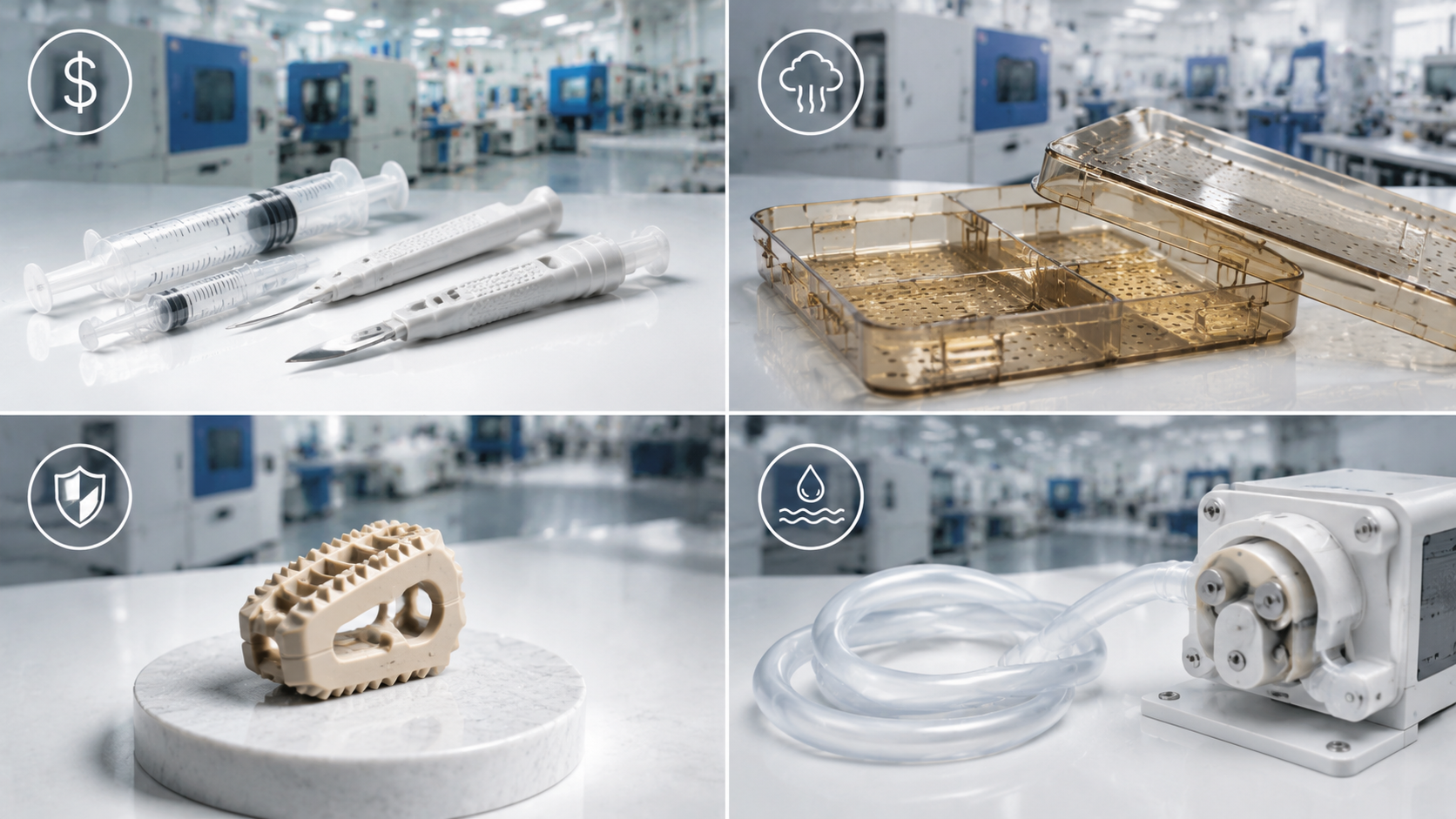
In my experience at KENVOX, I see that "best" usually means "best for the budget and the function." If you are making a disposable surgical tool, using PEEK is a waste of money. You need something like Polypropylene or ABS. These materials flow well in the mold and keep costs low for high-volume runs.
However, if the part must survive an autoclave (high heat and pressure), the game changes. I always suggest PPSU (Polyphenylsulfone) for reusable surgical trays. It can handle thousands of sterilization cycles without cracking or changing color. Many designers forget about "environmental stress cracking." This is where a material looks strong but fails after touching a cleaning chemical. We test for this early in the design phase to avoid failures in the field.
| Application | Recommended Material | Why? |
|---|---|---|
| Disposable Tools | Polypropylene (PP) | Low cost, easy processing |
| Sterilizable Trays | PPSU | Heat resistance, durability |
| Surgical Implants | PEEK | Bio-inert, high strength |
| Fluid Delivery | Medical Silicone | Flexibility, non-reactive |
Are aluminum injection molds better than steel?
Using the wrong mold metal can lead to parts that warp or molds that wear out too fast. This results in wasted material and missed deadlines.
Aluminum molds are better for prototyping and low-volume runs because they are cheaper and faster to make. Steel molds are superior for mass production because they offer much higher durability and a longer tool life.
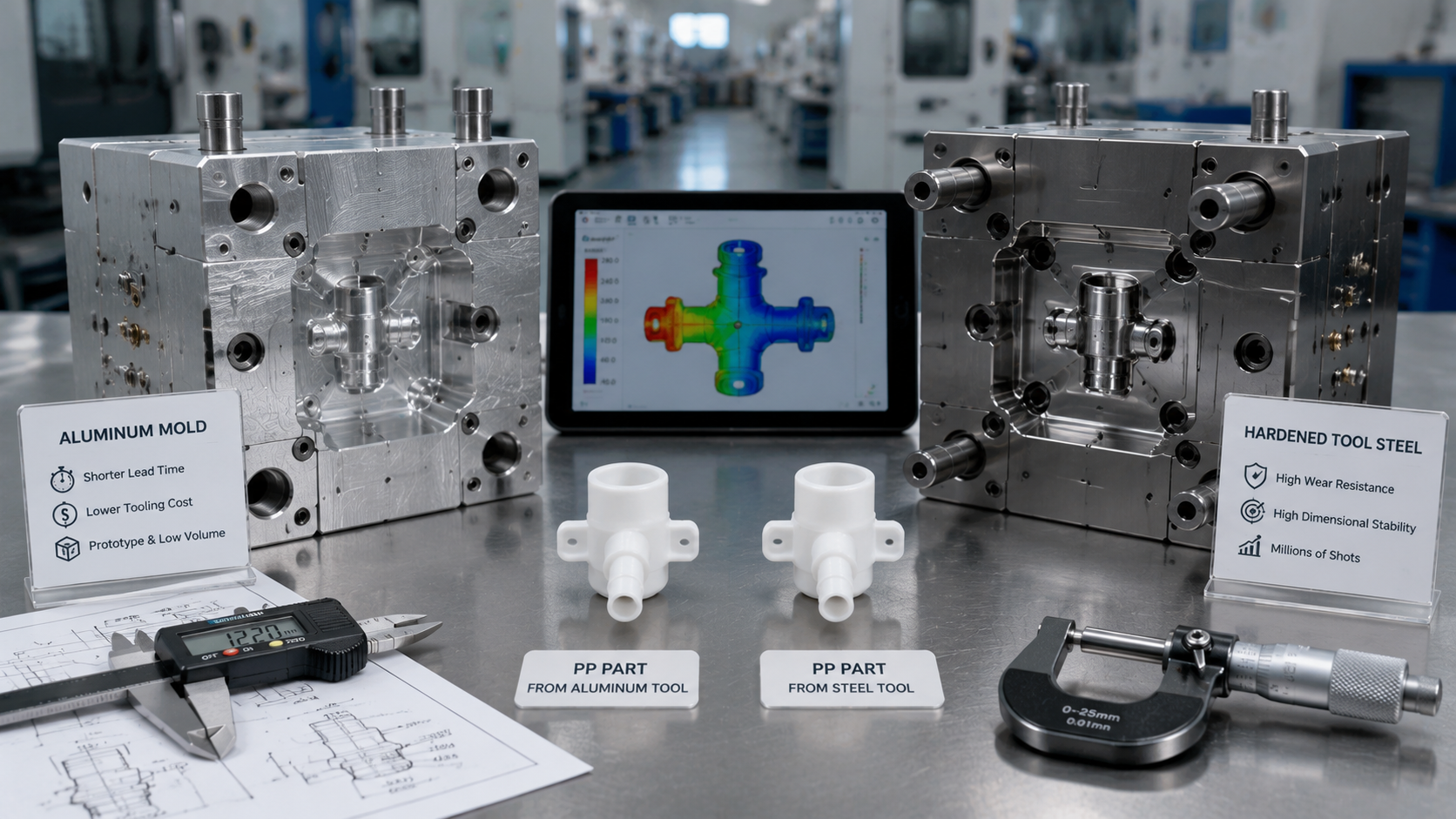
I often have conversations with engineers who want to save money by using aluminum. I tell them it depends on the "shot count." If you only need 1,000 parts for a clinical trial, aluminum is great. It cools faster, which means shorter cycle times and faster delivery. At our factories in Dongguan and Shenzhen, we use aluminum when the client needs a quick turn-around to test a concept.
But if you are going for millions of units, aluminum will wear down. The edges get dull, and the surface finish fades. That is where hardened steel comes in. Steel can handle the abrasive nature of glass-filled medical plastics. If I see a design with very tight tolerances or deep ribs, I always push for steel. It keeps the dimensions stable over years of production.
| Feature | Aluminum Molds | Steel Molds |
|---|---|---|
| Cost | Lower | Higher |
| Lead Time | Fast | Slower |
| Tool Life | Low (Thousands) | High (Millions) |
| Thermal Conductivity | High (Fast Cooling) | Moderate |
| Precision | Good | Excellent |
Is polypropylene better than ABS for injection molding?
Choosing between PP and ABS often leads to parts that are either too brittle or too soft. This mismatch ruins the user experience and product feel.
Polypropylene (PP) is better for applications requiring chemical resistance, flexibility, and sterilization safety. ABS is better when you need high impact resistance, a glossy finish, and a rigid structure.
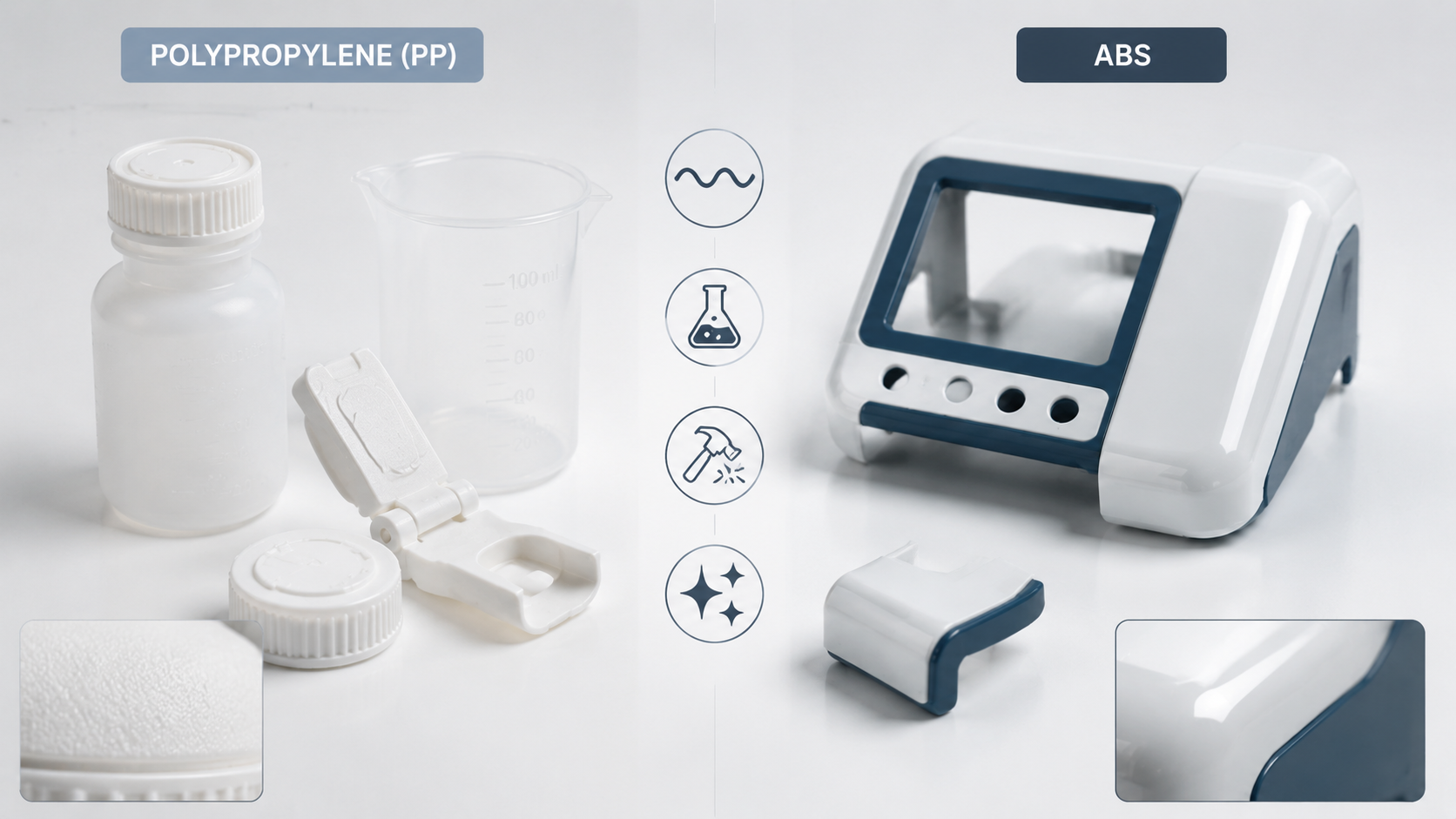
I have worked on many housings for medical devices where this choice comes up. ABS is my go-to for the outer shell of a diagnostic machine. It feels solid in the hand and takes paint or textures very well. But there is a catch. ABS can degrade if it touches certain medical disinfectants. This is why I often suggest a blend or a coating if the device will be wiped down daily.
On the other side, Polypropylene is like the "workhorse" of the medical world. It is launderable and resists almost all chemicals. If you are making a cap for a medicine bottle or a plastic syringe, PP is the only choice. The main struggle with PP is that it shrinks more than ABS. I spend a lot of time with my R&D team calculating shrinkage rates to make sure the parts fit together perfectly.
| Property | Polypropylene (PP) | ABS |
|---|---|---|
| Rigidity | Low (Flexible) | High (Stiff) |
| Chemical Resistance | Excellent | Moderate |
| Surface Finish | Matte/Waxy | Glossy/Smooth |
| Impact Strength | Moderate | Very High |
| Sterilization | Good | Limited |
Conclusion
Choosing the right medical material depends on biocompatibility, sterilization needs, and volume. Balance your budget with safety to ensure a successful, durable medical product.