


What Makes a Top-Selling Silicone Baby Bib? Product Info, Reviews & Mold Design Guide?
Last month, a brand owner from California visited our factory in Dongguan. She held a sample bib in her hand. "This is exactly what I was looking for," she said. She placed an order for 10,000 units that same week. That is the power of getting the product right.
A top-selling silicone baby bib succeeds through food-grade material, a practical spill-catching design, and precise mold control—not just how it looks. The winning formula combines a soft, safe silicone body, a wide pocket that actually stays open, and a fastener that won’t irritate a baby’s neck. Getting these right starts with the mold.
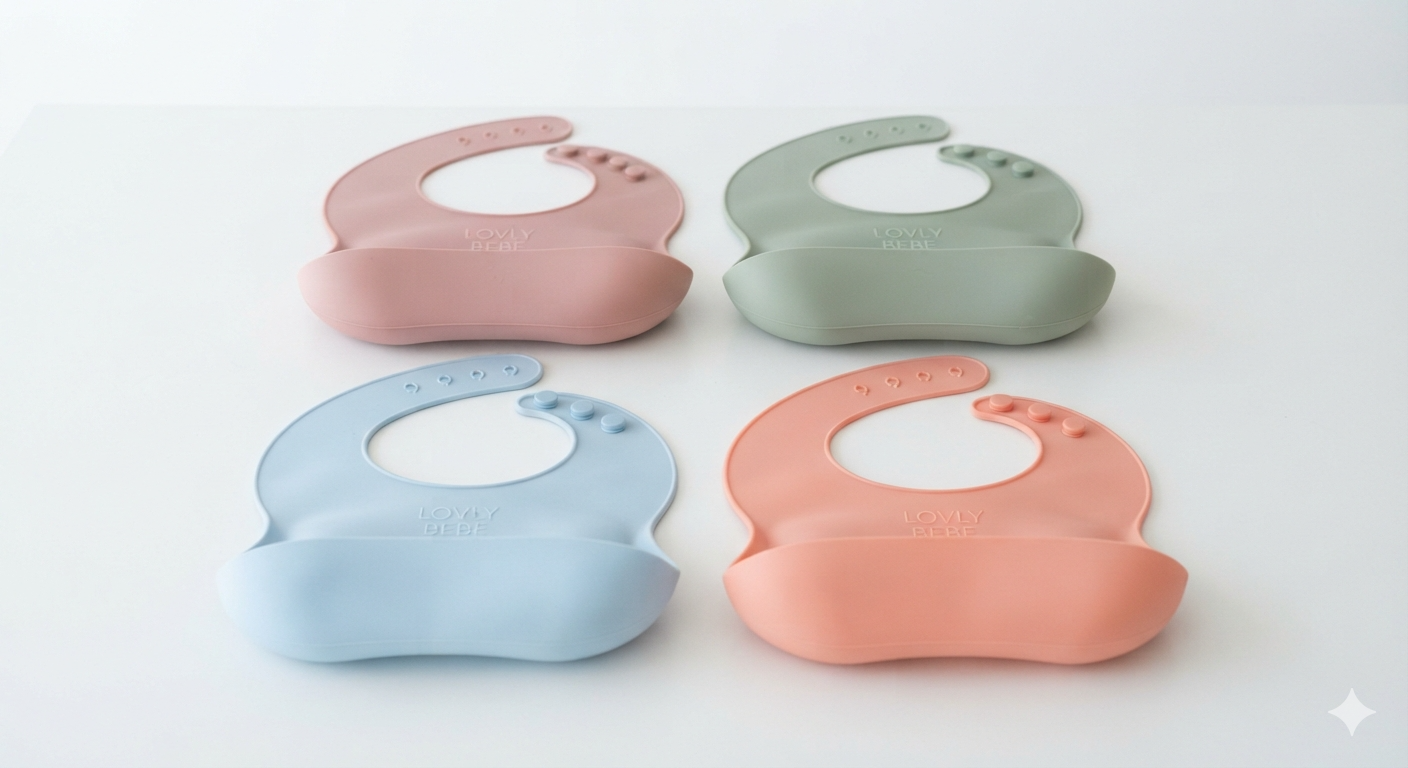
1. What Key Product Features and Materials Turn a Silicone Baby Bib into a Top Seller?
Parents buy safety and convenience. They see a cute design. They feel the material. Then they make a choice. If the bib is stiff, has weak snaps, or a pocket that flops shut, they will not buy it again. I have seen beautiful bibs fail because the mold did not allow for enough flexibility at the neck.
The best-selling features are 100% food-grade silicone, an adjustable and soft closure, and a stay-open crumb catcher pocket. These elements solve the real daily problems of feeding a messy baby. They make cleanup fast for the parent and comfortable for the child.
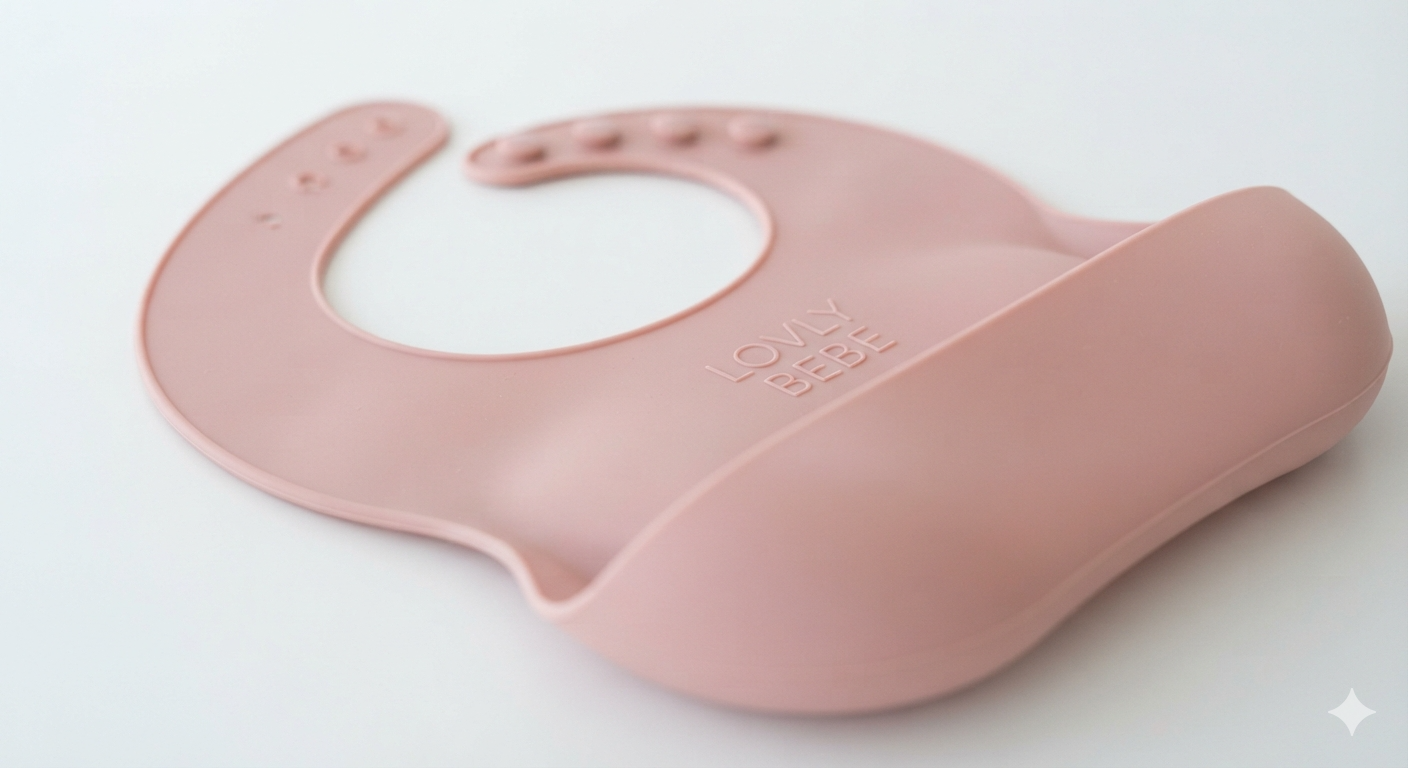
Let us break down what truly matters in the product.
Dive Deeper: Material and Design Features
The material is the foundation. Food-grade silicone (platinum-cured) is the standard for top products. It is free of BPA, PVC, and phthalates. It does not hold odors. It is easy to clean in a dishwasher. The Shore A hardness of the silicone is critical. Too soft, and the pocket collapses. Too hard, and it is uncomfortable for the baby. We aim for a Shore A of 30-40.
The design must be functional. The neck opening needs a range of adjustment, usually through a series of buttonholes or a sliding tab. The pocket must be engineered to stay open. This is a direct result of the mold’s parting line and the thickness of the silicone around the lip.
Here is a simple comparison of materials:
| Feature | Food-Grade Silicone | PVC | Polyester Fabric |
|---|---|---|---|
| Safety | Highest (FDA/LFGB) | Often contains additives | Varies, can treat with chemicals |
| Cleaning | Wipe, rinse, or dishwasher | Wipe clean, can stain | Machine wash required |
| Durability | Very high, no cracking | Can degrade and crack | Can wear and stain |
| Comfort | Soft and flexible | Stiffer | Soft but absorbs liquids |
| Mess Containment | Excellent with molded pocket | Good | Poor, absorbs spills |
2. What Do Real Customer Reviews Reveal About Performance, Safety, and Everyday Use?
I read reviews on Amazon and Target for a week. I looked for patterns. The five-star reviews often mentioned "easy to clean" and "my baby doesn’t fuss wearing it." The one-star reviews complained about "snaps breaking," "mold in the neck crevices," and "colors rubbing off." The feedback is direct and valuable.
Customer reviews show that performance means easy cleaning, the silicone stays soft after many washes, and the fastener is gentle on skin. They also reveal that safety is assumed until it is not—a chemical smell or a rash will generate a return and a bad review instantly.

The reviews are a free focus group. They tell you where the design failed and where it succeeded in daily life. You can use this data to improve your next product version.
Dive Deeper: Translating Reviews into Design Improvements
Let us analyze common review complaints and their root causes in mold design.
Complaint 1: "The pocket doesn’t stay open." This is a geometry issue. The mold design must create a pocket with a slight outward curve or a reinforced rim. The wall thickness needs to be sufficient at the lip to hold its shape. A parting line that runs through the middle of the pocket will create a stiff crease that helps it stay open.
Complaint 2: "Mold grows in the folds." This happens when the design has deep, narrow grooves that are hard to clean. The mold should have generous radii in all corners. Sharp internal corners in the mold trap water and bacteria. Smoothing these in the CAD model and the final mold prevents this.
Complaint 3: "The neck snaps are too hard to use or break." The snaps are often made of the same silicone. If the snap button geometry is not precise, it will be difficult to fasten. If the material is not durable enough, it will tear. The mold for the snap button must be highly precise, and the material must be tested for thousands of cycles.
3. How Should You Approach Mold Design and Manufacturing for High-Quality Silicone Baby Bibs?
Designing the bib is one thing. Manufacturing it perfectly is another. I once approved a bib design that looked great on screen. The first mold trial produced bibs with a flash line so sharp it could scratch a baby. We had to rework the mold’s parting line and venting. The mold is the machine that makes the product. It must be perfect.
Approach mold design by focusing on parting lines to hide seams, venting to prevent air traps, and precise geometry for features like snaps and pockets. For silicone, you must account for the material’s flow and compression characteristics, which are different from plastic.
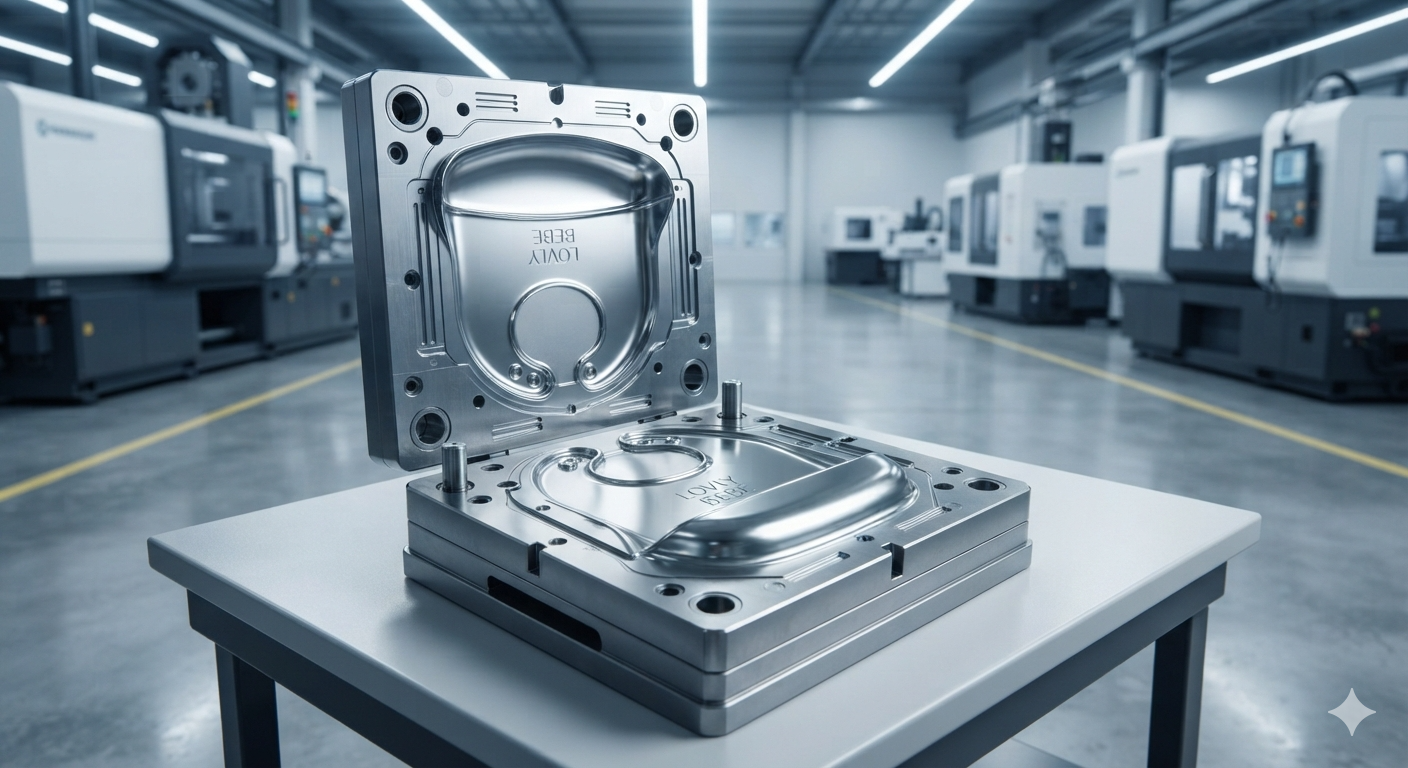
The process from design to production mold follows key steps. We will look at the critical design choices for the mold.
Dive Deeper: Mold Design and Production Considerations
Silicone compression molds differ from plastic injection molds. The mold is typically made from hardened steel (like P20 or H13). The cavity is designed for the silicone compound to be placed in as a pre-form, then compressed and cured with heat.
Key design elements include:
Parting Line Placement: The parting line is where the two mold halves meet. It creates a thin seam (flash) on the part. For a bib, you want the parting line to be along the outer edge, not across the middle of a smooth surface. A well-placed parting line can also help shape the crumb catcher pocket.
Venting: Air gets trapped in the cavity as the silicone flows. Tiny vents (0.01-0.02mm) are cut into the mold to let air escape without letting silicone through. Poor venting causes incomplete fills or burn marks.
Texture and Finish: The mold surface finish is transferred to the silicone. A smooth finish is easy to clean. A light texture can hide minor imperfections but must be shallow enough to clean easily.
Shrinkage and Tolerance: Silicone shrinks slightly after curing. The mold maker must scale the cavity dimensions to account for this, typically 2-3%. All features, especially the snap buttons, must be designed with tight tolerances.
The manufacturing process flow is:
- Mold Design & DFM: Final 3D model, material selection, parting line design.
- Mold Machining: CNC milling of cavity and core, EDM for sharp details.
- Mold Trial (T0): First shots to test fill, flash, and dimensions.
- Sample Approval: Client approves the golden sample.
- Mass Production: Compression or LSR injection molding with QC checks.
Conclusion
A top-selling silicone bib is born from smart material choice, user-focused design, and expert mold engineering. These three elements work together to create a safe, durable product that parents trust and babies tolerate.
About Me
KENVOX INDUSTRIAL (HONGKONG) CO., LTD is a Hong Kong–based contract manufacturing group (est. 1989) focused on plastic, silicone, and metal tooling and finished parts, with OEM/ODM, design support, and one-stop turnkey project delivery from concept through mold, production, secondary processes, assembly, packaging, and export logistics. The group operates wholly owned and partner facilities in Dongguan, Huizhou, Shenzhen (commercial/engineering), and Vietnam (plastic, silicone, and precision metal), and promotes primarily as a manufacturer platform rather than a generic trading broker. Website: www.kenvox.com.