


Injection molding versus 3D printing: which is better for producing durable plastic parts at scale?
Are you struggling to choose between 3D printing and injection molding for high-volume parts? Picking the wrong process leads to broken parts and blown budgets. Here is how you solve it.
For producing durable plastic parts at scale, injection molding is clearly the better choice. It delivers isotropic strength, lower piece costs past 1,000 units, superior surface finishes, and rapid cycle times. 3D printing excels for prototypes and low volumes, but it cannot match injection molding in large-scale production.
I have spent ten years designing plastic components for consumer electronics, and I see teams get stuck on this decision every month. Let us break down the real trade-offs so you can protect your timeline and your bottom line.
Can 3D printing be as strong as injection molding?
Weak 3D printed parts often fail during field tests, which delays your market launch. Layer line delamination causes constant headaches for engineers. You can prevent these mechanical failures right now.
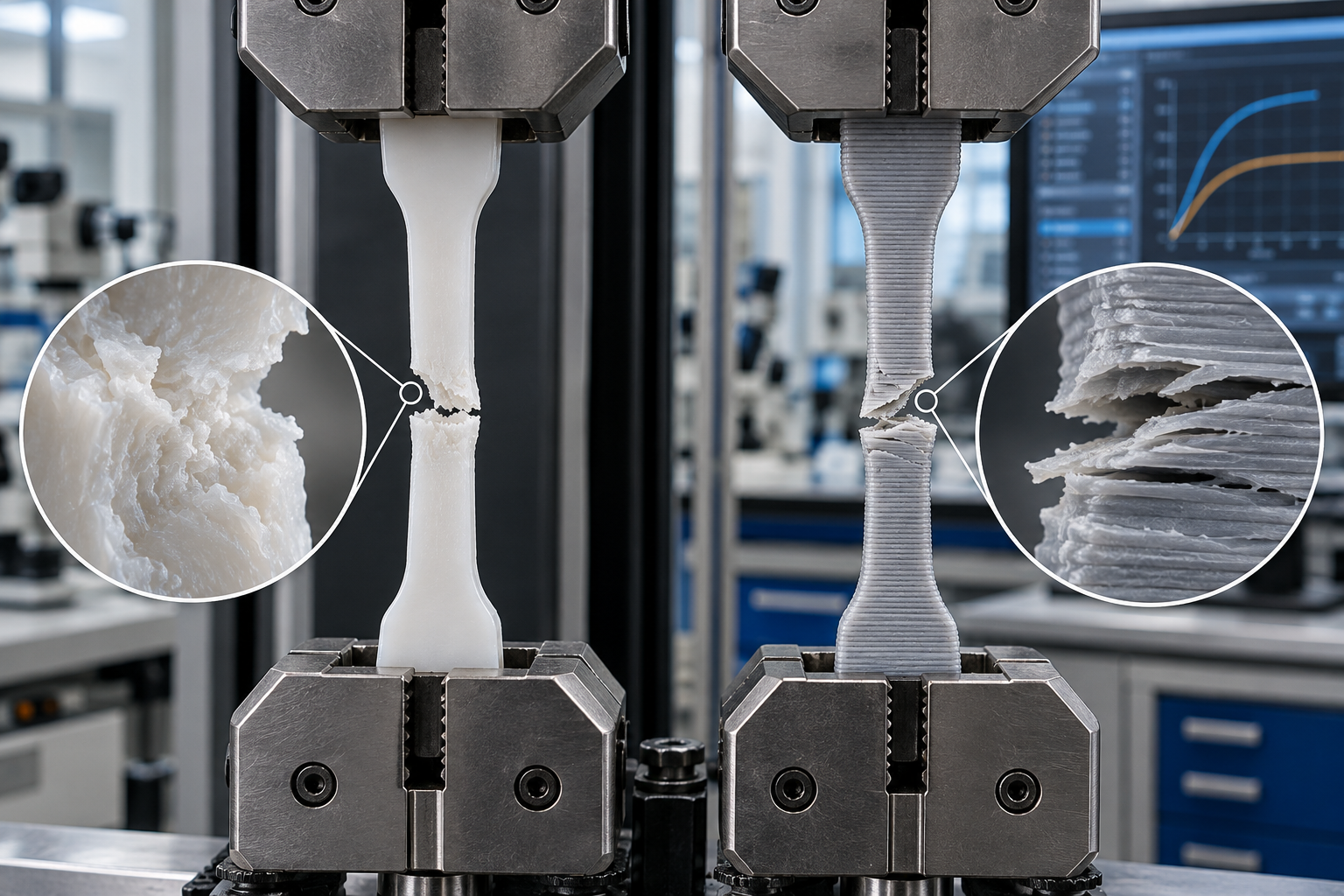
3D printing can approach the strength of injection molding only along specific axes when using high-performance polymers like PEEK or carbon fiber. However, 3D printed parts have anisotropic weakness between build layers. Injection molded parts have uniform, isotropic strength in all directions, making them consistently stronger under real-world loads.
Understanding Isotropic vs Anisotropic Behavior
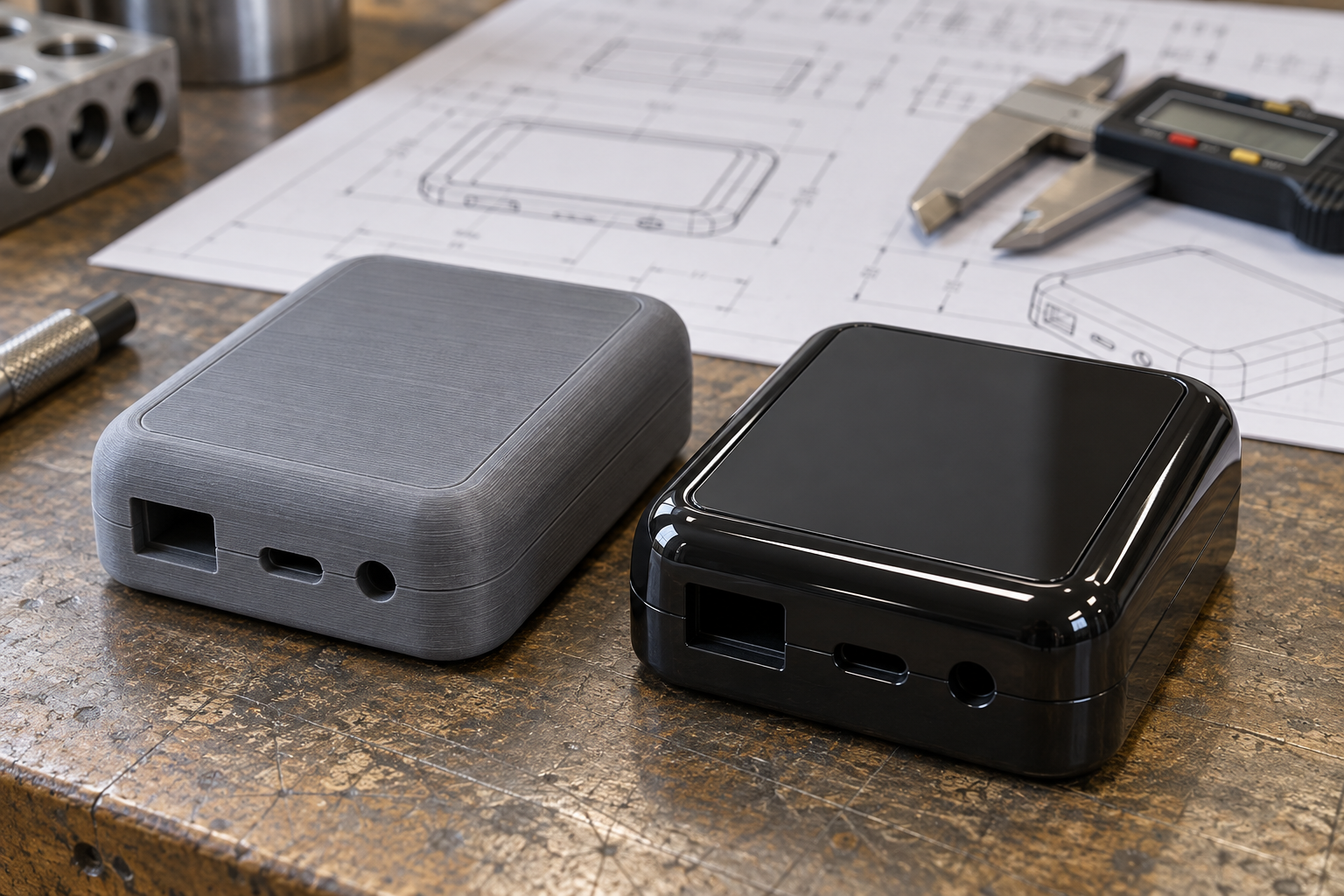
In my early years as a mold designer, I watched a prototype housing snap along its print layers during a basic drop test. That failure taught me an essential lesson about molecular structure. When you melt thermoplastic pellets and shoot them into a steel mold cavity under tons of pressure, the polymer chains bond homogeneously. The resulting part has isotropic strength, meaning its mechanical properties stay uniform no matter which direction the stress comes from.
3D printing builds parts slice by slice. Even advanced powder bed systems like SLS or MJF suffer from reduced Z-axis tensile strength compared to their X-Y planes. When your product faces multi-axis fatigue, impact, or cyclic vibration in consumer hands, those print boundaries become microscopic fault lines.
| Performance Metric | Injection Molding | 3D Printing (FDM / SLS / MJF) |
|---|---|---|
| Tensile Uniformity | Fully isotropic across all axes | Anisotropic with weaker Z-axis bonding |
| Impact Resistance | High and repeatable | Medium to low; sensitive to print orientation |
| Material Density | Solid, void-free core | Micro-voids and porosity between beads |
| Engineering Resin Access | Thousands of standard and custom resins | Limited selection of specialized filaments and powders |
| Long-Term Fatigue Life | Exceptional under continuous mechanical load | Prone to stress cracking along thermal boundaries |
If you need a functional part to withstand genuine drop impacts and continuous load, you cannot beat the unified density of a molded plastic part.
What are three disadvantages of injection molding?
High upfront costs and long lead times can paralyze a new hardware project before it begins. One small design flaw can waste thousands of dollars in tooling. Here is the reality.
The three main disadvantages of injection molding are high upfront tooling expenses, long initial lead times for mold fabrication, and rigid design limitations that make post-production modifications slow and costly. These factors make injection molding risky and impractical for low-volume production or unfinalized product designs.
Breaking Down the Trade-offs of Tooling
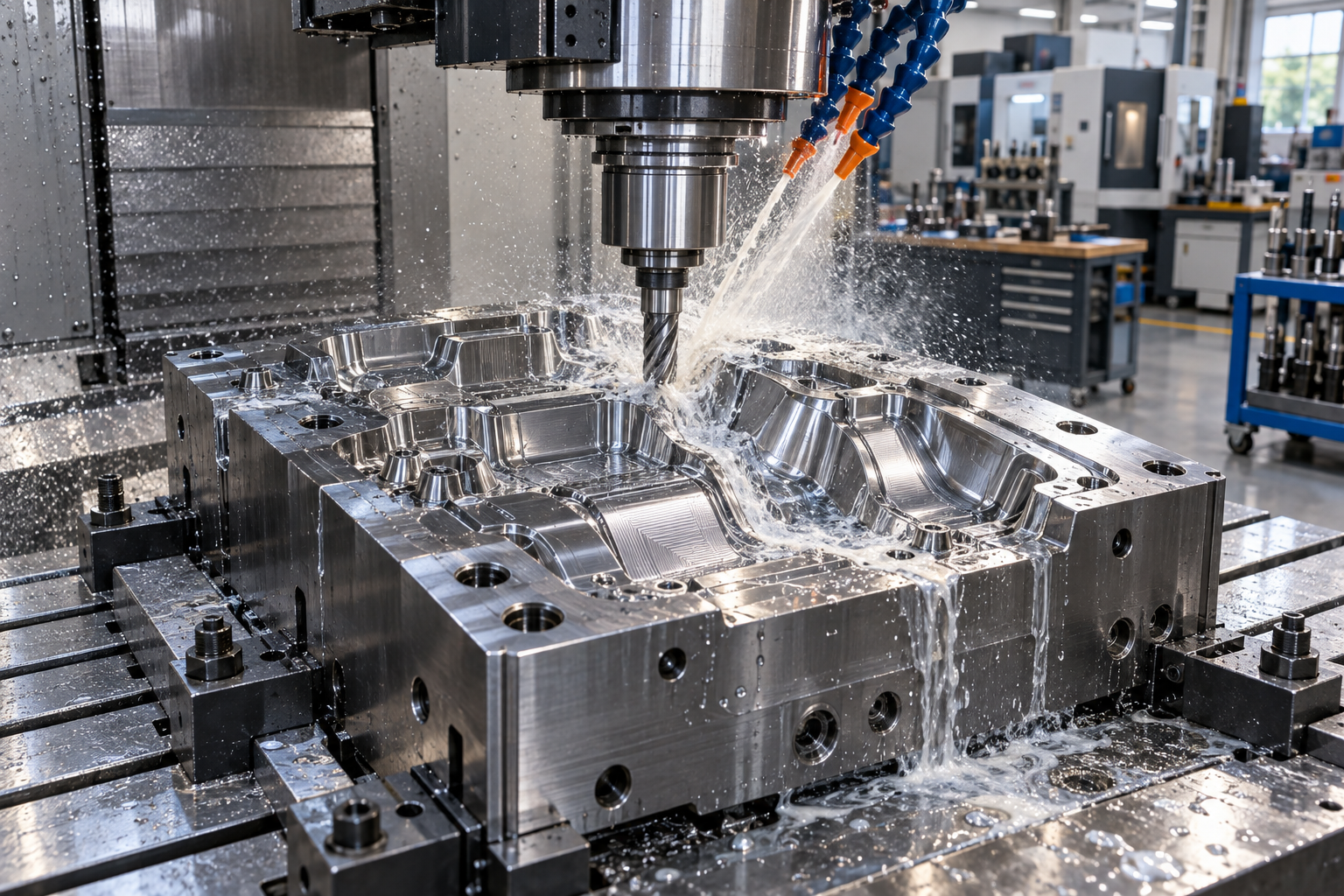
Tooling is a serious financial commitment. Early in my career, our team rushed a CAD model into steel cutting without a full DFM review, and correcting that tool cost us three weeks and thousands of dollars. A high-grade production mold machined from hardened steel or aluminum requires precision CNC milling, EDM cutting, and polishing. That setup routinely costs between $5,000 and $50,000 before you produce a single good part.
Lead times are also substantial. Fabricating, assembling, and testing a tool takes anywhere from four to twelve weeks. During that window, your project sits in limbo.
| Disadvantage Factor | Practical Impact on Projects | Mitigation Strategy |
|---|---|---|
| High Upfront Capital | Steel tooling requires thousands of dollars in initial investment | Use aluminum rapid tooling or bridge runs to cut initial cash outlays |
| Extended Lead Times | Tool fabrication takes several weeks before first shots | Complete extensive DFM reviews early to eliminate mold trial delays |
| Design Inflexibility | Modifying steel tooling is difficult and expensive once cut | Validate all clip features and wall thicknesses with functional prints first |
| Geometry Constraints | Parts must include draft angles and avoid severe undercuts | Work directly with tooling engineers to plan lifters and side actions early |
Because of these realities, you must freeze your design completely before you authorize steel cutting.
What is the most profitable item to 3D print?
Wasting print time on cheap commodity items ruins your shop margins and burns expensive machine hours. Low-value prints will drain your operational budget quickly. You can focus your printers on higher profits.
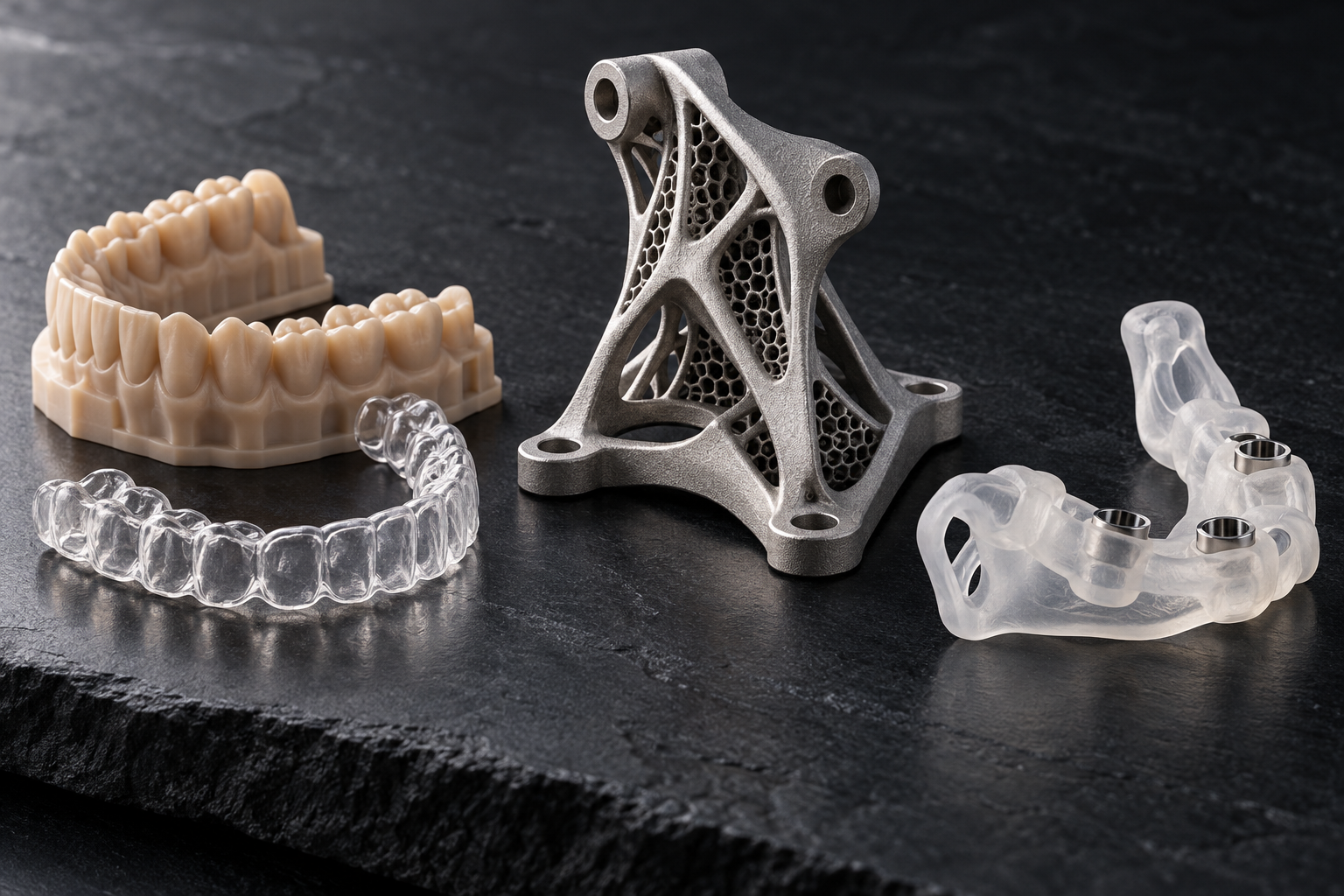
The most profitable items to 3D print are low-volume, highly customized, complex parts with urgent demand, such as custom medical orthotics, patient-matched surgical guides, dental aligner models, aerospace brackets, and bespoke drone airframes. These items command high prices because they eliminate tooling costs and offer immediate delivery.
Finding High-Margin Additive Niches
I once helped a medical device client who needed twenty specialized surgical guides per month. Creating an injection mold for that tiny volume was financially impossible. We turned to industrial 3D printing and achieved exceptional margins because the buyer cared about patient-specific geometry, not mass production economies of scale.
3D printing becomes wildly profitable when the cost of making a physical tool exceeds the customer’s budget, or when the geometry is too complex for traditional machining. Organic internal channels, topological optimization, and lightweight lattice structures cannot be molded easily, yet additive machines build them with zero tooling overhead.
| Profitable Item Category | Primary Value Driver | Target Market / Application |
|---|---|---|
| Custom Dental & Orthotics | Perfect patient fit with zero setup retooling | Dental clinics and orthopedic rehabilitation centers |
| Aerospace Ducting & Brackets | Weight savings via complex internal hollows | Drone manufacturers and defense tier-two suppliers |
| On-Demand Replacement Spares | Rapid supply chain bypass for obsolete systems | Industrial machinery repair and vintage car restoration |
| Factory Assembly Jigs | Ergonomic customization for assembly lines | Manufacturing plants and automated production cells |
Do not print simple plastic boxes to sell at retail. Print high-complexity components that customers need within forty-eight hours.
What is illegal to 3D print?
Legal penalties and regulatory fines can shut down your manufacturing operations overnight if you cross compliance boundaries. Ignorance of regional product laws will not protect your company. Learn these critical red lines.
It is illegal to 3D print untraceable firearms, functional weapon components without a licensed manufacturer status, patented or trademarked commercial products without authorization, and regulated medical implants that lack statutory clearance. Producing counterfeit consumer goods also violates federal intellectual property laws and carries heavy criminal penalties.
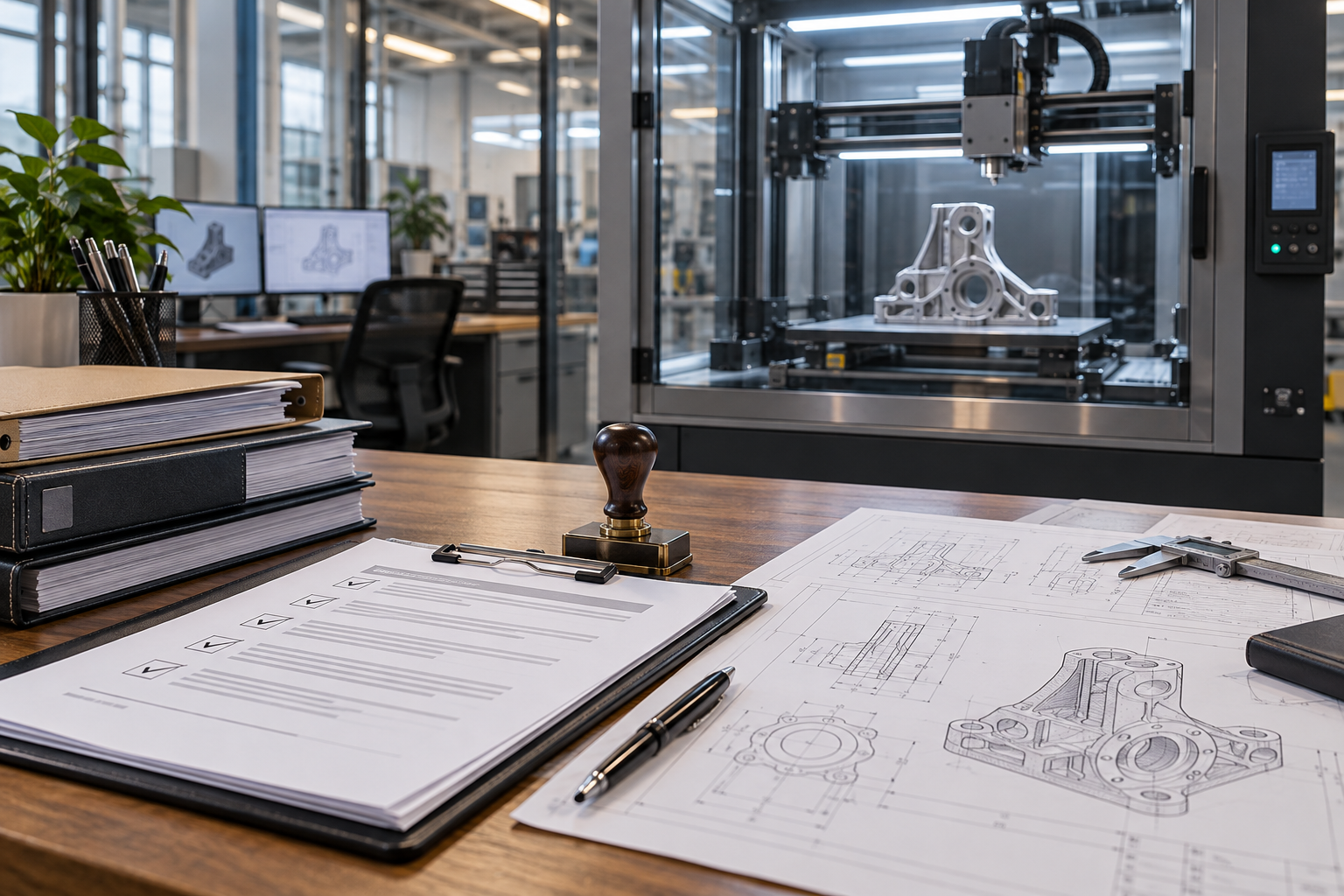
As manufacturing professionals, we must know where creative freedom ends and legal liability begins. In my day-to-day work, our engineering team regularly checks patent databases to make sure our CAD files do not infringe on existing utility designs. 3D printing makes copying physical shapes effortless, but scanning a competitor’s part and printing it for commercial sale constitutes direct patent and trademark infringement.
Firearms are the most strictly enforced category worldwide. Printing receivers or firearm frames without an official manufacturer license violates strict national firearm statutes in most countries. Medical hardware is equally regulated; selling printed spinal implants or respiratory parts without health agency approvals can trigger severe criminal charges.
| Restricted Category | Governing Legal Issue | Real-World Compliance Risk |
|---|---|---|
| Undetectable Firearms | Weapon control laws and gun manufacturing statutes | Severe criminal prosecution and asset seizure |
| Patented Hardware Parts | Intellectual property and patent infringement | Civil litigation, injunctions, and financial damages |
| Counterfeit Branded Goods | Trademark theft and commercial counterfeiting | Customs confiscation and trademark owner lawsuits |
| Unapproved Medical Devices | Healthcare regulatory safety violations | Product liability lawsuits and medical authority bans |
Always confirm IP rights and industry certifications before you load print jobs onto commercial machines.
Conclusion
Injection molding wins for large-scale durable parts, while 3D printing excels for prototypes and low-volume custom designs. Pair both processes smartly to launch strong products within budget.
My Role
About me
Brand Name: Kenvox
Slogan: Just show us your design or idea, Kenvox will return you a perfect finished product!
Website: www.kenvox.com
Our Mission:
Kenvox is a knowledge-sharing platform dedicated to helping anyone interested in mold design and manufacturing gain a deeper understanding of the craft. Our goal is to make mold knowledge accessible to all, from beginners to seasoned professionals.
KENVOX INDUSTRIAL (HONGKONG) CO., LTD is a Hong Kong–based contract manufacturing group (est. 1989) focused on plastic, silicone, and metal tooling and finished parts, with OEM/ODM, design support, and one-stop turnkey project delivery from concept through mold, production, secondary processes, assembly, packaging, and export logistics. The group operates wholly owned and partner facilities in Dongguan, Huizhou, Shenzhen (commercial/engineering), and Vietnam (plastic, silicone, and precision metal), and promotes primarily as a manufacturer platform rather than a generic trading broker. Website: www.kenvox.com.
Services Offered:
- Product & engineering design: Component design, reverse engineering, DFM/DFMA, tooling/fixture/gauge design, and drawing refinement for manufacturability.
- Prototyping: CNC prototypes (plastic/metal), silicone sample molds, silicone overmolding for small plastic prototype runs, and engineering/appearance validation before production tooling.
- Injection mold design & manufacturing: Plastic injection molds (including gas-assisted, insert, precision, and two-shot / overmolding), plus related mold flow analysis and DFM reporting.
- Custom manufacturing — plastic: High- and low-volume injection molding, dual-color injection, overmolding, insert molding; support for clean-room medical molding (up to Class 10,000 where applicable).
- Custom manufacturing — silicone: Compression molding, LSR (liquid silicone) injection, dispensing/epoxy, and related finished silicone parts.
- Custom manufacturing — metal: CNC machining, die casting, stamping (sheet metal), and coordinated metal supply through JV/partner metal operations.
- Secondary processing & assembly: Silk screen and pad printing, laser engraving, painting/UV coating, sand blast texturing, vacuum plating, ultrasonic welding, simple structural assembly, and coordination of anodizing, electroplating, powder coating, and other outsourced finishes.
- Supply chain & project operations: Sourcing of related components (electronics/EMS, packaging, standard parts, wood/glass/textiles via vetted suppliers), warehousing, multi-destination shipping, and testing/certification coordination (e.g. CE, FCC, UL, FDA, LFGB as required by product/market).
Certifications and Quality Assurance:
KENVOX operates under ISO 9001, IATF/TS 16949 (automotive quality), and ISO 14001, with incoming-to-outgoing QC, dedicated QA resources, and ERP-backed documentation and traceability for molds and production.
Team and Communication:
Sales and project staff are positioned for direct English communication with overseas clients; foreign-trade engineers typically bring 10+ years of industry experience, with appointed project leaders per case for faster quotations (streamlined internal approval vs. typical factory hierarchies), online technical reviews, and ongoing follow-up through mold trials (T0/T1…), golden samples, and mass production.
Production Capabilities:
Group scale (figures vary by document/year—use ranges when speaking to customers): roughly 600–1,300+ employees, ~30,000–40,000+ m² manufacturing footprint, 70–80% export orientation. Plastic injection capacity includes 190+ injection machines (about 75–1,000 ton class across the network, with dual-color capability and partner access to ~1,000 ton machines), 1300+ tons/year plastic processing capacity cited for major plastic sites, and 60+ silicone-related machines (compression, transfer, LSR, dispensing). Mold shop highlights include high-speed CNC (e.g. Mikron), EDM / mirror EDM, slow-wire EDM, grinding, and CMM measurement; Huizhou-scale plastic operations cite on the order of ~400 molds/year and ~5,000 T injection parts (site-dependent).
Global Reach:
Primary markets: North America, South America, Western/Eastern Europe, East Asia, Middle East, and Australia, with reference customers/brands including CASIO, BROTHER, BBK, KINPO, LADA, and automotive/industrial names (e.g. VAZ, GAZ). U.S. sales support is referenced (California); European branch is planned rather than fully established. KENVOX targets mid-to-high-end buyers—especially industrial/product design firms, brand owners, contract manufacturers/assemblers, sourcing firms, and regional mold shops subcontracting to China/Vietnam—who value turnkey execution, dual-material molding, medical/clean-room options, and responsive project management over lowest-unit-price-only sourcing.