


Automotive Injection Molding: Quality Control and PPAP Essentials under IATF 16949
KENVOX (Kenvox Industrial), founded in 1989, holds ISO 9001, ISO 13485, and IATF 16949 certifications, operates production bases in Shenzhen and Dongguan, China, as well as Vietnam, and runs 190+ injection molding machines. We provide precision molding for automotive electronics, interior, and functional components. The biggest difference between automotive molded parts and standard consumer parts is not “whether they can be made,” but whether they can be delivered stably, verifiably, and repeatably under an IATF 16949 system. This article, written for purchasing and SQE/project engineering teams, outlines the priorities of automotive-grade quality control and the key points for PPAP preparation.
Note: IATF 16949 is an automotive supplement to ISO 9001, emphasizing defect prevention, variation reduction, and waste reduction. The specific PPAP level, submission content, and acceptance criteria follow the customer’s APQP/PPAP manual and the purchasing contract.

1. Three Core Controls for Automotive-Grade Molding
1.1 Traceability: Traceable from Pellets to Vehicle Installation
- Material batch, mold number, machine, process version, operator, and inspection records are linked and traceable per batch.
- Key resin grades and masterbatches are managed under approved supplier lists; unauthorized material substitution is prohibited.
- When a quality issue occurs, the affected scope can be isolated and contained through the shortest path.
1.2 Variation Control: Make Every Batch Close to the Same Level
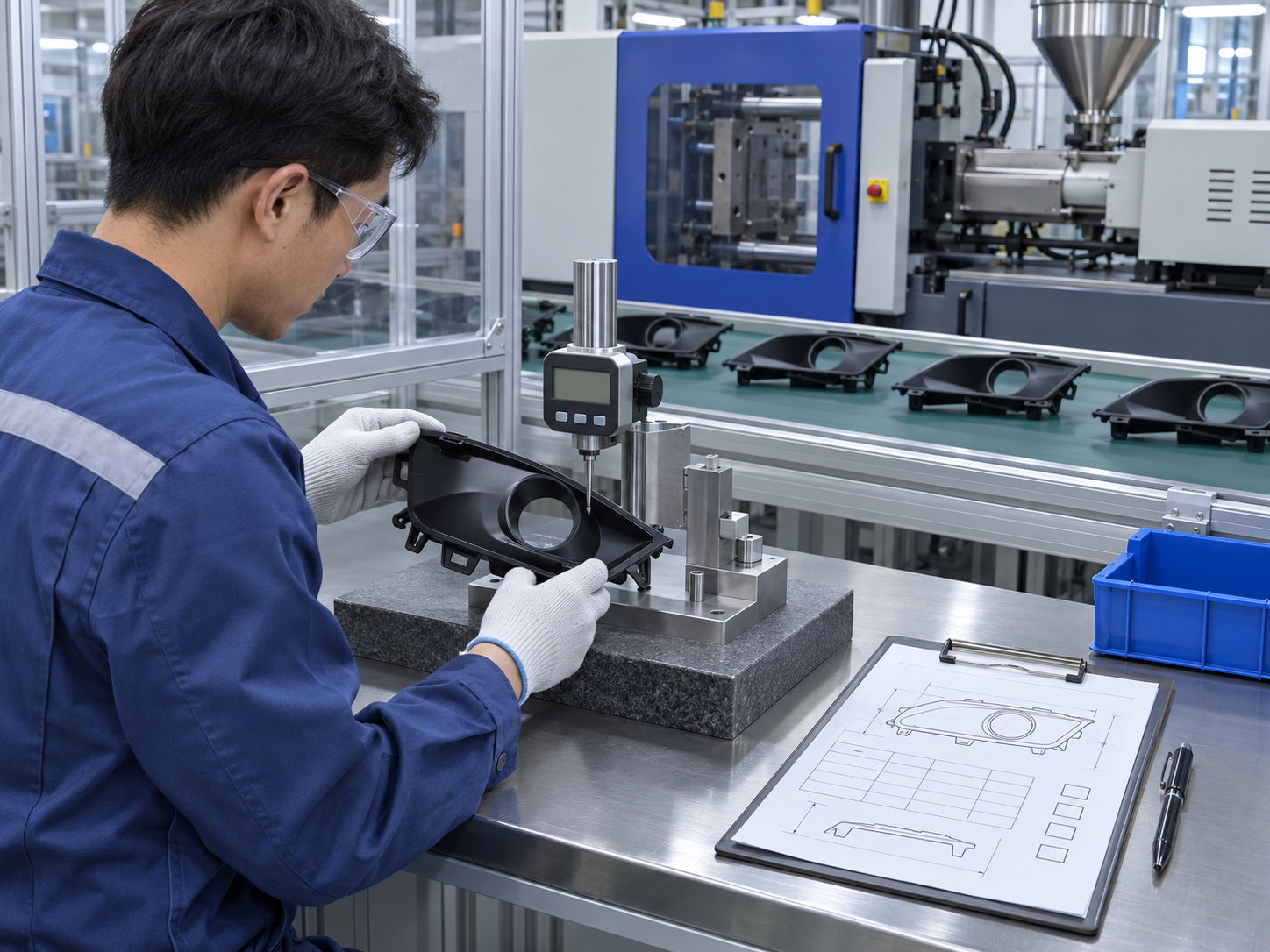
- Key dimensional and cosmetic characteristics are brought into SPC (Statistical Process Control) to monitor mean and variation.
- The molding process window is locked during trial molding; mass production follows the control plan to reduce human tuning differences.
- Mold maintenance, tooling calibration, and equipment checks are included in preventive plans to reduce sudden variation.
1.3 Defect Prevention: Intercept Issues Before They Occur
- APQP (Advanced Product Quality Planning) moves risk identification earlier into the design and tooling stages.
- Mold DFM, mold-flow analysis, and trial validation are used to expose risks such as sink marks, flash, weld lines, and warpage in advance.
- FMEA (Failure Mode and Effects Analysis) identifies failure paths and controls for key characteristics.
2. PPAP Preparation Essentials (Supplier View)
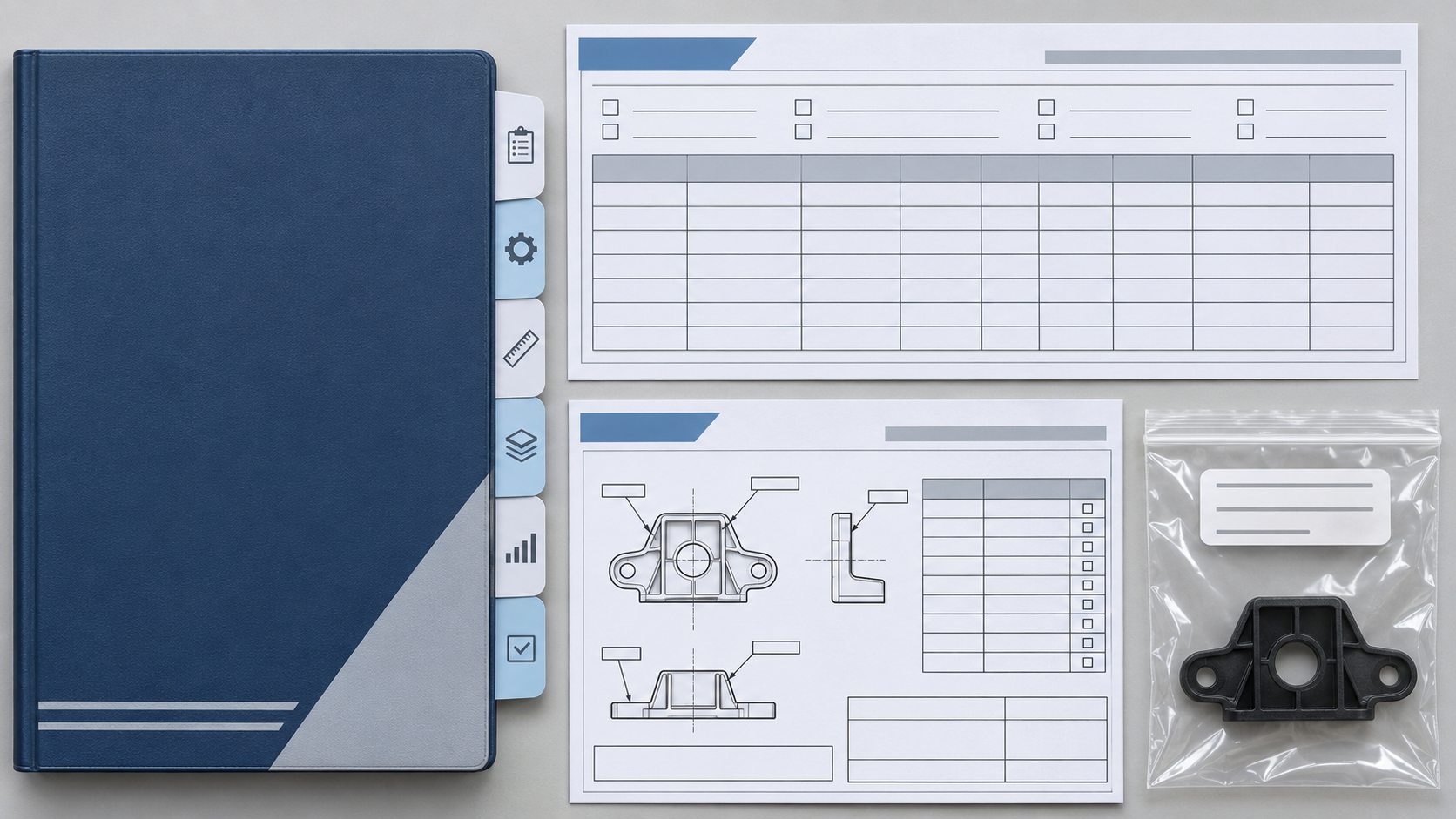
PPAP (Production Part Approval Process) is the core document package before a customer releases mass production. Common submission content (specific level per customer requirement) includes:
| Item | Description | Supplier Preparation Focus |
|---|---|---|
| Design records & engineering changes | Customer 3D/2D and change status | Ensure produced version matches latest approved drawing |
| Process flow diagram | Sequence from loading to packaging | Consistent with actual line, covering all operations |
| PFMEA | Potential failure modes and controls | Identify key characteristics and detection/prevention measures |
| Control plan | Key characteristics, method, frequency | Aligned with PFMEA and shop-floor work instructions |
| Dimensional results & FAI | Full dimensional measurement and first article | Measurement system available, data traceable |
| Material/performance test results | Material compliance and performance tests | Resin batch, compliance declaration, required tests |
| Initial process capability study | Cp/Cpk, etc. | Key characteristics meet customer acceptance criteria |
| Appearance approval (if applicable) | Texture, color, gloss | Consistent with customer signed sample |
| Production parts sample & PSW | Part Submission Warrant | Declare process and documents are complete |
3. Key Actions for Material Batch Management
- Approved supplier and grade lock: Automotive parts usually cannot be changed to alternate materials temporarily; resin, masterbatch, and additives must come from the approved list.
- Batch retention and records: Each material batch retains batch number, compliance declaration, and incoming inspection record, forming forward and backward traceability.
- Regrind management: Whether regrind is allowed, the upper limit ratio, and batch-mixing rules must be defined and reflected in the control plan.
- Environmental compliance: Such as RoHS, REACH, and IMDS (International Material Data System) reporting, executed per customer requirements.

4. Questions to Confirm with the Molder During Selection
- Do you hold a current valid IATF 16949 certificate (including certification scope)?
- Do you support the full automotive quality toolkit: APQP / PPAP / FMEA / Control Plan / SPC?
- Can you provide key-characteristic process capability studies (Cp/Cpk) and batch traceability records?
- Do material, mold, and process changes follow a formal change-notification (ECN/PCN) process?
- Do you have relevant automotive experience (automotive electronics, interior, functional parts), and can you provide capability evidence?
KENVOX (Kenvox Industrial) supports automotive injection molding projects with DFM, molding, trial validation, and production ramp-up. Leveraging our China–Vietnam footprint, we help customers balance quality, lead time, and cost.

Frequently Asked Questions (FAQ)
Q1: Where does an IATF 16949 molder differ from a standard ISO 9001 molder?
A: IATF 16949 adds automotive-industry requirements such as defect prevention, variation control, traceability, and PPAP/APQP, emphasizing that processes can be proven by the system—not just a single conforming part.
Q2: How long does PPAP preparation usually take?
A: It depends on product complexity and the customer’s submission level. From locking the process at trial to completing dimensional/performance and process-capability data typically takes several weeks to a few months, so plan early in APQP.
Q3: Can regrind be used in automotive molded parts?
A: It must follow the customer’s control plan and material specification. Most automotive parts strictly limit regrind ratio and batch mixing; no change is allowed without approval.
Q4: What is the difference between Cp and Cpk?
A: Cp measures potential process capability (tolerance width vs. variation width), while Cpk also considers whether the process mean is centered. Automotive parts usually focus more on Cpk to ensure key characteristics are both stable and low in shift.
Q5: Does KENVOX support automotive mass production?
A: KENVOX (Kenvox Industrial) holds IATF 16949 certification and can provide precision molding, trial, and production ramp-up for automotive electronics, interior, and functional parts; the specific support scope is subject to project assessment and the quality agreement.
This article is based on general automotive injection molding quality practice and KENVOX (Kenvox Industrial) project experience. Specific PPAP levels and acceptance criteria follow the customer’s APQP/PPAP manual and contract.