


Injection Molding Supplier Delivery Management Guide for Overseas Buyers?
Are late shipments ruining your launch schedules and draining your profit margins? Managing overseas suppliers feels like a constant battle against unexpected production delays and broken promises.
Injection molding supplier delivery management is the process of planning, tracking, and controlling tooling and production timelines to ensure your custom plastic parts arrive on schedule without quality compromises.
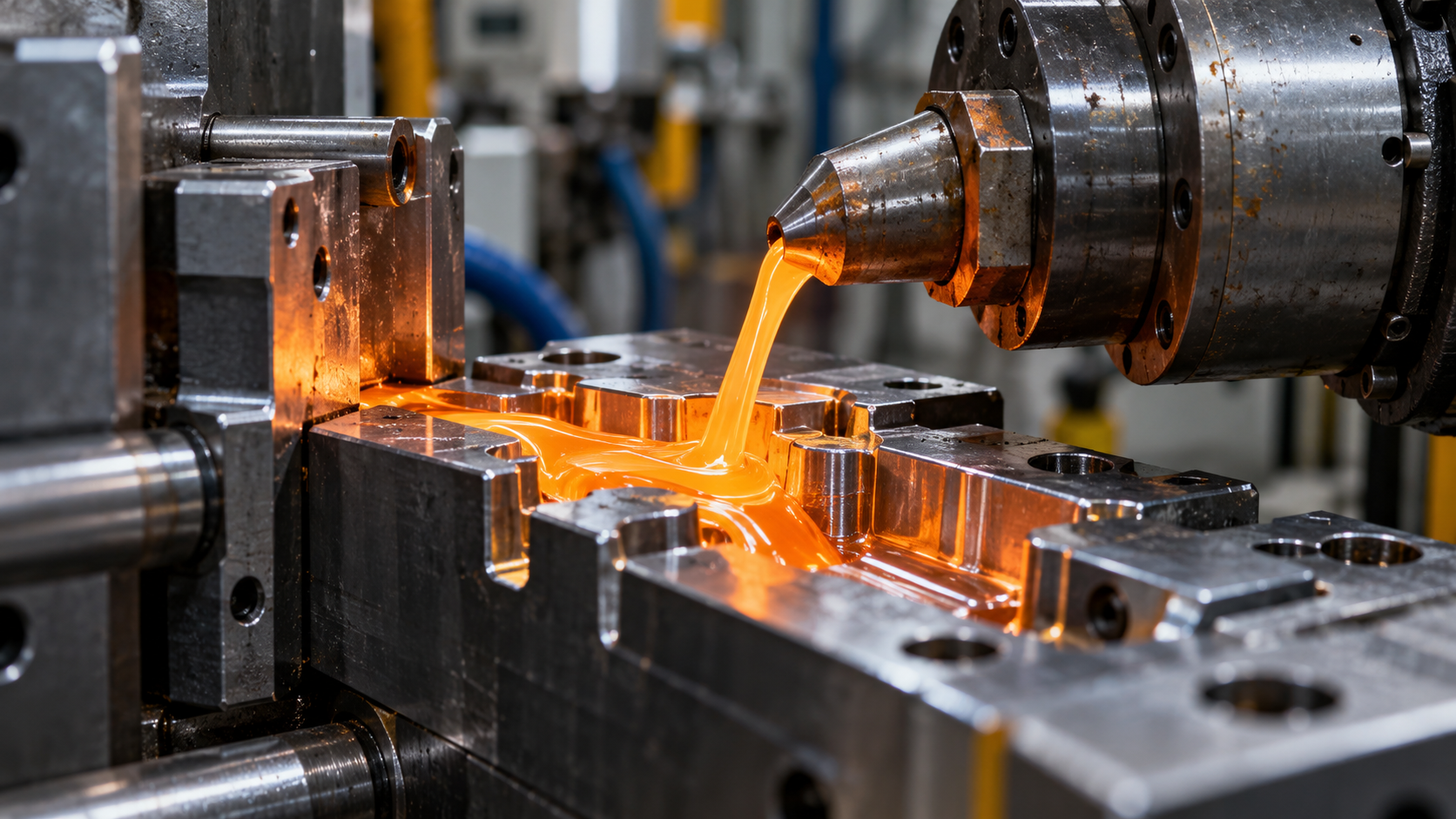
I remember a project three years ago when a simple mold modification blew past our hard deadline by three weeks. That delay cost us a major retail launch window, and it taught me that tracking delivery is not just about checking shipping dates—it is about controlling every step of the manufacturing pipeline.
1. What Is Injection Molding Supplier Delivery Management?
Are you tired of hearing excuses about why your plastic parts are stuck in production? Relying on vague factory updates leaves your business exposed to expensive market delays.
Injection molding supplier delivery management is a structured system where buyers track critical manufacturing milestones—from initial mold design and steel cutting to sample testing and final shipment—to guarantee predictable lead times.
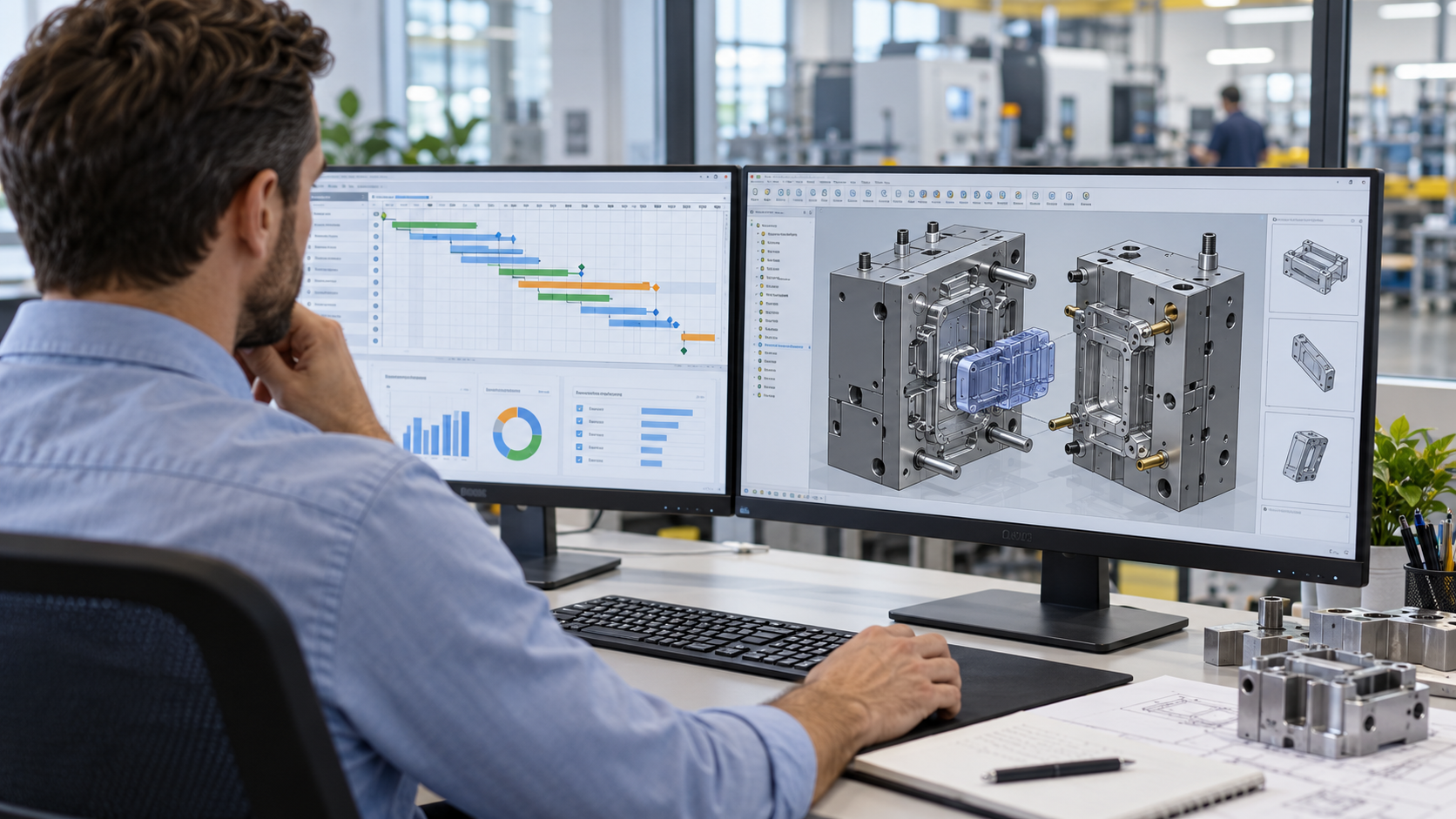
Injection molding supplier delivery management is not just a passive waiting game. It is an active engineering strategy that aligns your project goals with factory floor operations. When I manage project timelines at Kenvox, I break down the entire manufacturing lifecycle into transparent, verifiable stages.
Plastic injection molding involves complex technical steps. A single mistake in tool fabrication or resin sourcing can stop the entire line. Proper delivery management gives you total visibility over these hidden processes.
| Delivery Management Stage | Key Focus Area | Main Deliverable |
|---|---|---|
| Tooling Phase | DFM review and steel cutting | Approved mold design & T1 samples |
| Sampling Phase | Parameter tuning and testing | Golden sample approval |
| Mass Production | Cycle time and yield rate | Inspected finished parts |
| Shipping & Logistics | Packaging and export docs | Bill of Lading & delivery |
By establishing clear expectations early, you eliminate the guesswork. You transition from hoping your supplier delivers to knowing exactly when your parts will hit your dock.
2. How Do You Evaluate a Supplier’s Delivery Capability Before Placing an Order?
Are you worried that your new supplier will promise quick lead times but fail when production begins? Choosing the wrong manufacturing partner can ruin your product launch.
Evaluating a supplier’s delivery capability means auditing their historical on-time delivery rates, machine capacity, internal ERP tracking tools, and raw material inventory before signing any purchase order.
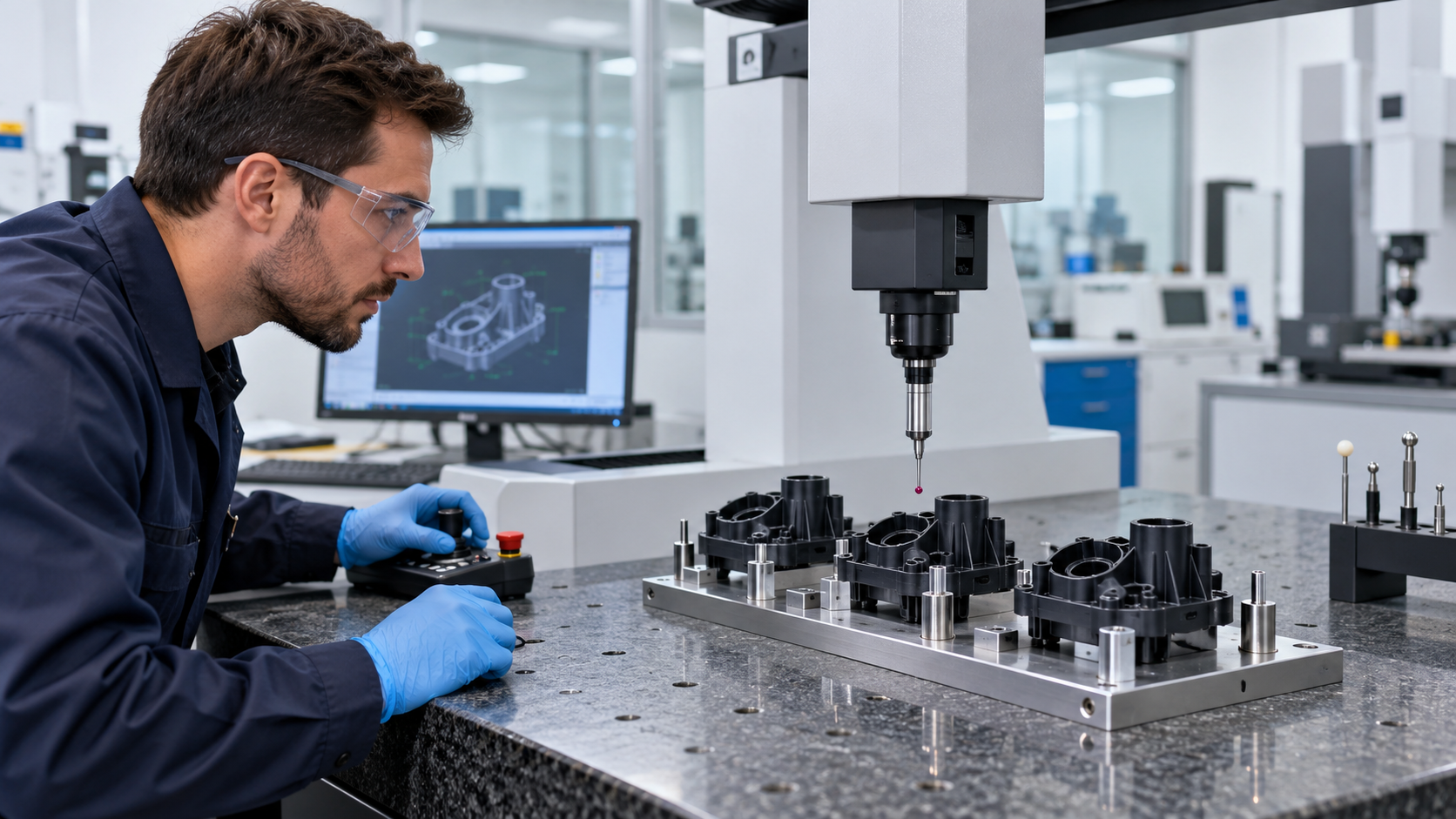
Before I place a tooling or production order, I always verify a factory’s claims with hard data instead of taking sales promises at face value. A good factory will gladly share historical performance metrics and recent customer references.
During my factory audits in Dongguan, I look closely at their machine utilization and maintenance schedules. If a plant operates at 100% capacity with no backup machines, any mechanical breakdown will immediately delay your project.
| Audit Metric | What to Look For | Red Flag |
|---|---|---|
| On-Time Delivery (OTD) Rate | Consistent score above 95% | Vague estimates without data |
| Machine Capacity | 70-80% utilization with backup units | Overbooked lines with zero buffer |
| Material Stocking | Established resin supply chains | No local stock of standard resins |
| Project Management | Dedicated English-speaking engineers | Communication only through sales |
Asking for real production logs helps you separate top-tier contract manufacturers from generic brokers. Solid evidence upfront saves you months of headache later.
3. What Are the Most Common Causes of Delivery Delays in Injection Molding?
Are your shipments constantly falling behind schedule without any clear explanation from your factory? Unplanned delays can stall your assembly line and destroy customer trust.
The most common causes of injection molding delivery delays include unapproved design changes, mold repair iterations, raw material shortages, machine breakdowns, and poor communication during sample reviews.
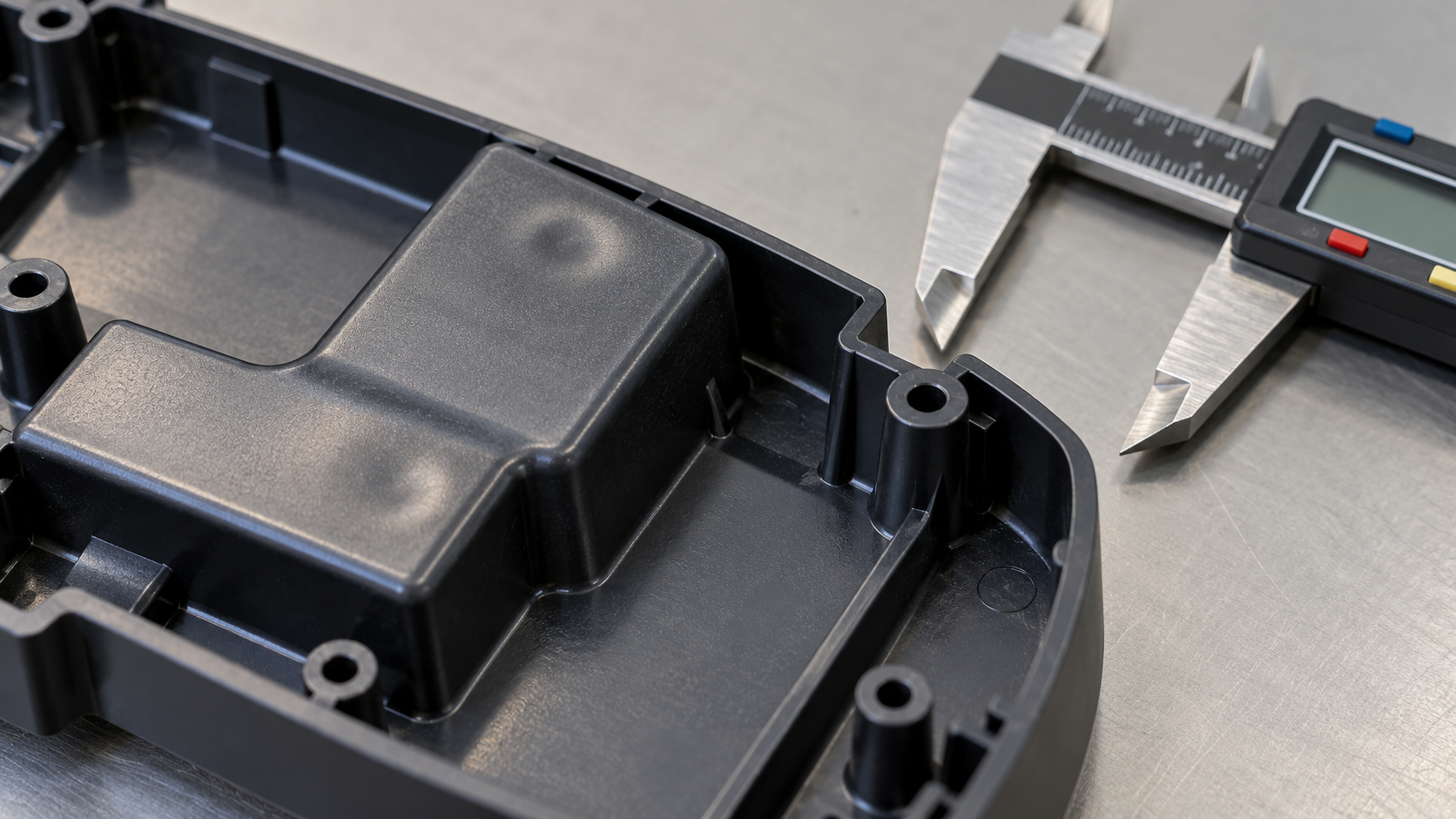
In my 10 years of mold design experience, I have seen simple design oversights create massive schedule slip. For example, failing to spot a thick wall section during the DFM phase leads to sink marks during T1 trials, which forces steel modifications and adds two weeks to the clock.
Another major bottleneck is resin availability. If your product requires specialized engineering resins or custom color masterbatches, lead times can double if the factory does not order raw materials early.
| Delay Cause | Root Problem | Prevention Strategy |
|---|---|---|
| Tooling Modifications | Incomplete early DFM review | Freeze product design before cutting steel |
| Sample Rejections | Unclear cosmetic requirements | Establish signed Golden Samples early |
| Material Shortages | Special resins with long lead times | Pre-order resins during mold building |
| Machine Downtime | Poor factory maintenance | Work with ISO-certified manufacturers |
Understanding these root causes allows you to build preventive steps directly into your project schedule, protecting your launch dates from surprise roadblocks.
4. How Can Overseas Buyers Track and Manage Production Milestones?
Do you feel completely out of the loop once you send your deposit to an overseas supplier? Lacking real-time visibility makes it impossible to manage your supply chain effectively.
Overseas buyers can track production milestones by breaking orders into explicit phase gates, requiring weekly Gantt chart updates, requesting video inspections, and tying progress payments to verified engineering sign-offs.
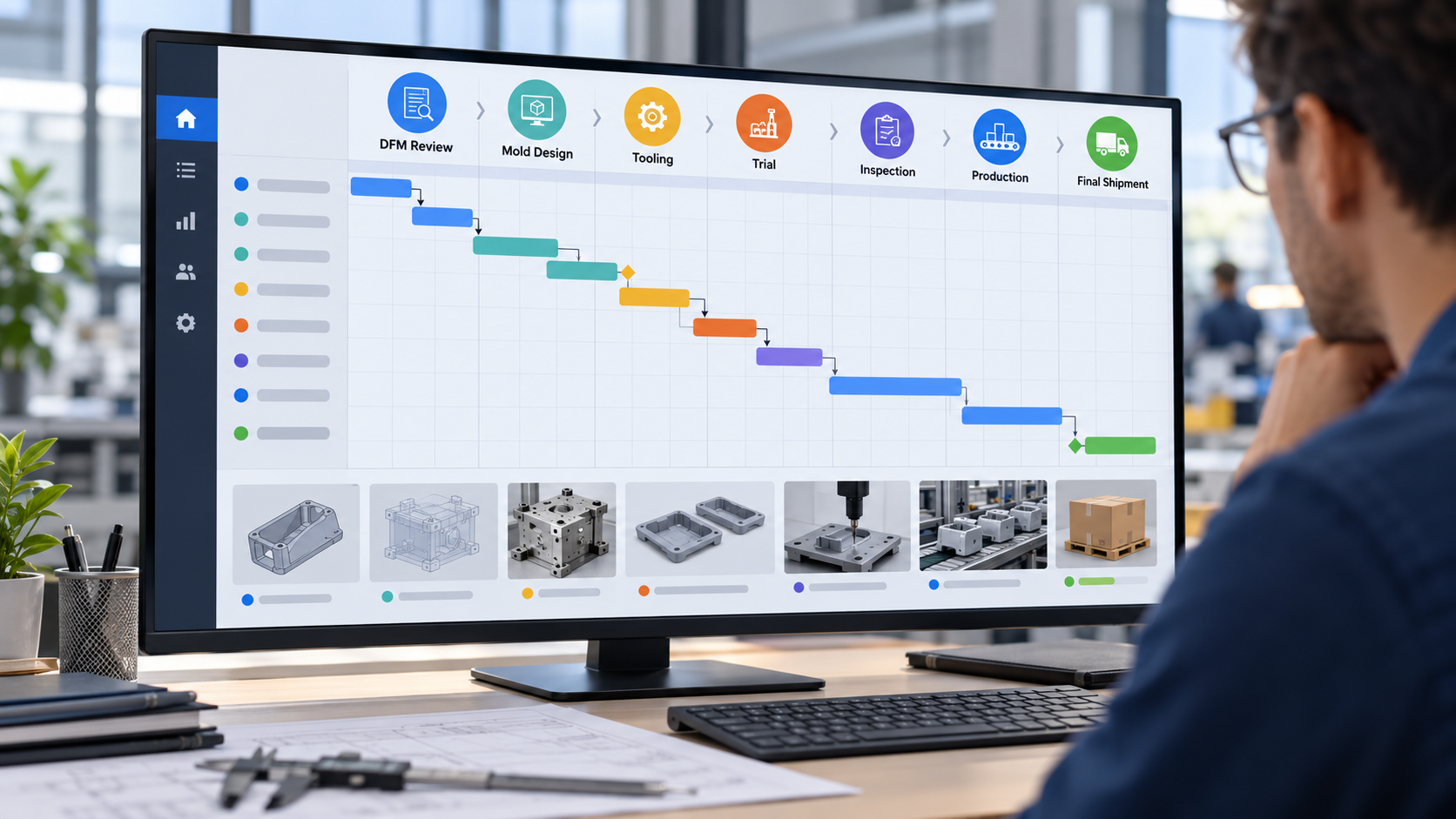
I always set up a strict milestone schedule before any steel is cut. At Kenvox, we share weekly progress reports with photographs and dimension logs so overseas engineers can follow every step without leaving their desk.
Never rely on verbal updates like "production is going well." Demand specific proof for every phase gate, such as steel hardness test reports or video clips of mold trial runs.
| Production Milestone | Required Verification | Action Before Next Step |
|---|---|---|
| 1. DFM & Mold Design | Signed 3D mold drawing & Flow Analysis | Authorize steel ordering |
| 2. T1 Sample Trial | Inspection report (FAI) & sample parts | Approve or request tuning |
| 3. Golden Sample | Approved physical sample with sign-off | Release mass production deposit |
| 4. Mass Production Run | Daily output logs & OQC inspection | Schedule final shipment |
Breaking the project into smaller, measurable checkpoints keeps your supplier accountable and ensures that minor delays are caught and corrected immediately.
5. What Quality Checks Should Be Tied to Delivery Milestones?
Are you afraid of receiving a container full of defective plastic parts right on your deadline? Skipping quality checks during production creates costly rework that delays your delivery by weeks.
Quality checks tied to delivery milestones include steel hardness testing at raw material intake, First Article Inspection (FAI) on T1 samples, in-process SPC checks during molding, and final Outgoing Quality Control (OQC).
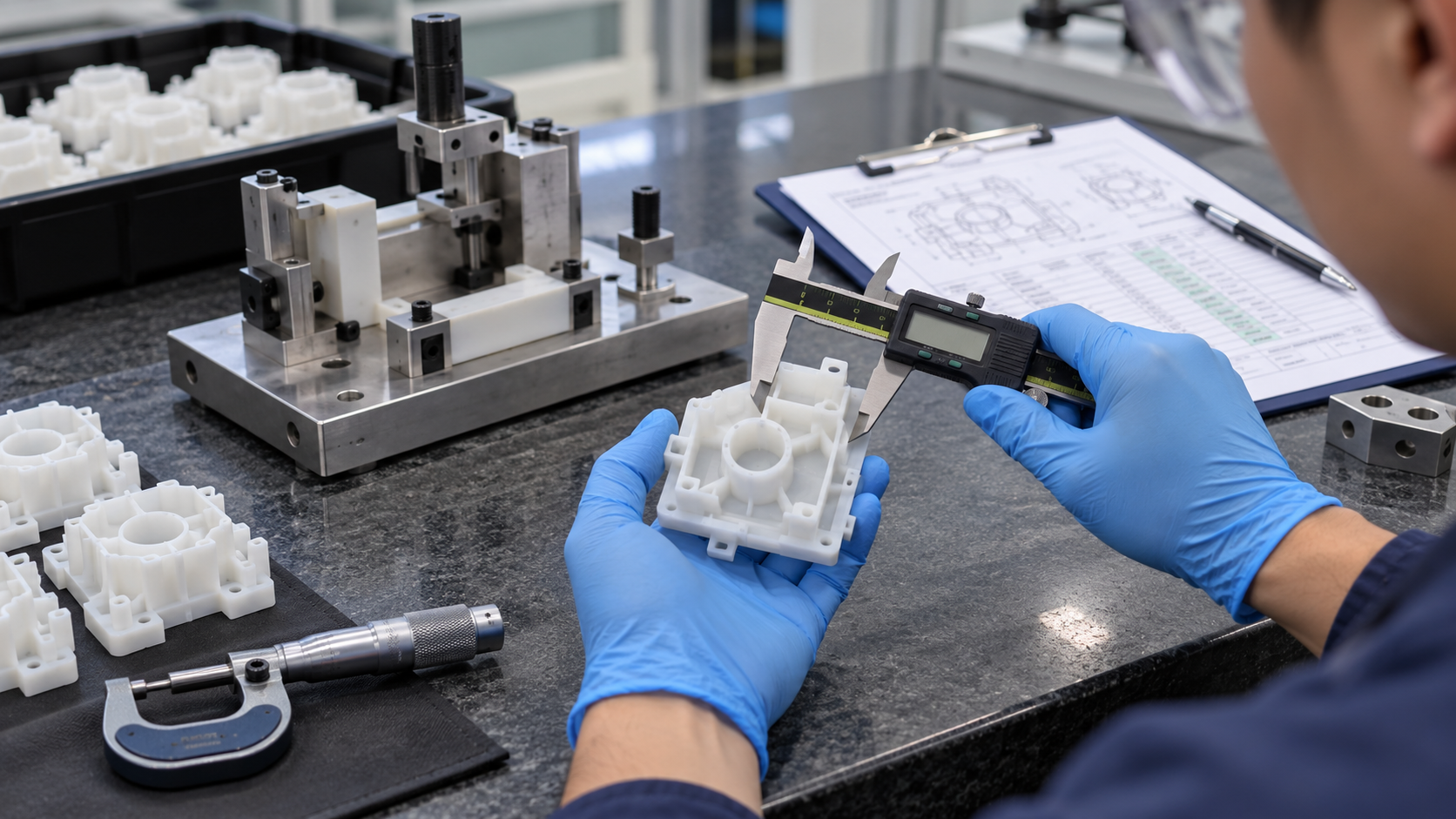
I learned early in my career that speed without quality is meaningless. Once, a client rushed a factory to ship parts without waiting for full dimensional reports. The parts arrived overseas with critical warp issues, and fixing them locally cost five times more than the original tooling budget.
To prevent this, tie your financial payments to formal quality gates. Never release final payments until your quality team approves the FAI report and CMM inspection data.
| Milestone Gate | Required Quality Check | Impact on Delivery |
|---|---|---|
| Tool Steel Arrival | Spectrometer & hardness check | Prevents premature tool wear |
| T1 Sample Trial | Full CMM dimensional report | Identifies tool adjustments early |
| Production Start | First-piece inspection & color match | Avoids running scrap parts |
| Final Packaging | OQC audit & drop testing | Ensures parts survive transit |
Linking quality approval directly to project schedules prevents factories from rushing defective goods out the door just to claim an on-time shipment.
6. How Do Shipping and Logistics Affect Your Delivery Timeline?
Is your project stuck at sea even though production finished on time? Forgetting to calculate freight times can ruin an otherwise perfect manufacturing schedule.
Shipping and logistics impact your total delivery timeline because sea freight from Asia adds 20 to 40 days, while air freight takes 3 to 7 days but costs 4 to 8 times more.

Many buyers focus entirely on factory lead times and forget about export customs, vessel space availability, and port congestion. When I plan production schedules, I always treat logistics as an integrated part of the manufacturing timeline.
Choosing between air and sea freight depends on your budget and urgency. For critical product launches, I often recommend a split shipment strategy: ship 10% by air to cover initial demand, and send the remaining 90% by sea freight.
| Shipping Method | Typical Transit Time | Cost Comparison | Best Used For |
|---|---|---|---|
| Air Express (DHL/FedEx) | 3 – 5 Days | Highest (8x) | Pre-launch samples & urgent stock |
| Standard Air Freight | 5 – 10 Days | High (4x – 5x) | Initial production batches |
| Sea Freight (FCL/LCL) | 20 – 40 Days | Lowest (1x) | Regular mass production runs |
| Railway (Asia to Europe) | 15 – 20 Days | Moderate (2x) | Balanced European shipping |
Factor logistics into your master schedule from day one. Proper planning prevents expensive emergency air freight bills when your retail launch date gets close.
7. What Should a Delivery Contingency Plan Include?
What will you do if your primary mold breaks or your factory faces an unexpected shutdown? Lacking a backup plan leaves your entire supply chain vulnerable to total collapse.
A delivery contingency plan should include a written mold transfer agreement, approved backup manufacturing sites, pre-sourced secondary resin suppliers, and a dedicated buffer stock of finished parts.
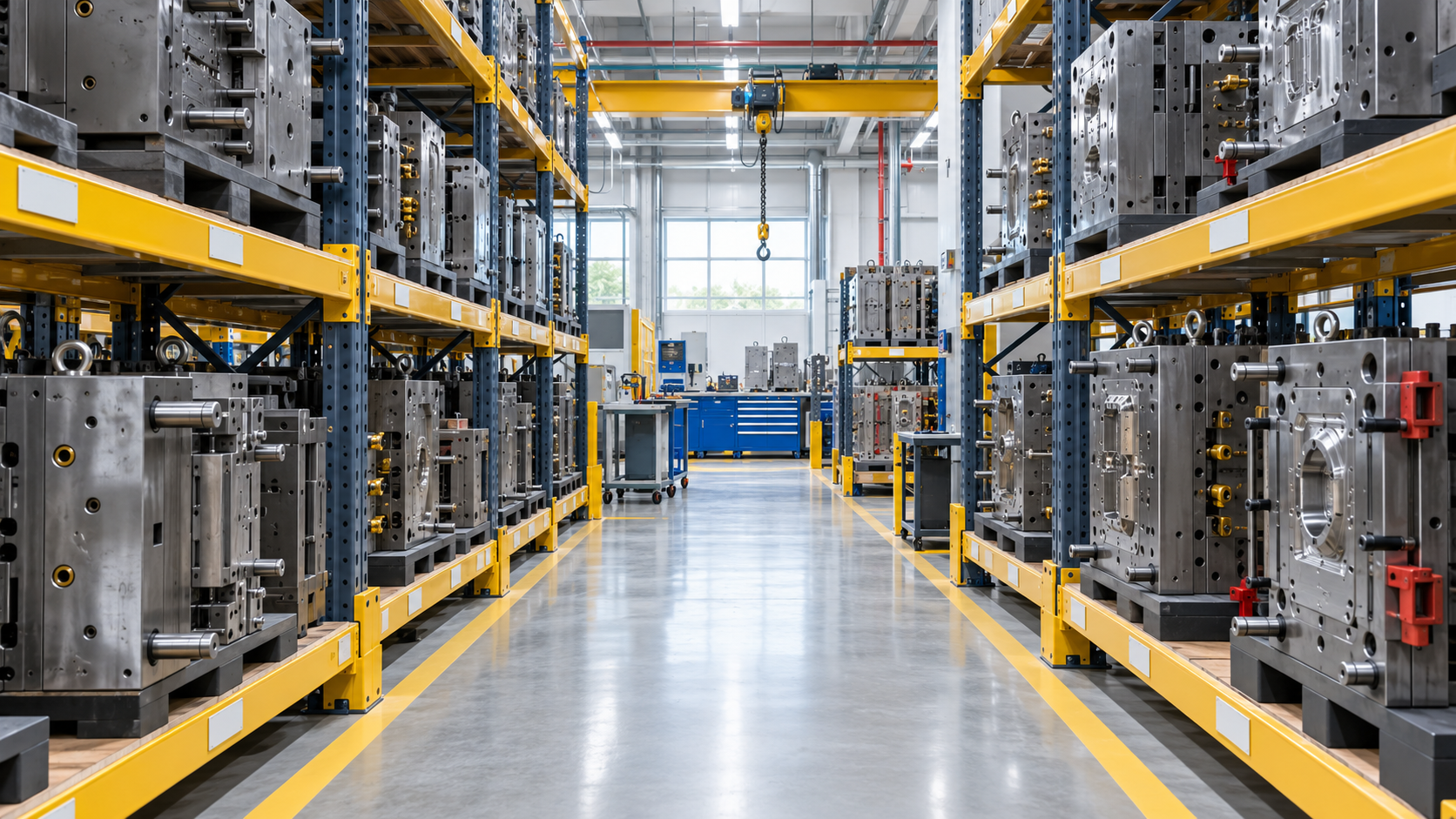
Every experienced engineer knows that things can go wrong on the factory floor. Power outages, tool damage, or sudden labor shortages happen. Having a risk management plan ensures your business keeps running smoothly when trouble hits.
At Kenvox, we operate multiple facilities across Dongguan, Huizhou, and Vietnam. This multi-plant footprint gives our clients built-in protection because we can shift production between sites if capacity issues arise.
| Contingency Element | Strategic Action | Benefit |
|---|---|---|
| Mold Ownership Clause | Clear contractual ownership of tools | Allows immediate tool transfer |
| Dual Sourcing Sites | Vetted backup facilities in other regions | Protects against localized disruptions |
| Safety Stock | Hold 2-4 weeks of inventory locally | Absorbs sudden supply chain spikes |
| Alternative Resins | Pre-approve secondary resin grades | Prevents delays from resin shortages |
Building a comprehensive backup strategy takes extra effort upfront, but it pays for itself the first time an unexpected disruption hits your primary line.
8. How Do You Build a Long-Term Delivery Partnership with Your Supplier?
Are you tired of switching suppliers every few months because of poor communication and missed deadlines? Constantly changing factories creates instability and ruins manufacturing consistency.
Building a long-term delivery partnership involves sharing transparent production forecasts, paying on time, working collaboratively on design improvements, and choosing turnkey manufacturers with strong engineering capabilities.

Manufacturing is a collaborative process. When you treat your injection molding factory as an extended engineering partner rather than a simple vendor, you get better priority on the factory floor during peak seasons.
Clear, open communication is the foundation of a successful partnership. Share your rolling sales forecasts with your supplier so they can reserve machine time and raw materials well in advance.
| Partnership Level | Buyer Action | Supplier Benefit | Result |
|---|---|---|---|
| Transactional | Orders parts on short notice | No visibility or planning time | High risk of delays |
| Collaborative | Shares 3-6 month forecasts | Can reserve capacity & stock resin | On-time, predictable delivery |
| Turnkey Partner | Involves factory early in DFM | Optimizes design for fast molding | Lower cost & faster lead times |
Invest in your supplier relationships over time. A strong, trusted partnership is the best guarantee for long-term delivery success and high-quality production.
9. Frequently Asked Questions
How long does it take to build a custom plastic injection mold?
Building a standard plastic injection mold typically takes 3 to 6 weeks, depending on tool size, part complexity, and surface finish requirements.
What is a Golden Sample in injection molding?
A Golden Sample is an officially approved physical part that sets the visual and dimensional quality baseline for all future mass production runs.
Can I move my mold to another factory if my supplier causes delays?
Yes, provided your contract clearly establishes that you own the tooling. Ensure your contract specifies that the factory must release the mold upon request without penalty.
Conclusion
Managing overseas injection molding delivery requires verified supplier data, strict milestone tracking, early quality controls, and written contingency plans to ensure reliable, on-time shipments every time.