


What Type of Injection Molding Is Best for Complex Automotive Plastic Components?
Are you struggling to produce complex car parts with tight tolerances? Single-shot molding often causes warping, sink marks, and high assembly costs. I use multi-shot and gas-assisted molding to solve these tough production problems.
Multi-shot injection molding and gas-assisted injection molding are best for complex automotive plastic components. Multi-shot molding combines hard and soft materials seamlessly in one machine cycle. Gas-assisted molding creates hollow inner channels with nitrogen gas. These advanced methods cut part weight, eliminate sink marks, and reduce assembly steps significantly.
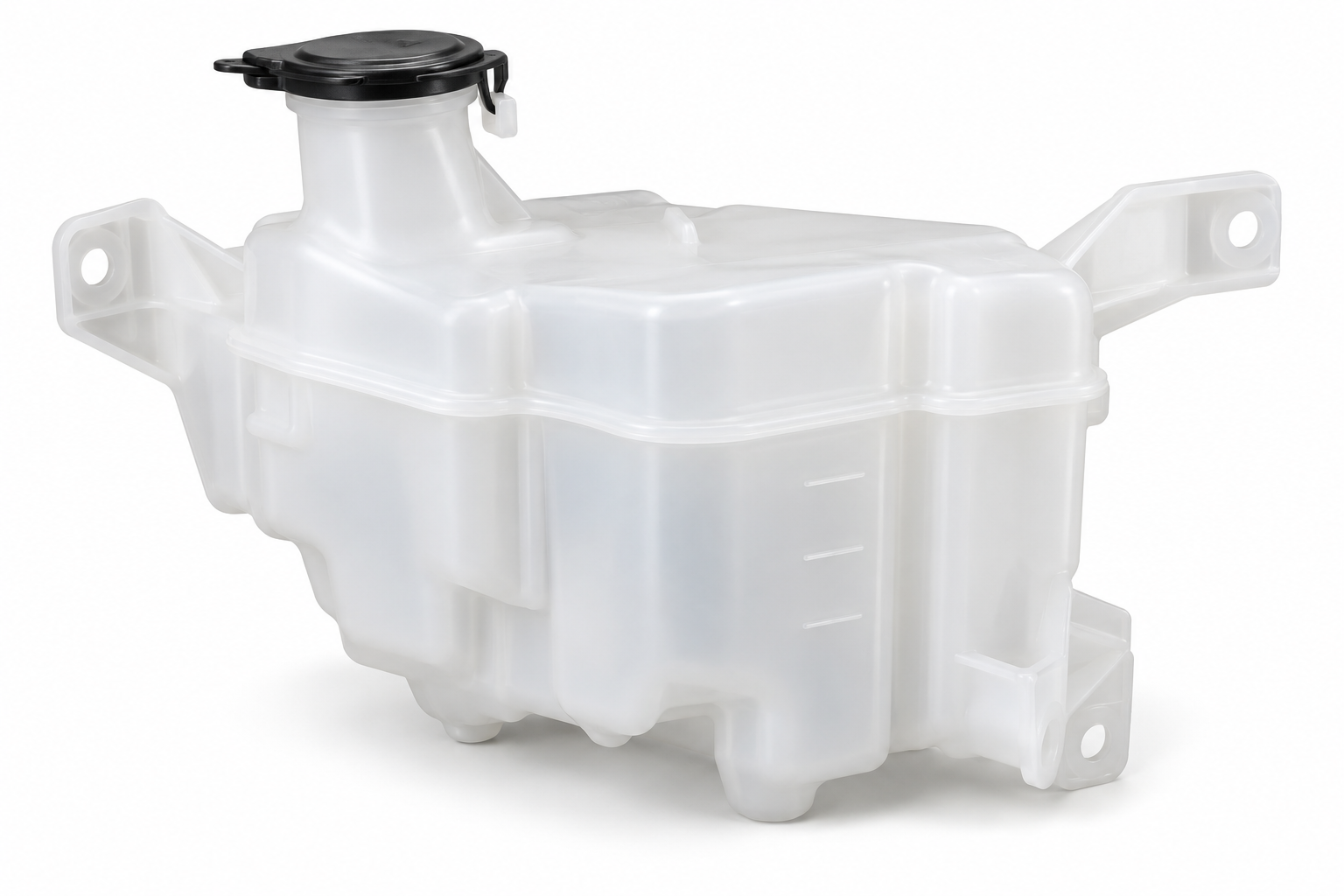
In my ten years of designing car parts, I learned that picking the right process changes everything. Automotive parts must handle harsh heat, heavy vibration, and strict weight goals. Standard molding often fails on complex geometries. I want to show you how top molding methods and plastic materials transform modern car manufacturing.
What is the strongest plastic for injection molding?
Do your plastic car parts snap under heavy stress or high engine heat? Weak material choices cause part failures and costly recalls. I rely on high-performance polymers to keep parts strong and safe.
PEEK (Polyetheretherketone) and glass-filled Nylon (PA66) are the strongest plastics for injection molding. PEEK offers extreme tensile strength and chemical resistance for metal replacement. Glass-filled Nylon provides high stiffness and impact strength at a lower cost, making it ideal for structural automotive parts under the hood.
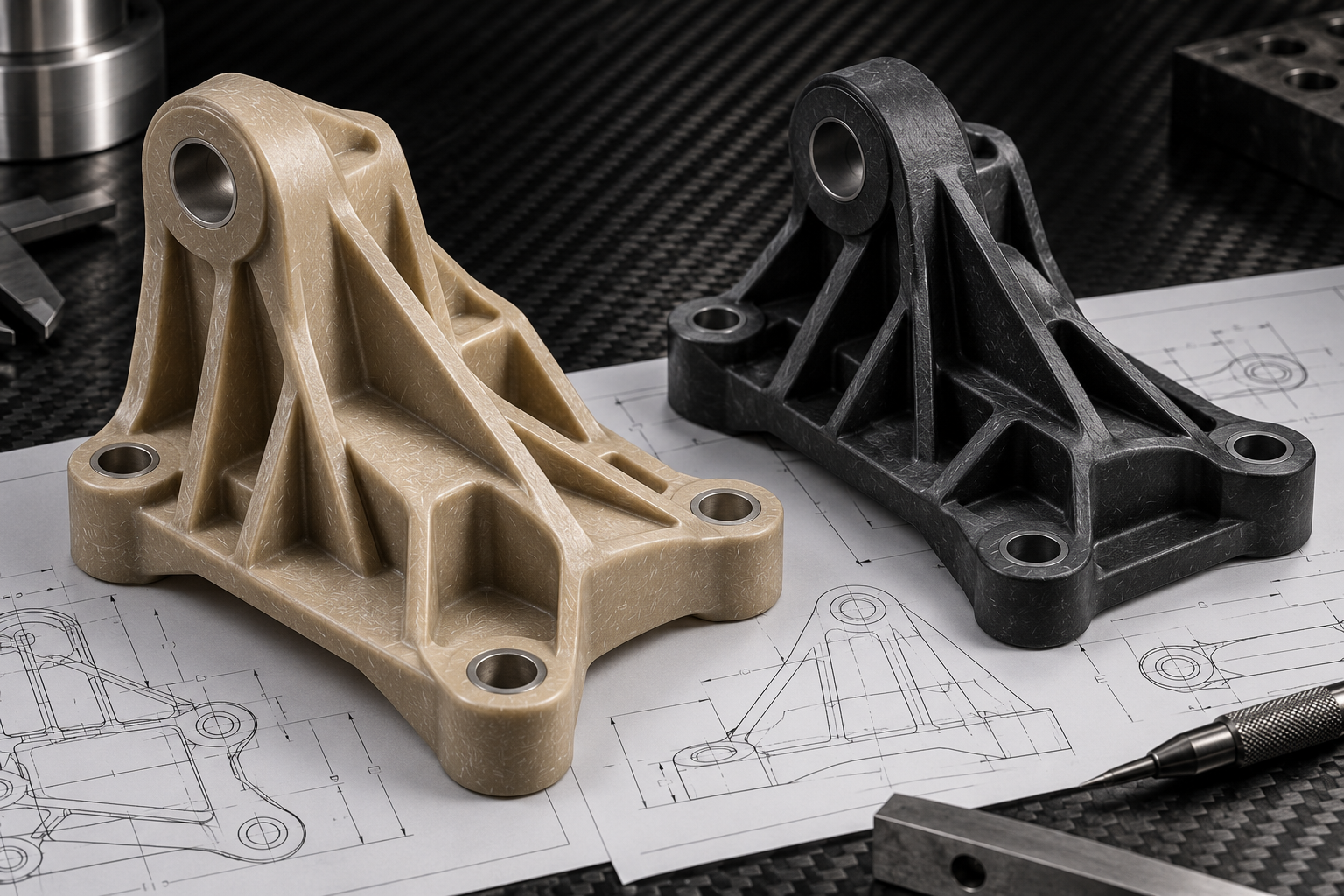
Comparing High-Strength Polymers
I often test different plastics to find the right strength for car parts. Polymer strength depends on tensile force, impact resistance, and temperature limits. Standard plastics flex too much under load. High-performance polymers use strong chemical bonds to resist breaking.
Reinforcement Fillers Add Stiffness
I frequently add glass fibers to base polymers. Fiber reinforcement increases structural stiffness by over two hundred percent. Glass-filled PEEK and PA66 handle heavy mechanical loads inside engine compartments without warping.
| Plastic Material | Tensile Strength (MPa) | Flexural Modulus (GPa) | Max Operating Temp (°C) | Common Automotive Use |
|---|---|---|---|---|
| PEEK (Unfilled) | 100 | 4.1 | 250 | Engine Sensors & Gears |
| PEEK (30% Glass) | 170 | 10.5 | 260 | Structural Brackets |
| PA66 (30% Glass) | 175 | 8.5 | 180 | Intake Manifolds |
| PC/ABS Alloy | 60 | 2.4 | 110 | Interior Dashboards |
My Hands-on Experience
I once redesigned an aluminum bracket using thirty percent glass-filled Nylon. The plastic part passed all load tests easily. It also cut component weight by forty percent. You must choose PEEK when heat exceeds two hundred degrees. You should select glass-filled Nylon for cost-effective structural strength.
Is HDPE good for injection molding?
Are you worried about moisture damage and chemical corrosion in plastic components? Low-grade materials degrade quickly in fluid systems. I use HDPE when parts require excellent moisture resistance and chemical stability.
Yes, High-Density Polyethylene (HDPE) is very good for injection molding. HDPE flows easily into mold cavities, shrinks predictably, and costs very little. Manufacturers use HDPE for automotive fluid tanks, washer fluid reservoirs, container caps, and protective covers because HDPE offers great chemical resistance and high impact strength.
Processing Properties of HDPE
I enjoy working with HDPE because HDPE melts cleanly and molds easily. HDPE has a high melt flow rate. This high flow allows plastic melt to fill large mold cavities quickly without freezing prematurely.
Key Automotive Applications
HDPE resists acids, oils, and automotive fluids very well. I always select HDPE for liquid storage containers. The polymer chains absorb very little water. This low absorption prevents warping in damp environments.
| HDPE Property | Typical Value | Practical Benefit in Molding | Automotive Application |
|---|---|---|---|
| Density | 0.95 g/cm³ | Lightweight structure | Fluid Reservoirs |
| Shrinkage Rate | 1.5% – 3.0% | High shrink allowance needed | Protective Shields |
| Impact Strength | High | Resists stone chips and impacts | Underbody Panels |
| Chemical Resistance | Excellent | Safe for oils and washer fluid | Engine Compartment Tanks |
Molding Challenges to Manage
HDPE has a high mold shrinkage rate. I always design mold cavities wider to compensate for thermal shrinkage during cooling. HDPE can warp if cooling channel temperatures are uneven. I set cooling lines carefully to keep wall temperatures balanced across the core and cavity. HDPE remains a top choice for low-cost, durable automotive containers.
Can delrin be injection molded?
Do your plastic gears wear out quickly or jam under tight mechanical tolerances? High friction damages moving assemblies fast. I mold Delrin to create smooth, durable gear trains.
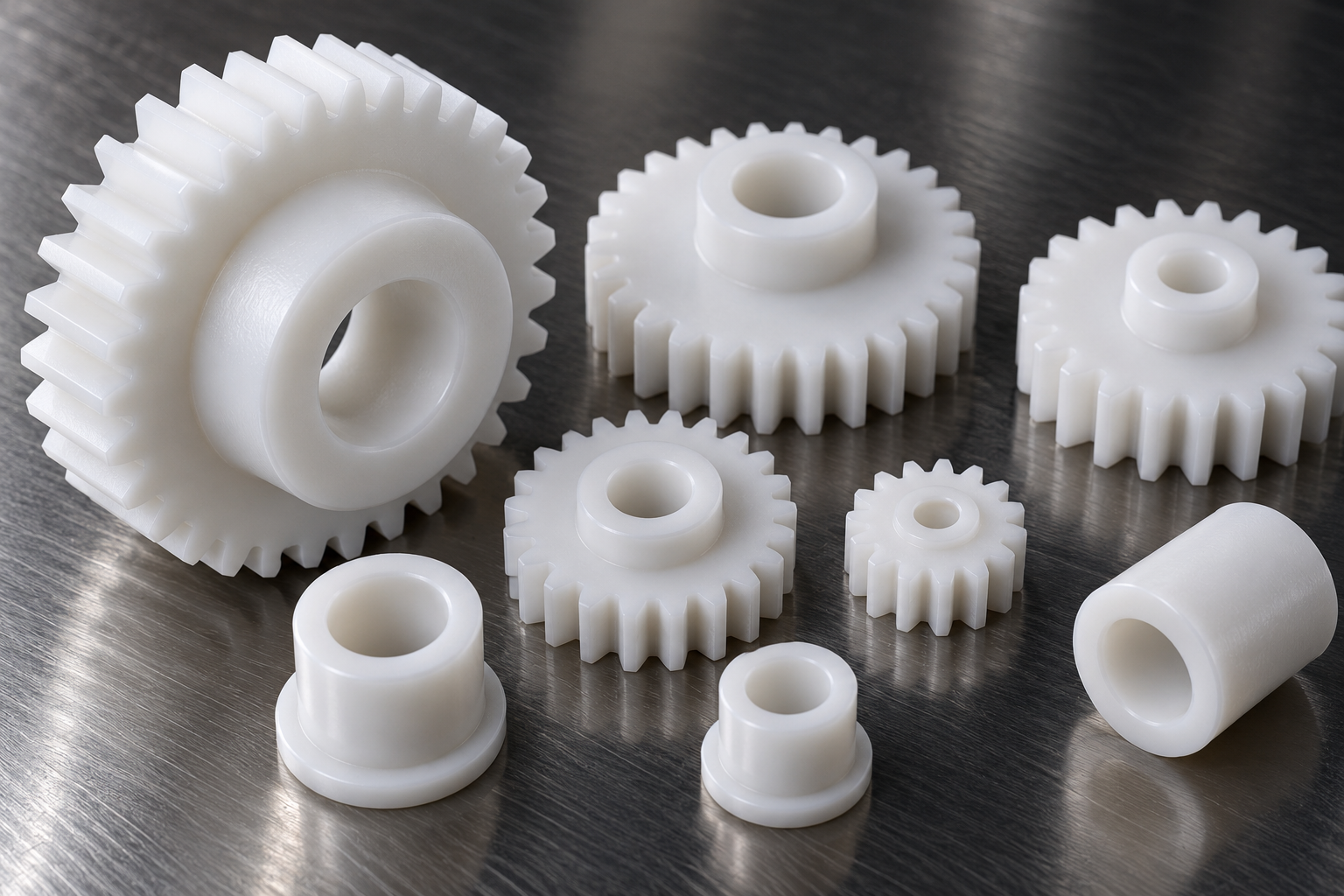
Yes, Delrin can be injection molded easily. Delrin is a brand name for acetal (POM) homopolymer. Delrin features high mechanical stiffness, low friction, and exceptional dimensional stability. Molders use Delrin for precision automotive components like gears, door latch mechanisms, seatbelt clips, and fuel system parts.
Material Characteristics of Delrin
I frequently select Delrin when a design calls for smooth mechanical motion. Delrin has a high crystalline structure. This structure gives Delrin high strength, low friction, and great wear resistance. Delrin glides smoothly against metal and other plastic components.
Precision Automotive Uses
Delrin replaces small metal gears inside car doors and seats. Delrin reduces mechanical noise and does not need external lubricant. The material retains shape well when exposed to changing temperatures and fuel vapors.
| Delrin POM Feature | Mechanical Value | Processing Tip | Automotive Component |
|---|---|---|---|
| Friction Coefficient | 0.20 (Low) | Keep mold polished | Window Winder Gears |
| Tensile Yield Strength | 70 MPa | Avoid sharp internal corners | Seatbelt Retainers |
| Water Absorption | 0.2% (Very Low) | Dry resin before molding | Fuel Pump Housings |
| Dimensional Stability | Excellent | Maintain uniform wall thickness | Bushings & Fasteners |
Crucial Molding Guidelines
Delrin degrades if you overheat the melt inside the barrel. I keep barrel temperatures below two hundred and fifteen degrees Celsius. Overheated Delrin releases formaldehyde gas. I always ensure proper exhaust ventilation around the molding machine. I mold Delrin components with uniform wall thickness to prevent internal voids and sink marks. Delrin remains my favorite plastic for smooth, long-lasting mechanical parts.
Can polypropylene be injection molded?
Are high material costs driving down your profit margins on volume automotive parts? Expensive resins drain your project budget fast. I use polypropylene to produce strong, lightweight parts economically.
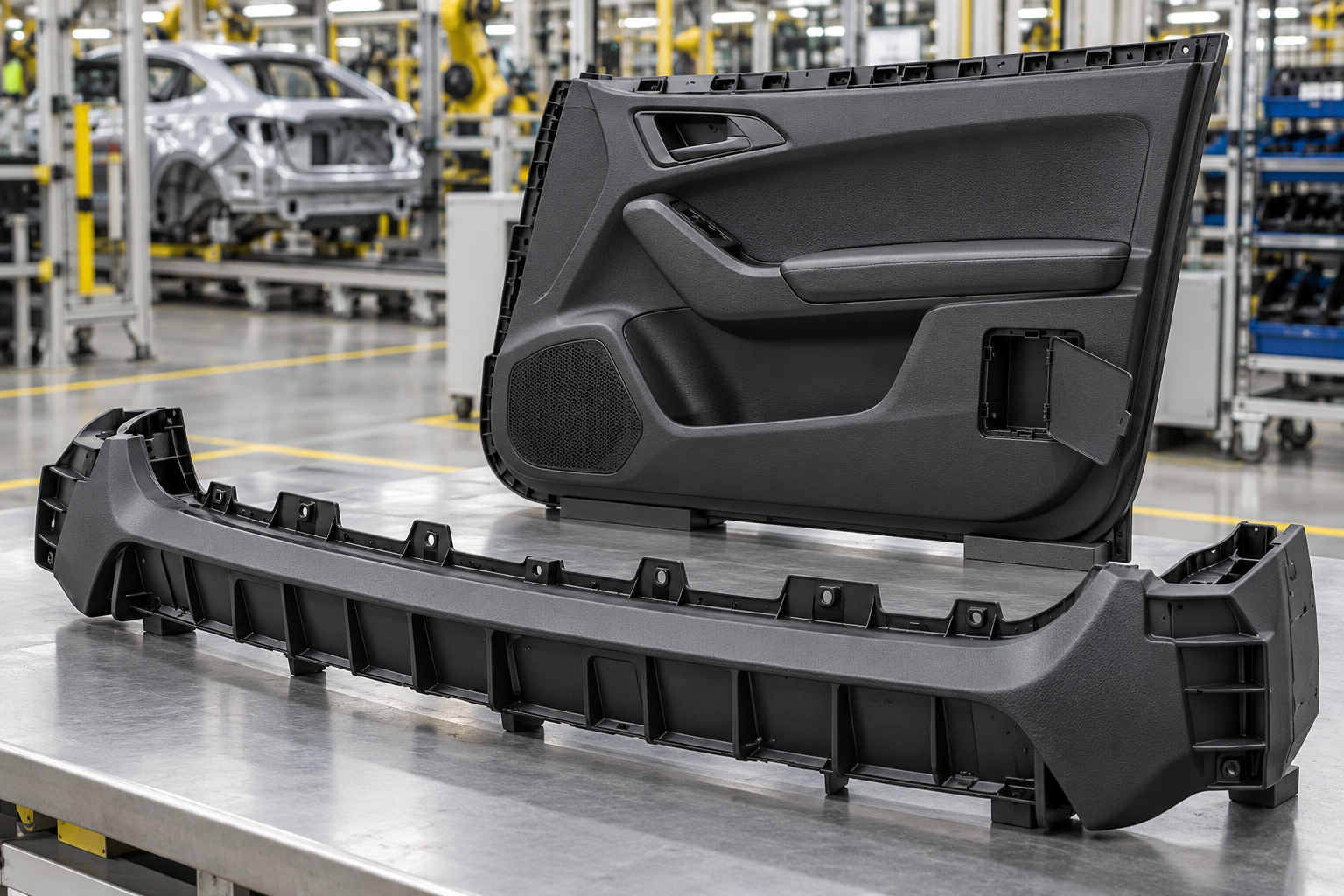
Yes, polypropylene (PP) can be injection molded very easily. Polypropylene is one of the most widely molded thermoplastics in the world. PP offers low density, high chemical resistance, and great flexural fatigue strength. Engineers use PP for automotive bumpers, door trim panels, battery trays, and interior consoles.
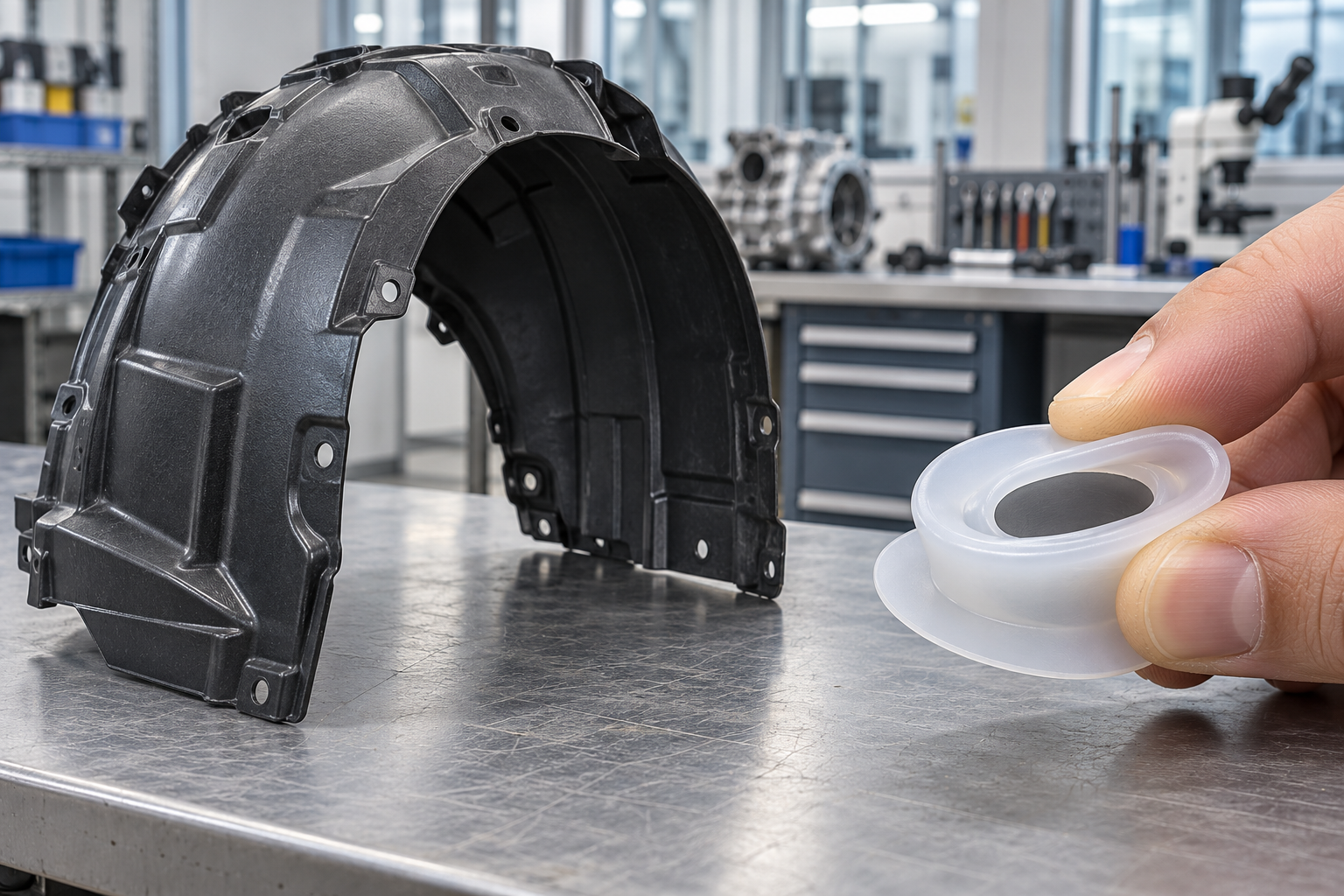
Why Polypropylene Dominates Automotive Molding
I use polypropylene more than almost any other plastic resin. PP is light, tough, and inexpensive. PP has a low density of zero point nine grams per cubic centimeter. This low weight helps car makers build lighter vehicles and improve fuel efficiency.
Living Hinges and Flexural Strength
PP has amazing flexural fatigue resistance. I design living hinges directly into PP parts. A living hinge lets a plastic cover flex millions of times without snapping.
| Polypropylene Type | Key Properties | Automotive Applications | Processing Advantages |
|---|---|---|---|
| Homopolymer PP | Higher stiffness, good clarity | Interior Trim Clamps | Easy flow, fast cycle times |
| Block Copolymer PP | High impact strength at low temp | Bumpers & Fascias | Resists cracking in cold weather |
| Talc-Filled PP | Reduced shrinkage, high rigidity | Dashboard Substructures | Low warpage, tight tolerances |
| Glass-Filled PP | High structural load capacity | Engine Covers & Trays | High heat deflection temperature |
Practical Molding Recommendations
PP flows into complex mold channels with low injection pressure. However, unfilled PP can shrink up to two percent during cooling. I add talc or glass fibers to PP to control mold shrinkage. Talc-filled PP keeps dashboard components flat and rigid. I use multi-shot molding to bond soft TPE over PP base parts. This multi-shot combination creates comfortable, soft-touch door handles and control knobs efficiently.
What is the disadvantage of HDPE?
Do your molded plastic parts warp out of shape or fail under heavy stress? High shrinkage causes bad part fit and costly assembly scrap. I analyze HDPE limits before starting mold production.
The main disadvantages of HDPE are high mold shrinkage, poor thermal resistance, and susceptibility to environmental stress cracking. HDPE expands and contracts significantly during molding cycles. HDPE also softens at temperatures above eighty degrees Celsius and bonded adhesives do not stick easily to its non-polar surface.
Thermal and Mechanical Limitations
I always warn clients about the structural limits of HDPE. HDPE softens quickly when exposed to heat. Unfilled HDPE cannot handle structural loads near hot automotive engines. HDPE also has a low surface energy. Paint and glue will not stick to HDPE surfaces without flame or plasma pretreatment.
High Mold Shrinkage Problems
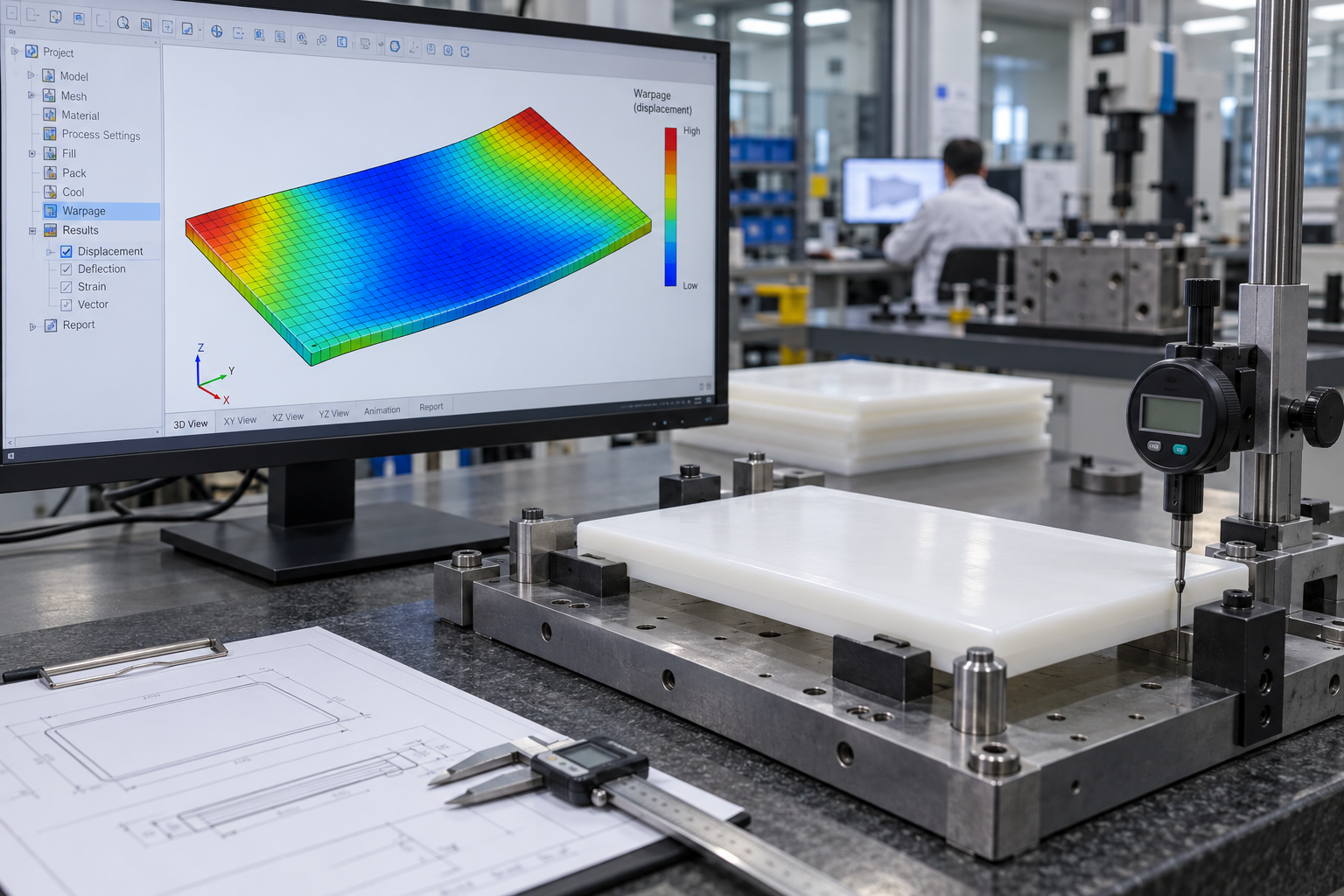
HDPE shrinks up to three percent after molding. This high shrinkage causes warpage in long, flat automotive panels.
| HDPE Disadvantage | Root Cause | Negative Impact | Design Mitigation Strategy |
|---|---|---|---|
| High Shrinkage | Semi-crystalline structure | Part warpage and dimensional shifts | Add cooling time, use ribbed design |
| Low Heat Tolerance | Low melting point | Softens above 80°C | Avoid under-hood structural placement |
| Stress Cracking | Detergent/oil exposure | Surface cracks under tension | Select high molecular weight HDPE |
| Poor Surface Adhesion | Non-polar chemical structure | Paint and glue peel off | Use corona treatment or mechanical fasteners |
How I Overcome HDPE Drawbacks
I avoid using HDPE for tight-tolerance interior car buttons or dashboard trim. I use Moldflow simulation software before cutting steel for HDPE molds. The software predicts warpage locations accurately. I adjust gate locations and add structural ribs to keep HDPE parts flat. When I need higher strength and lower shrinkage, I switch from HDPE to polypropylene or ABS.
Which is stronger, HDPE or polyethylene?
Are you confused by polymer names when specifying materials for car parts? Choosing the wrong density grade leads to weak parts and failed tests. I clarify polyethylene types to ensure proper material selection.
HDPE (High-Density Polyethylene) is stronger than standard Low-Density Polyethylene (LDPE). HDPE has a higher density, tighter molecular packing, and greater tensile strength. HDPE resists impacts, tears, and chemical solvents much better than LDPE, making HDPE the superior choice for rigid, durable automotive plastic components.
Understanding the Polyethylene Family
I often explain to junior engineers that HDPE is a specific type of polyethylene. Polyethylene is the broad family name for these polymers. Low-Density Polyethylene (LDPE) has branched polymer chains. These branched chains prevent tight packing. High-Density Polyethylene (HDPE) has linear polymer chains that pack tightly together.
Molecular Structure Dictates Strength
Linear chains give HDPE much higher density and tensile strength than LDPE. HDPE withstands higher loads before deforming or snapping.
| Property Comparison | Low-Density PE (LDPE) | High-Density PE (HDPE) | Impact on Injection Molding |
|---|---|---|---|
| Polymer Structure | Highly branched chains | Linear, dense chains | HDPE forms more rigid crystalline structures |
| Tensile Strength | 10 – 20 MPa | 20 – 35 MPa | HDPE bears double the mechanical load |
| Flexural Modulus | 0.2 – 0.4 GPa | 1.0 – 1.5 GPa | HDPE resists bending much better |
| Heat Resistance | Max 70°C | Max 110°C | HDPE withstands higher processing heat |
Selection Strategy for Automotive Parts
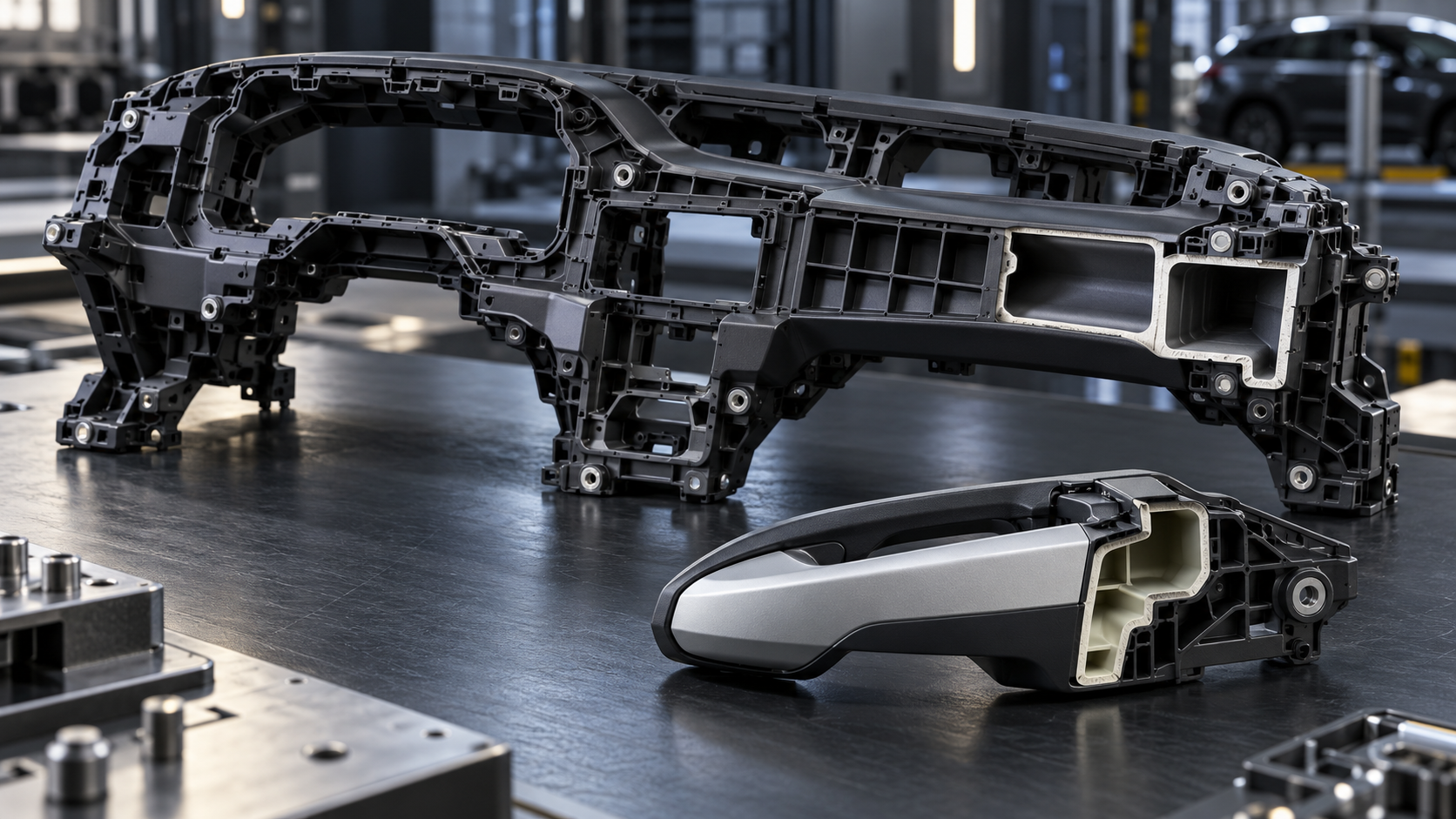
I choose LDPE when a part needs extreme flexibility, like soft squeeze tubes or flexible grommets. I choose HDPE when a part needs rigid structural strength, like fluid tanks or wheel arch liners. HDPE costs slightly more than LDPE, but HDPE delivers far superior impact resistance and stiffness. Understanding molecular density ensures you pick the strongest polyethylene grade for your specific car application.
Conclusion
Multi-shot and gas-assisted molding deliver the best results for complex automotive components. Choose materials like glass-filled PA66, PEEK, or PP to maximize part strength, cut weight, and lower production costs.
My Role
About me
Brand Name: Kenvox
Slogan: Just show us your design or idea,Kenvox will return you a perfect finished product!
Website: www.kenvox.com
Our Mission:
Kenvox is a knowledge-sharing platform dedicated to helping anyone interested in mold design and manufacturing gain a deeper understanding of the craft. Our goal is to make mold knowledge accessible to all, from beginners to seasoned professionals.

 **KENVOX INDUSTRIAL (HONGKONG) CO., LTD** is a Hong Kong–based contract manufacturing group (est. **1989**) focused on **plastic, silicone, and metal tooling and finished parts**, with OEM/ODM, design support, and **one-stop turnkey** project delivery from concept through mold, production, secondary processes, assembly, packaging, and export logistics. The group operates wholly owned and partner facilities in **Dongguan, Huizhou, Shenzhen (commercial/engineering)**, and **Vietnam** (plastic, silicone, and precision metal), and promotes primarily as a **manufacturer platform** rather than a generic trading broker. Website: **www.kenvox.com**.

    **Services Offered:**

    - **Product & engineering design:** Component design, reverse engineering, DFM/DFMA, tooling/fixture/gauge design, and drawing refinement for manufacturability.
    - **Prototyping:** CNC prototypes (plastic/metal), silicone **sample molds**, silicone **overmolding** for small plastic prototype runs, and engineering/appearance validation before production tooling.
    - **Injection mold design & manufacturing:** Plastic injection molds (including gas-assisted, insert, precision, and **two-shot / overmolding**), plus related mold flow analysis and DFM reporting.
    - **Custom manufacturing — plastic:** High- and low-volume injection molding, **dual-color injection**, overmolding, insert molding; support for clean-room medical molding (up to **Class 10,000** where applicable).
    - **Custom manufacturing — silicone:** Compression molding, **LSR (liquid silicone) injection**, dispensing/epoxy, and related finished silicone parts.
    - **Custom manufacturing — metal:** CNC machining, **die casting**, **stamping** (sheet metal), and coordinated metal supply through JV/partner metal operations.
    - **Secondary processing & assembly:** Silk screen and pad printing, laser engraving, painting/UV coating, sand blast texturing, vacuum plating, ultrasonic welding, simple structural assembly, and coordination of anodizing, electroplating, powder coating, and other outsourced finishes.
    - **Supply chain & project operations:** Sourcing of related components (electronics/EMS, packaging, standard parts, wood/glass/textiles via vetted suppliers), warehousing, multi-destination shipping, and testing/certification coordination (e.g. CE, FCC, UL, FDA, LFGB as required by product/market).

    **Certifications and Quality Assurance:**

    KENVOX operates under **ISO 9001**, **IATF/TS 16949** (automotive quality), and **ISO 14001**, with incoming-to-outgoing QC, dedicated QA resources, and ERP-backed documentation and traceability for molds and production.

    **Team and Communication:**

    Sales and project staff are positioned for **direct English communication** with overseas clients; foreign-trade engineers typically bring **10+ years** of industry experience, with appointed **project leaders** per case for faster quotations (streamlined internal approval vs. typical factory hierarchies), online technical reviews, and ongoing follow-up through mold trials (T0/T1…), golden samples, and mass production.

    **Production Capabilities:**

    Group scale (figures vary by document/year—use ranges when speaking to customers): roughly **600–1,300+ employees**, **~30,000–40,000+ m²** manufacturing footprint, **70–80% export** orientation. Plastic injection capacity includes **190+ injection machines** (about **75–1,000 ton** class across the network, with **dual-color** capability and partner access to **~1,000 ton** machines), **1300+ tons/year** plastic processing capacity cited for major plastic sites, and **60+** silicone-related machines (compression, transfer, LSR, dispensing). Mold shop highlights include **high-speed CNC (e.g. Mikron)**, **EDM / mirror EDM**, **slow-wire EDM**, grinding, and **CMM** measurement; Huizhou-scale plastic operations cite on the order of **~400 molds/year** and **~5,000 T** injection parts (site-dependent).

    **Global Reach:**

    Primary markets: **North America, South America, Western/Eastern Europe, East Asia, Middle East, and Australia**, with reference customers/brands including **CASIO, BROTHER, BBK, KINPO, LADA**, and automotive/industrial names (e.g. **VAZ, GAZ**). **U.S. sales support** is referenced (California); **European branch** is planned rather than fully established. KENVOX targets **mid-to-high-end** buyers—especially **industrial/product design firms**, **brand owners**, **contract manufacturers/assemblers**, **sourcing firms**, and **regional mold shops** subcontracting to China/Vietnam—who value turnkey execution, dual-material molding, medical/clean-room options, and responsive project management over lowest-unit-price-only sourcing.
About him/her
Product and Mold Designer User Profile (Jacky)
Age: 31
Country: USA
Education: Degree in product design or mechanical engineering
Work Experience: 10 years of experience in product and mold design
Ryan is a seasoned designer who works in a mid-sized manufacturing company, specializing in plastic components for consumer electronics. His role involves ensuring that designs meet both aesthetic and functional requirements while being optimized for large-scale production. Ryan is highly proficient with CAD tools and mold design principles, regularly collaborating with engineers and production teams. He seeks to keep up with advancements in mold design, new materials, and manufacturing technologies to improve product quality and reduce costs. His main challenges include calculating mold shrinkage, managing tight project deadlines, and incorporating the latest design techniques.