


LSR vs. Thermoset Silicone: Which Molding Process Fits Your Part Design?
Choosing the wrong silicone molding process causes costly tool revisions and production delays. You need a reliable method that matches your exact part geometry, production volume, and performance requirements.
Liquid silicone rubber (LSR) and high-consistency rubber (HCR) are both thermoset silicones that offer heat resistance, biocompatibility, and low compression set. Choosing LSR or HCR depends on your volume, precision needs, and wall thickness.
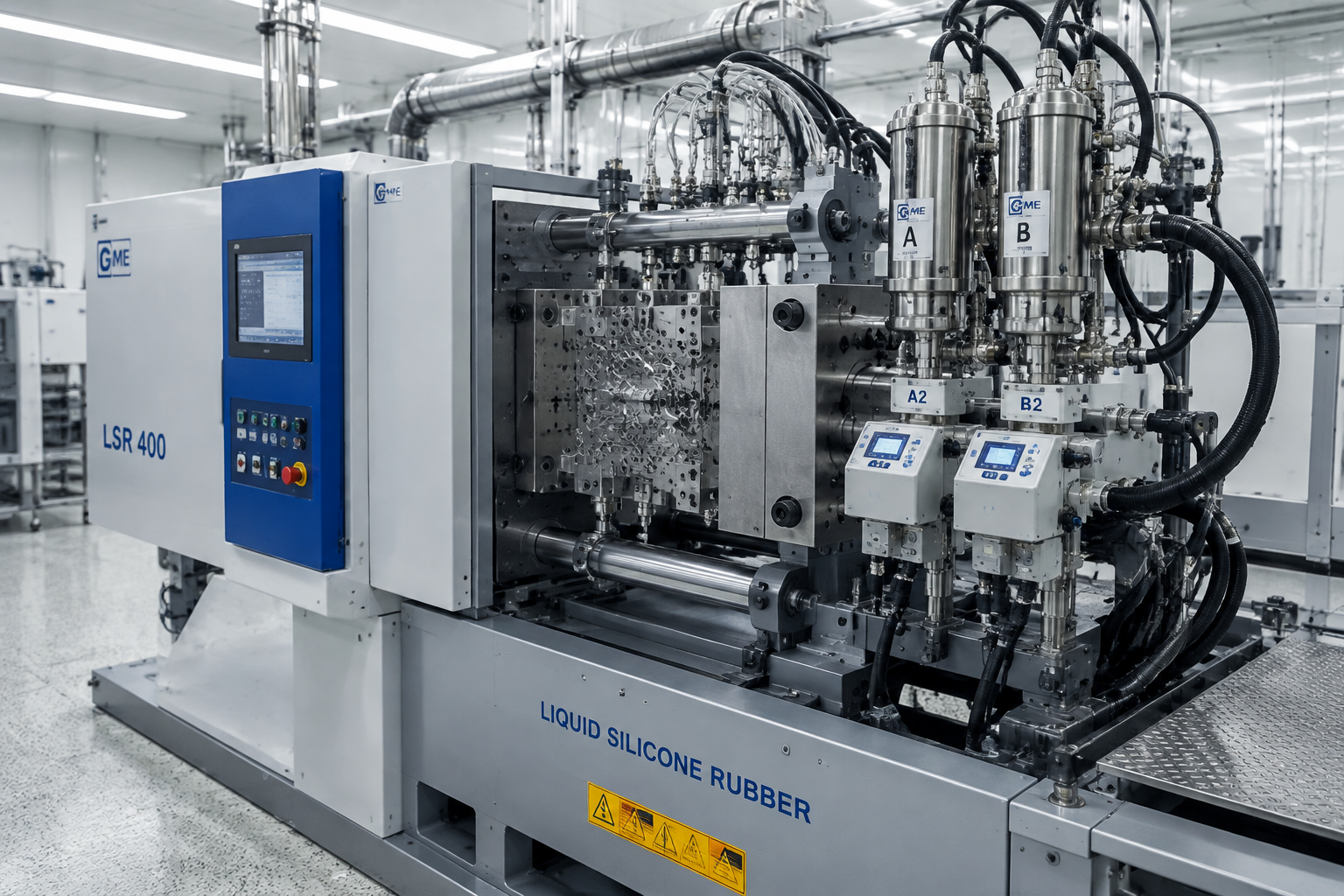
Read this comparison to avoid tool design mistakes and select the right molding process for your part.
Is LSR a Thermoset?
You risk part failure if you assume all flexible polymers melt and flow the same way. Misunderstanding material curing leads to wrong tooling setups and ruined production batches.
Yes. Liquid silicone rubber is a thermoset elastomer that undergoes irreversible chemical cross-linking during heat curing. Once cured, you cannot remelt or reprocess it like a standard thermoplastic material.
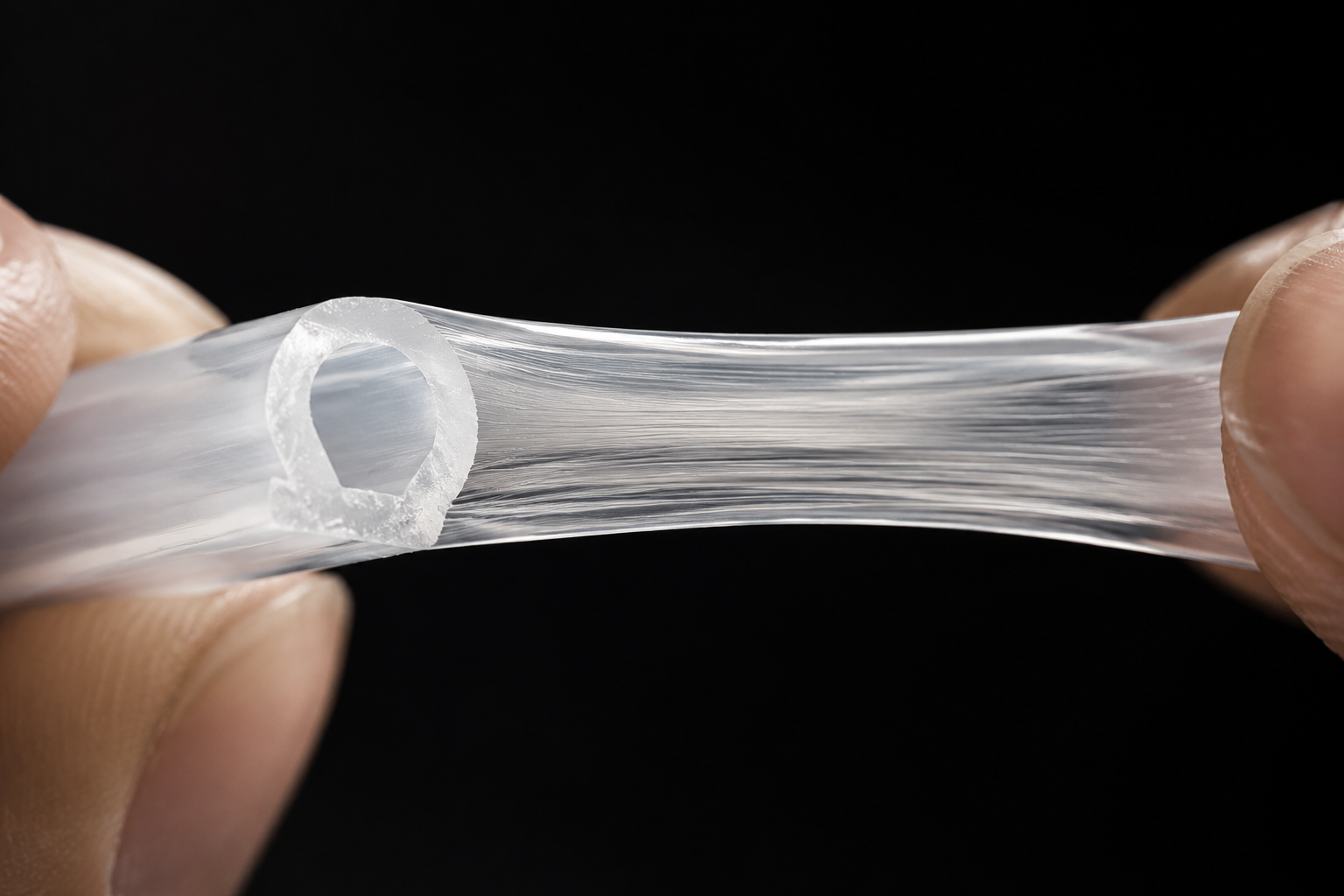
Material Structure and Heat Performance
I learned this lesson early in my design career. I worked on a custom high-temperature seal for an electronic enclosure. I initially picked a standard thermoplastic elastomer to save money. The seal melted and lost its shape under stress during high-heat testing. We switched to LSR, and the cross-linked polymer network kept its elasticity without any distortion.
LSR starts as a two-part liquid. Part A contains the base silicone and platinum catalyst. Part B contains the cross-linker. When you mix and heat these parts, they form a permanent three-dimensional molecular grid.
This permanent molecular bond gives LSR key physical properties:
- Continuous service temperature from -50 °C up to +200 °C
- Outstanding resistance to permanent deformation under long-term compression
- Complete immunity to remelting, even at extreme heat levels
| Property | Thermoplastic (e.g., TPE) | Thermoset Silicone (LSR) |
|---|---|---|
| Molecular Structure | Linear or branched chains | 3D cross-linked network |
| Heat Reaction | Melts when heated | Cures permanently when heated |
| Re-processability | Can be melted and recycled | Cannot be remelted |
| Thermal Stability | Drops sharply above 100 °C | Maintains shape up to 200 °C+ |
What Is the Process of LSR Molding?
Using incorrect process parameters causes premix curing inside your barrel. This ruins your material supply, damages equipment, and causes severe machine downtime.
LSR molding uses Liquid Injection Molding (LIM), where cold liquid silicone enters a heated mold cavity. The high heat in the tool triggers rapid platinum-catalyzed vulcanization in seconds.
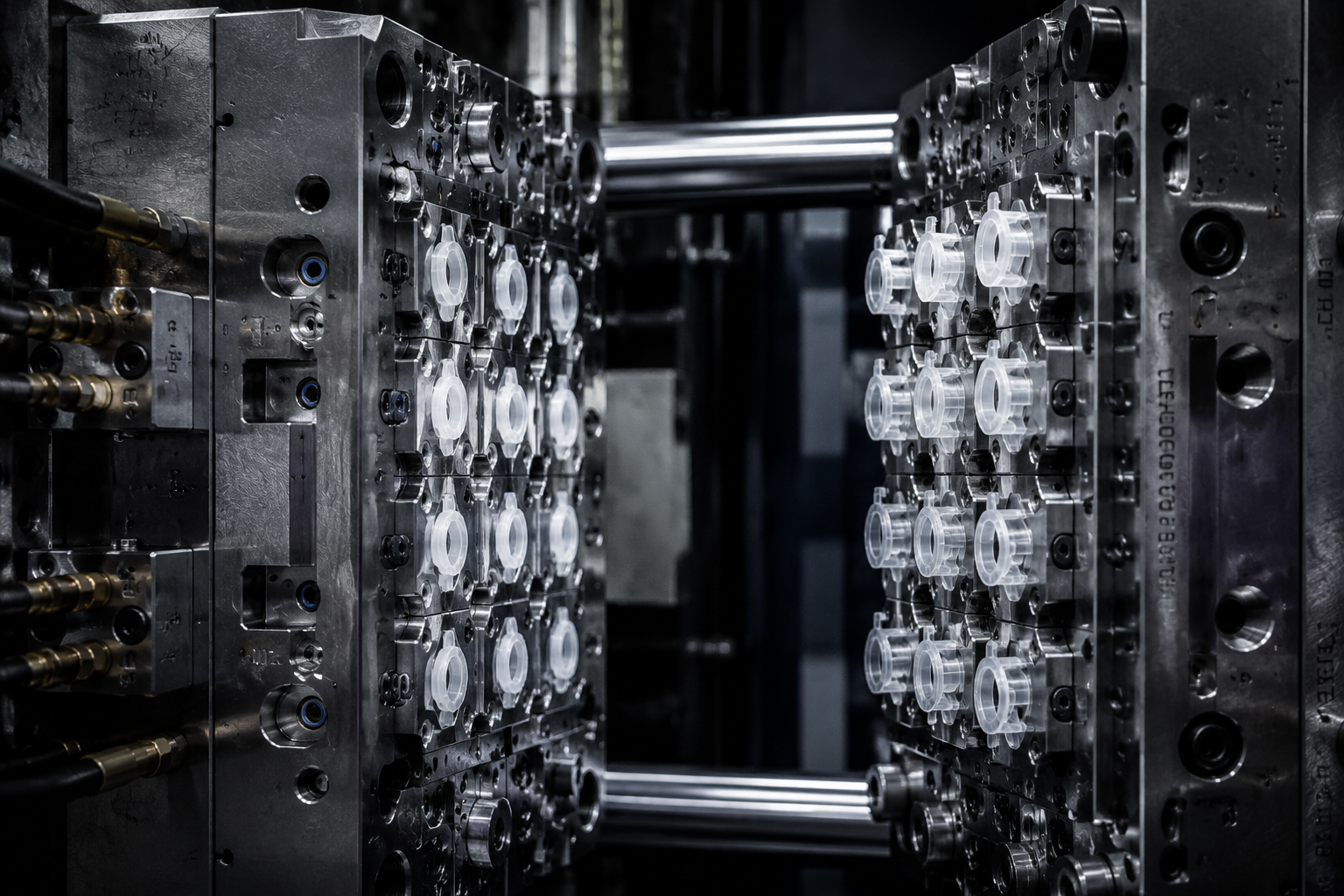
Step-by-Step Liquid Injection Molding Workflow
I remember my first project using a cold runner system for an LSR medical valve. We kept the barrel chilled at 20 °C while the mold ran at 180 °C. I was amazed by how clean the parts came out without any flash or material waste.
The LIM process follows five distinct mechanical steps:
- Precision Metering: A specialized pumping unit delivers Component A and Component B in an exact 1:1 ratio by volume.
- Static Mixing: The two liquid streams pass through a static mixer. Color pigments are added at this stage if required.
- Chilled Delivery: The mixed liquid flows through a cold barrel and a cold runner system to keep the material cool.
- Hot Tool Injection: The cool liquid enters the hot mold cavity under lower pressure than standard plastic injection.
- Rapid Vulcanization: The tool heat triggers the platinum catalyst, curing the part in 10 to 60 seconds.
| Process Stage | Temperature Range | Function |
|---|---|---|
| Dosing & Mixing Unit | 15 °C to 25 °C | Keeps material liquid and stable |
| Barrel & Cold Runner | 15 °C to 20 °C | Prevents early cross-linking |
| Mold Cavity | 150 °C to 200 °C | Triggers fast heat vulcanization |
Can Thermosets Be Used for Injection Molding?
Many engineers believe injection molding only works for thermoplastics that melt and cool. This misconception limits your options for high-performance heat-resistant components.
Yes. Thermosets like LSR, phenolics, and epoxies are routinely injection molded using specialized equipment. The machine keeps the raw material cold during delivery and cures it inside a hot mold.
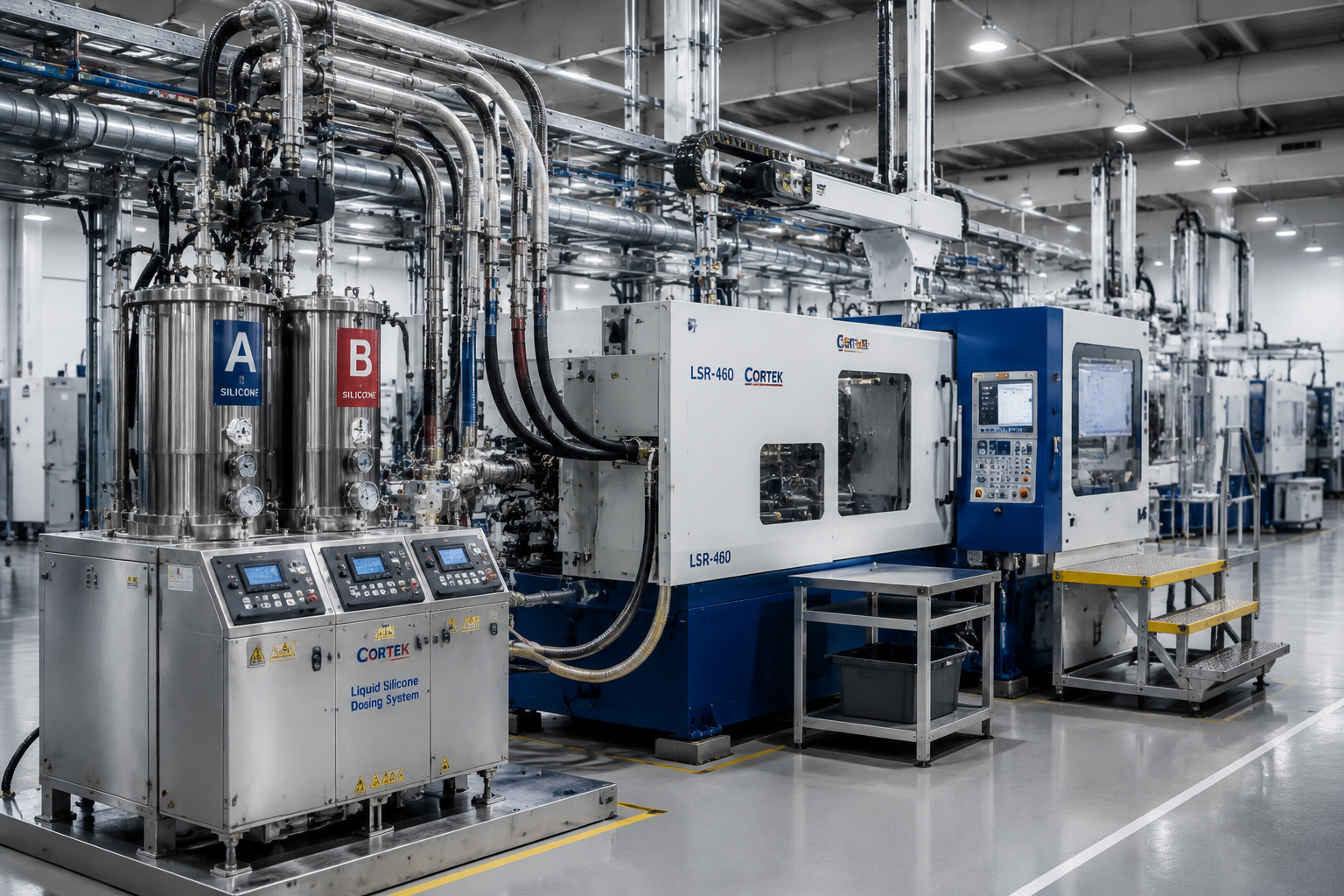
Machinery Differences: Thermoplastic vs. Thermoset
I once reviewed a project where a customer tried to run LSR through a standard plastic injection machine. The material cured inside the heated barrel and locked up the screw completely. We had to tear down the barrel and rebuild the delivery system.
To inject mold thermosets, you must reverse the standard thermal profile of the machine:
- Thermoplastic Molding: You heat the barrel to melt the plastic, then inject it into a chilled mold to freeze the shape.
- Thermoset Injection Molding: You cool the barrel to keep the liquid fluid, then inject it into a heated mold to cure the polymer.
Thermoset injection molding machines use water-cooled barrels, short non-return valves, and closed-loop temperature units. LSR is ideal for this process because its low liquid viscosity flows easily into intricate tool cavities before curing.
| Machine Feature | Thermoplastic Setup | Thermoset (LSR) Setup |
|---|---|---|
| Barrel Control | Heating bands (180 °C – 300 °C) | Cooling jackets (15 °C – 25 °C) |
| Mold Temperature | Cooling lines (20 °C – 80 °C) | Heating cartridges (150 °C – 200 °C) |
| Material Delivery | Solid pellets melted by screw | Pumped liquid mixed in static tube |
| Runner System | Hot runners keep material molten | Cold runners keep material liquid |
What Is the Difference Between TPE and LSR?
Picking TPE over LSR to cut material costs often backfires in high-stress environments. TPE seals can fail over time, causing product leaks and expensive warranty returns.
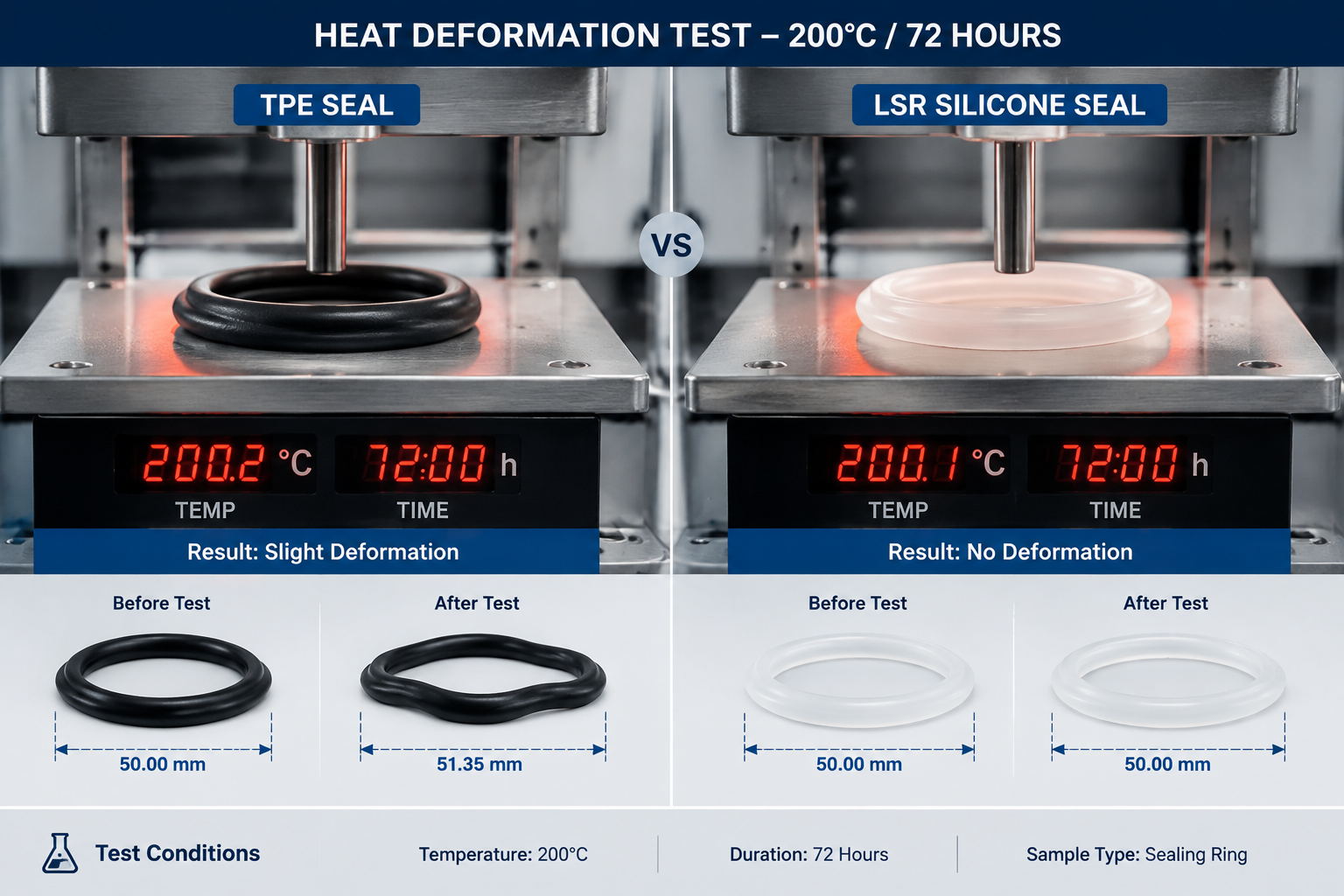
TPE melts and flows when heated, making it easy to recycle. LSR is a thermoset silicone that maintains its elastic seal at extreme temperatures where TPE breaks down.
Performance Comparison for Part Design
I designed a gasket for an outdoor wearable device a few years ago. We debated between a cheap TPE grade and a medical-grade LSR. We ran thermal stress tests at 85 °C for 500 hours. The TPE set permanently and lost its seal force, while the LSR recovered its original shape instantly.
When you choose between TPE and LSR, evaluate these critical factors:
- Temperature Resistance: TPE softens near 100 °C, while LSR handles continuous heat up to 200 °C.
- Compression Set: LSR offers superior elastic recovery under long-term mechanical loads.
- Biocompatibility: Platinum-cured LSR meets strict medical standards without adding plasticizers.
- Production Costs: TPE tooling costs less, but LSR excels in high-volume automated production.
| Feature | TPE (Thermoplastic) | LSR (Liquid Silicone) |
|---|---|---|
| Material Base | Thermoplastic blend | Platinum-cured silicone |
| Recyclability | Scrap can be remelted | Cannot be remelted |
| Heat Resistance | -40 °C to 110 °C | -50 °C to 200 °C+ |
| Compression Set | High (looses shape) | Very Low (retains elasticity) |
| Primary Benefit | Low material cost | Extreme environmental stability |
Is Silicone a Thermoset?
Assuming all silicone products behave like soft rubbers causes major tool design errors. Using the wrong silicone type leads to incorrect shrinkage calculations and bad part fits.
Most solid and liquid silicone rubbers used in molded parts are thermosets. Once cross-linked by heat, they form permanent bonds that will not melt under extreme thermal conditions.
Silicone Material Variants in Manufacturing
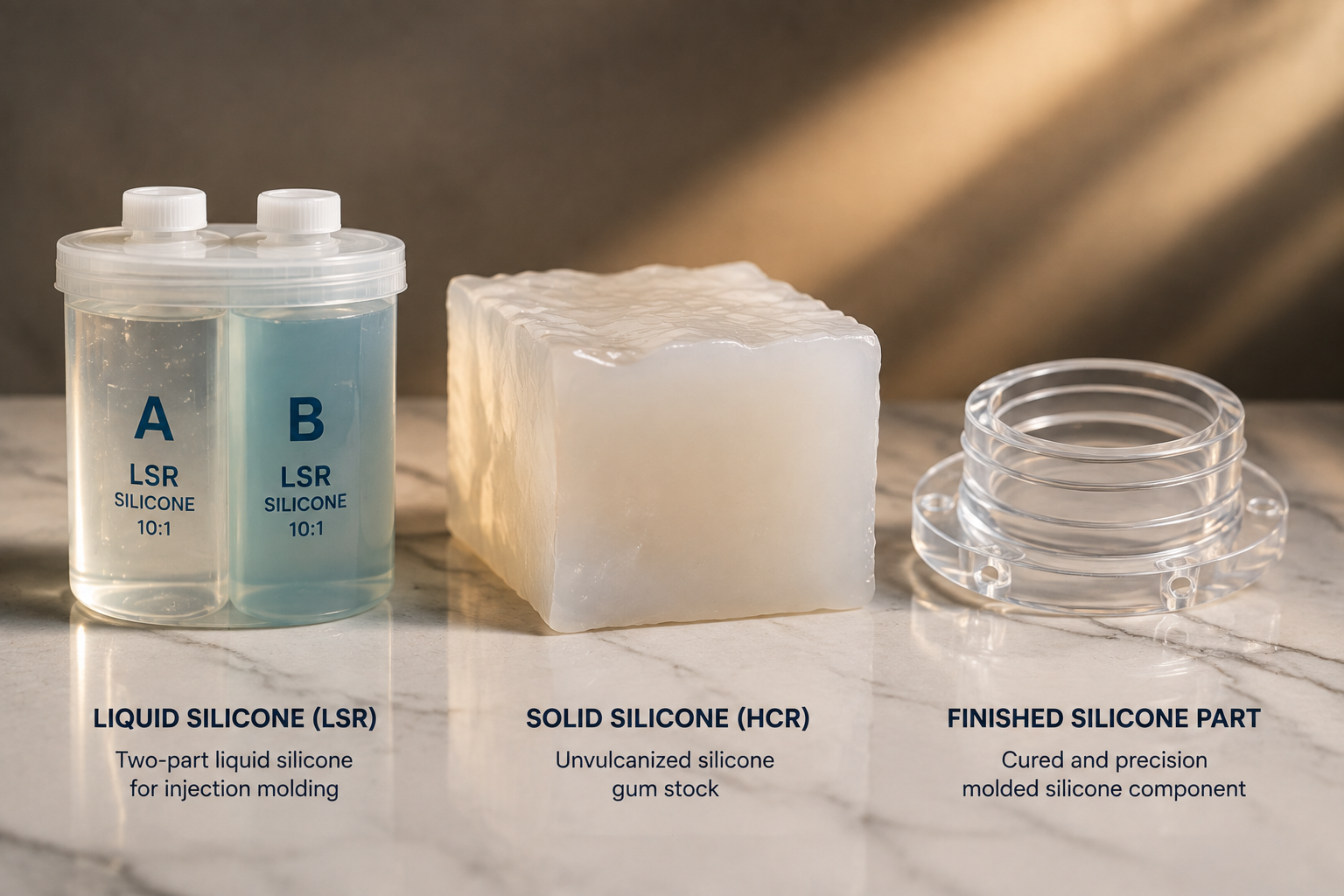
Early in my career, I thought all silicones came in liquid drums. I quickly learned that the silicone family includes many different physical forms, from thin oils to dense gum stocks.
While raw silicone polymers exist in various forms, molded elastic parts rely on thermoset curing chemistry:
- Silicone Elastomers (LSR & HCR): These are true thermosets that cross-link into permanent shapes using heat and catalysts.
- Silicone Fluids and Gels: These unlinked or lightly linked polymers serve as lubricants or damping gels.
- Fluorosilicone: A thermoset variant with added fluorine groups to resist fuels, oils, and harsh chemicals.
The permanent vulcanization process prevents silicone seals, grommets, and medical components from degrading when exposed to harsh chemicals, sterilization steam, or outdoor weathering.
| Silicone Class | Physical Form | Curing Mechanism | Typical Application |
|---|---|---|---|
| LSR | Low-viscosity liquid | Platinum addition cure | High-precision medical & auto parts |
| HCR | Clay-like solid gum | Peroxide or platinum cure | Large seals, hoses, keypads |
| Silicone Gels | Soft liquid gel | Low cross-link addition | Electrical insulation, shock mounts |
What Is the Difference Between HCR and LSR Silicone?
Choosing HCR compression molding for complex thin-walled parts causes high defect rates. Manual flash trimming increases labor costs and slows down delivery schedules.
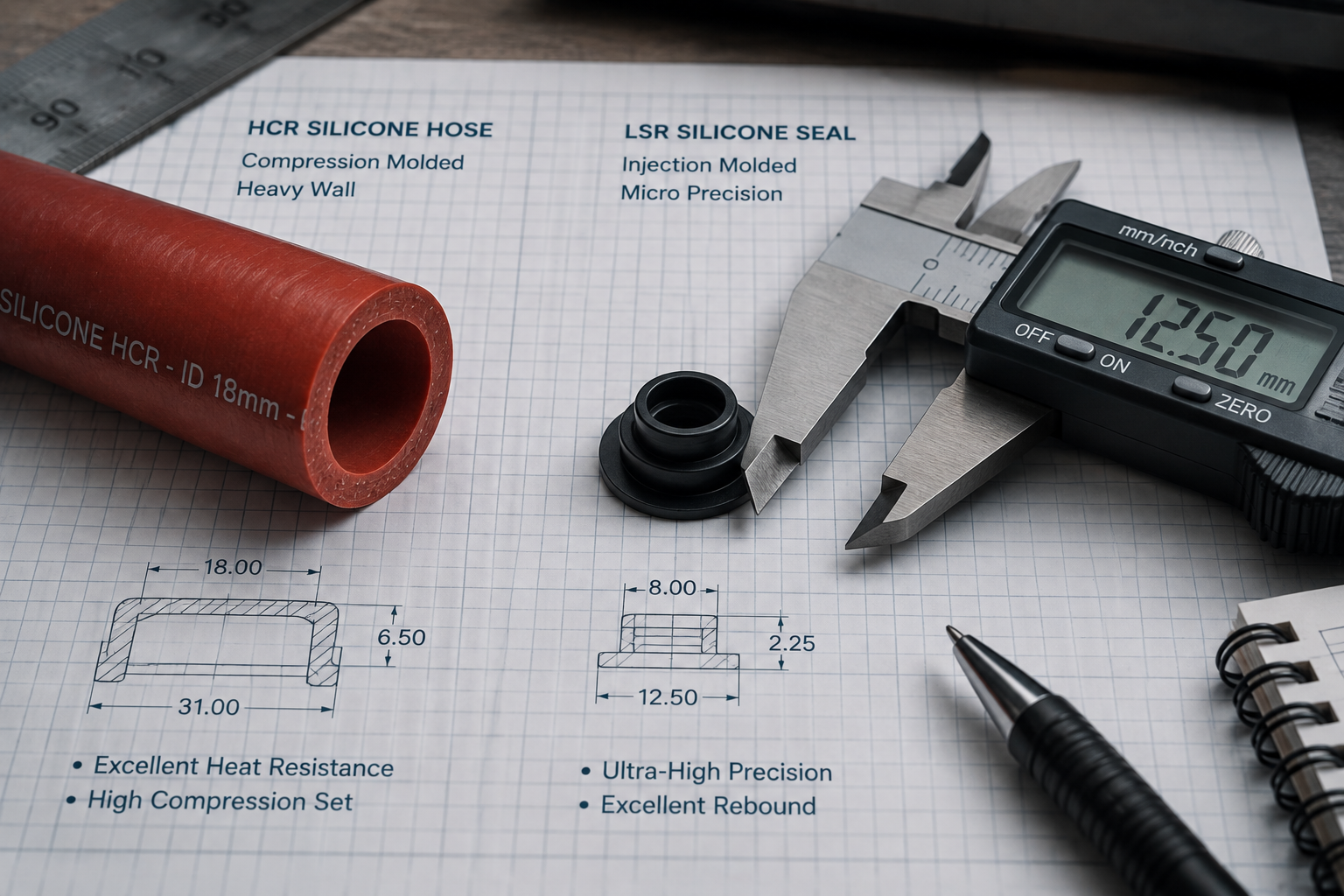
HCR is a thick gum silicone processed via compression or transfer molding. LSR is a pumpable liquid molded via automated injection for high-precision, thin-walled designs.
Process and Tooling Selection Guide
I worked on an automotive boot seal that was originally made from HCR compression tooling. The part had complex inner ribs, and manual loading created thick flash lines that caused seal failures. We redesigned the part for LSR injection molding. Cycle times dropped from four minutes to thirty seconds, and flash disappeared completely.
Here is how you should decide between HCR and LSR for your project:
- Geometry: Use LSR for complex internal features, thin walls down to 0.5 mm, or micro-molded parts. Use HCR for thick, heavy-section designs.
- Production Volume: Choose LSR for medium-to-high annual volumes to offset higher initial tooling costs. Choose HCR for low-volume runs.
- Automation: LSR supports fully automated, flashless, lights-out production. HCR requires manual loading and trimming.
| Manufacturing Aspect | HCR Silicone | LSR Silicone |
|---|---|---|
| Raw Material Form | High-viscosity gum | Low-viscosity two-part liquid |
| Primary Process | Compression / Transfer | Liquid Injection Molding |
| Cycle Time | 2 to 5 minutes | 10 to 60 seconds |
| Tooling Cost | Lower upfront cost | Higher precision tool cost |
| Automation Level | Mostly manual labor | Fully automated |
Conclusion
LSR and HCR both deliver excellent silicone heat performance. Choose LSR for high volumes, thin walls, and automated precision. Choose HCR for lower volumes and thicker parts.
My Role
About me
Brand Name: Kenvox
Slogan: Just show us your design or idea, Kenvox will return you a perfect finished product!
Website: www.kenvox.com
Our Mission: Kenvox is a knowledge-sharing platform dedicated to helping anyone interested in mold design and manufacturing gain a deeper understanding of the craft. Our goal is to make mold knowledge accessible to all, from beginners to seasoned professionals.
KENVOX INDUSTRIAL (HONGKONG) CO., LTD is a Hong Kong–based contract manufacturing group (est. 1989) focused on plastic, silicone, and metal tooling and finished parts, with OEM/ODM, design support, and one-stop turnkey project delivery from concept through mold, production, secondary processes, assembly, packaging, and export logistics. The group operates wholly owned and partner facilities in Dongguan, Huizhou, Shenzhen (commercial/engineering), and Vietnam (plastic, silicone, and precision metal), and promotes primarily as a manufacturer platform rather than a generic trading broker. Website: www.kenvox.com.
Services Offered:
- Product & engineering design: Component design, reverse engineering, DFM/DFMA, tooling/fixture/gauge design, and drawing refinement for manufacturability.
- Prototyping: CNC prototypes (plastic/metal), silicone sample molds, silicone overmolding for small plastic prototype runs, and engineering/appearance validation before production tooling.
- Injection mold design & manufacturing: Plastic injection molds (including gas-assisted, insert, precision, and two-shot / overmolding), plus related mold flow analysis and DFM reporting.
- Custom manufacturing — plastic: High- and low-volume injection molding, dual-color injection, overmolding, insert molding; support for clean-room medical molding (up to Class 10,000 where applicable).
- Custom manufacturing — silicone: Compression molding, LSR (liquid silicone) injection, dispensing/epoxy, and related finished silicone parts.
- Custom manufacturing — metal: CNC machining, die casting, stamping (sheet metal), and coordinated metal supply through JV/partner metal operations.
- Secondary processing & assembly: Silk screen and pad printing, laser engraving, painting/UV coating, sand blast texturing, vacuum plating, ultrasonic welding, simple structural assembly, and coordination of anodizing, electroplating, powder coating, and other outsourced finishes.
- Supply chain & project operations: Sourcing of related components (electronics/EMS, packaging, standard parts, wood/glass/textiles via vetted suppliers), warehousing, multi-destination shipping, and testing/certification coordination (e.g. CE, FCC, UL, FDA, LFGB as required by product/market).
Certifications and Quality Assurance:
KENVOX operates under ISO 9001, IATF/TS 16949 (automotive quality), and ISO 14001, with incoming-to-outgoing QC, dedicated QA resources, and ERP-backed documentation and traceability for molds and production.
Team and Communication:
Sales and project staff are positioned for direct English communication with overseas clients; foreign-trade engineers typically bring 10+ years of industry experience, with appointed project leaders per case for faster quotations (streamlined internal approval vs. typical factory hierarchies), online technical reviews, and ongoing follow-up through mold trials (T0/T1…), golden samples, and mass production.
Production Capabilities:
Group scale: roughly 600–1,300+ employees, ~30,000–40,000+ m² manufacturing footprint, 70–80% export orientation. Plastic injection capacity includes 190+ injection machines (about 75–1,000 ton class across the network, with dual-color capability and partner access to ~1,000 ton machines), 1,300+ tons/year plastic processing capacity cited for major plastic sites, and 60+ silicone-related machines (compression, transfer, LSR, dispensing). Mold shop highlights include high-speed CNC (e.g. Mikron), EDM / mirror EDM, slow-wire EDM, grinding, and CMM measurement; Huizhou-scale plastic operations cite on the order of ~400 molds/year and ~5,000 T injection parts (site-dependent).
Global Reach:
Primary markets: North America, South America, Western/Eastern Europe, East Asia, Middle East, and Australia, with reference customers/brands including CASIO, BROTHER, BBK, KINPO, LADA, and automotive/industrial names (e.g. VAZ, GAZ). U.S. sales support is referenced (California); European branch is planned rather than fully established. KENVOX targets mid-to-high-end buyers—especially industrial/product design firms, brand owners, contract manufacturers/assemblers, sourcing firms, and regional mold shops subcontracting to China/Vietnam—who value turnkey execution, dual-material molding, medical/clean-room options, and responsive project management over lowest-unit-price-only sourcing.
About him/her
Product and Mold Designer User Profile (Ryan)
Age: 31
Country: USA
Education: Degree in product design or mechanical engineering
Work Experience: 10 years of experience in product and mold design
Ryan is a seasoned designer who works in a mid-sized manufacturing company, specializing in plastic components for consumer electronics. His role involves ensuring that designs meet both aesthetic and functional requirements while being optimized for large-scale production. Ryan is highly proficient with CAD tools and mold design principles, regularly collaborating with engineers and production teams. He seeks to keep up with advancements in mold design, new materials, and manufacturing technologies to improve product quality and reduce costs. His main challenges include calculating mold shrinkage, managing tight project deadlines, and incorporating the latest design techniques.