


How Can Plastic Injection Molding Reduce Your Manufacturing Costs?
High manufacturing costs eat up your budget fast. Plastic injection molding is different. It changes the game for companies that want to grow.
Injection molding lowers costs by spreading fixed tooling expenses over thousands of parts. It uses high-speed cycles and recyclable waste to cut material and labor expenses. This makes it the best choice for high-volume production.
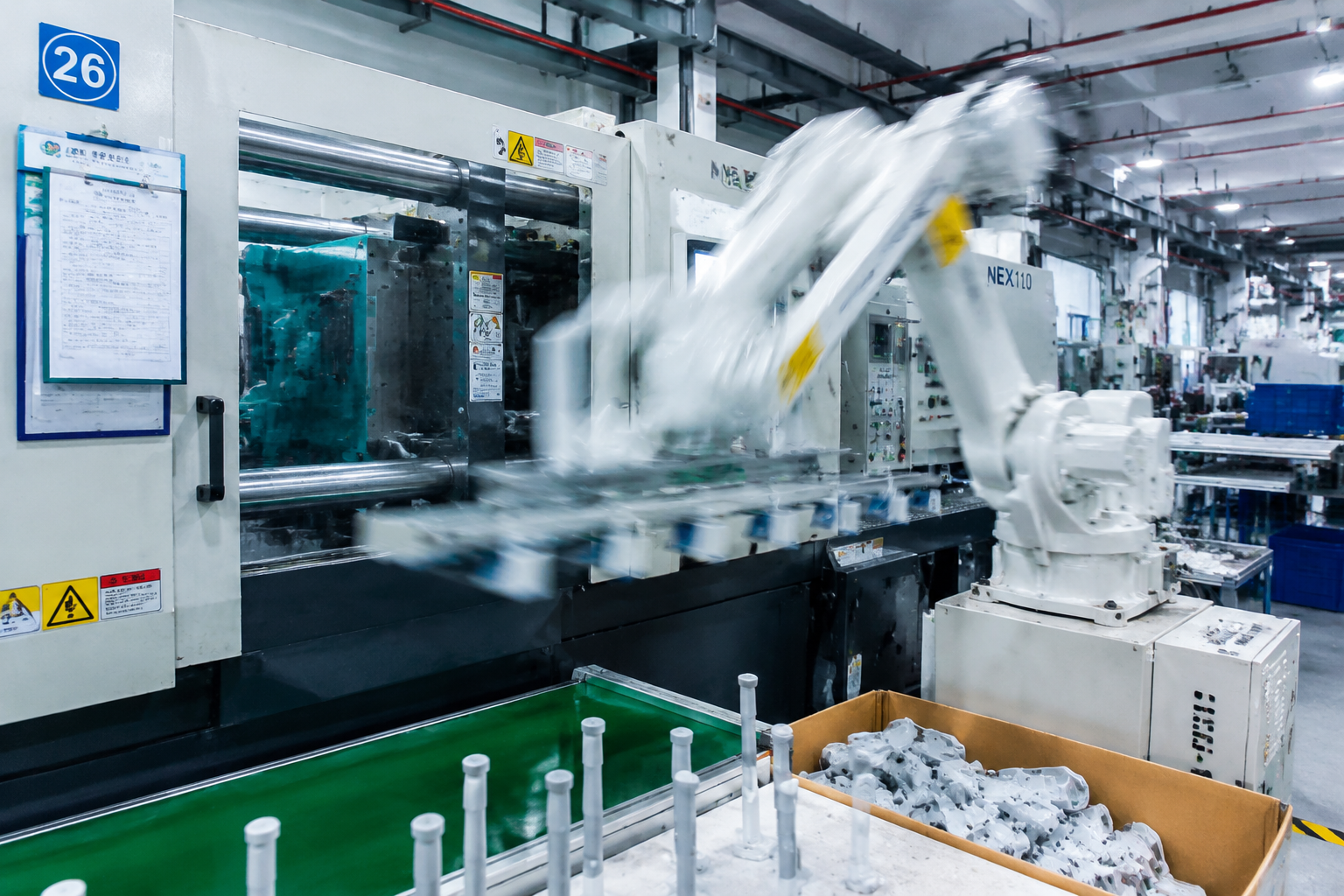
This method works because it solves three main problems. Let me show you how it lowers prices while keeping quality high.
How Does High-Volume Production Lower Per-Part Costs in Injection Molding?
Tooling costs seem high at first. But the price of each part drops fast once you start making thousands.
The per-part cost decreases as production volume increases. The initial mold investment is paid off quickly. This makes plastic molding cheaper than CNC machining for medium and high volume runs.
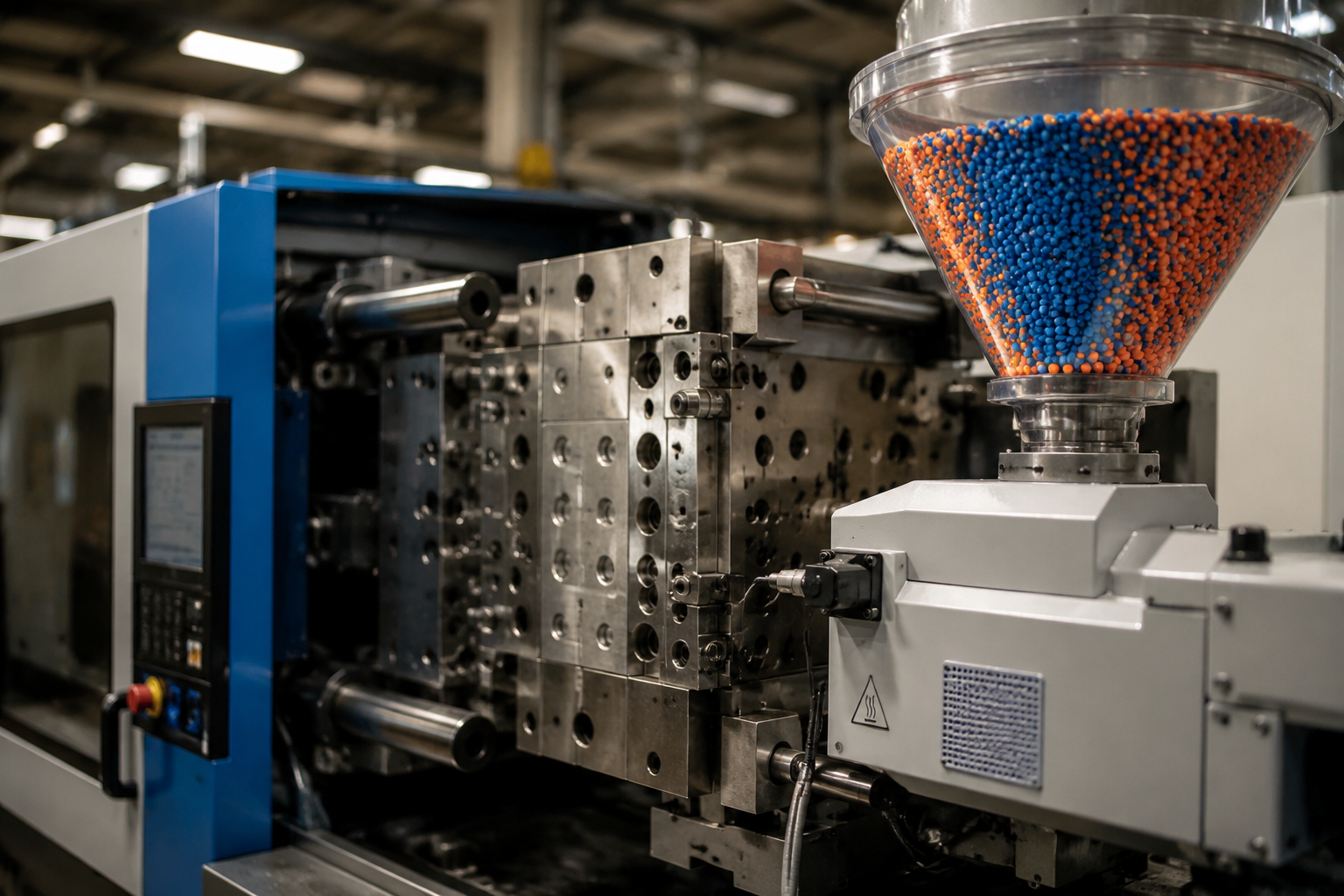
Amortization and Economies of Scale
The main reason injection molding wins on price is fixed cost amortization. A mold might cost a lot upfront. But if you make 100,000 units, that cost is tiny for each part. Other methods like 3D printing do not scale well. You pay the same high price for every single item.
I have seen projects switch from machining to molding and save 60%. Once the mold is paid for, the running costs are very low. This is the power of high-volume production.
| Method | Fixed Cost | Variable Cost (Per Part) |
|---|---|---|
| Injection Molding | High (Mold) | Very Low |
| 3D Printing | Low | High |
| CNC Machining | Low/Med | High |
How Can Smart Part Design Reduce Waste and Material Expenses?
Poor design wastes money. Good design saves resin and speeds up the cycle time. Small changes make a big difference.
Smart design uses thinner walls and ribs to save plastic. Choosing the right resin grade prevents over-specifying materials. This reduces waste and lowers the cost of the final product.
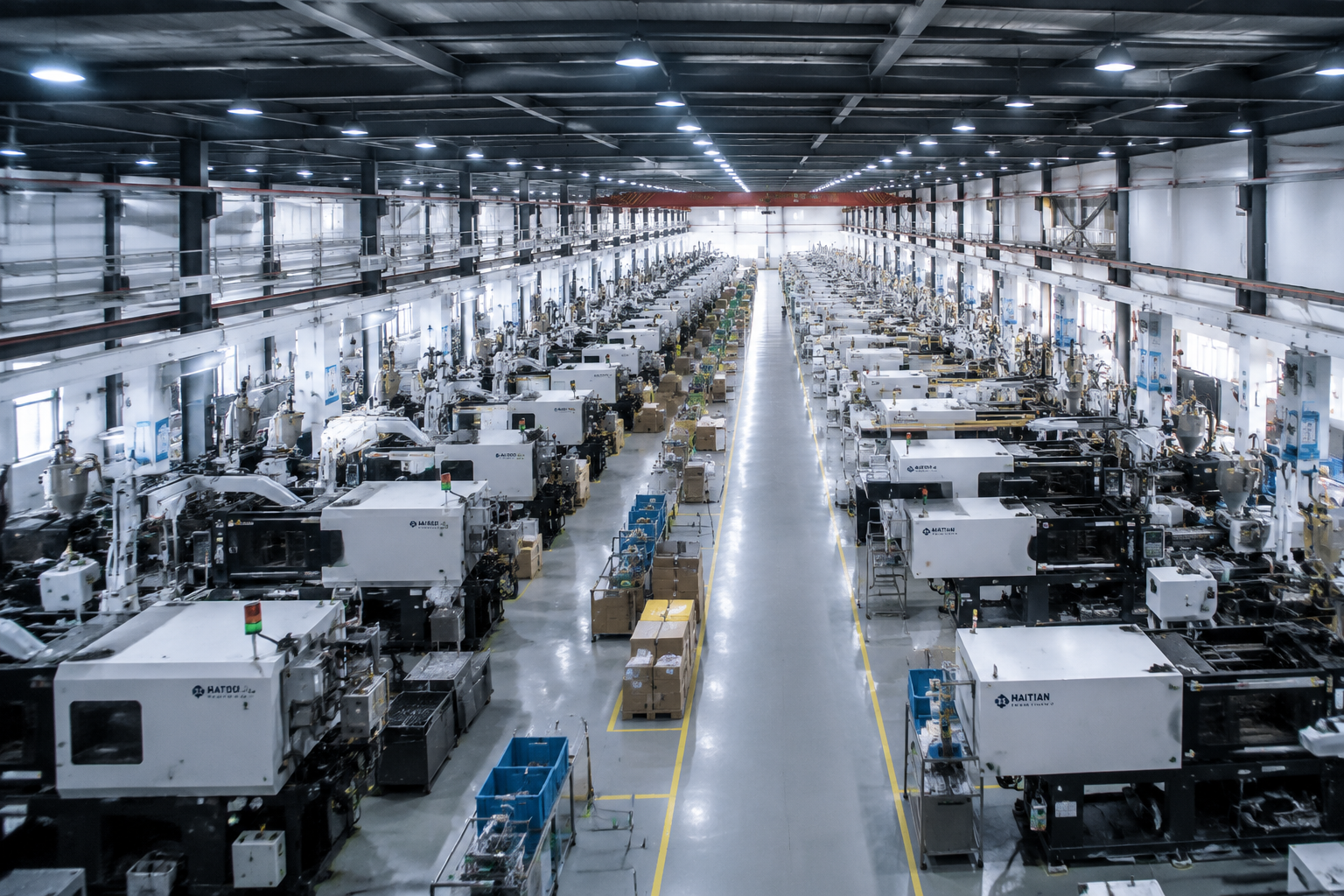
Design for Manufacturability (DFM)
I always start with DFM. We look at wall thickness. Thin walls use less plastic. They also cool faster. Faster cooling means the machine can make more parts in an hour.
Material Selection Strategy
We do not need "super plastics" for every job. A common resin often works just as well as an expensive one. Using regrind—recycled plastic from the sprue—also saves money without hurting strength.
| Design Factor | Impact on Cost |
|---|---|
| Thinner Walls | Less Material, Faster Cycle |
| Complex Geometry | Longer Cycle, More Wear |
| Simple Parting Line | Faster Mold Making |
How Does Process Optimization Cut Labor and Cycle Time?
Manual work costs money. Automated molding runs 24/7. It does not get tired. It keeps every part the same.
Automation reduces labor costs and human error. Optimized cooling and gating shorten the cycle time. Recyclable waste from runners lowers material expenses.
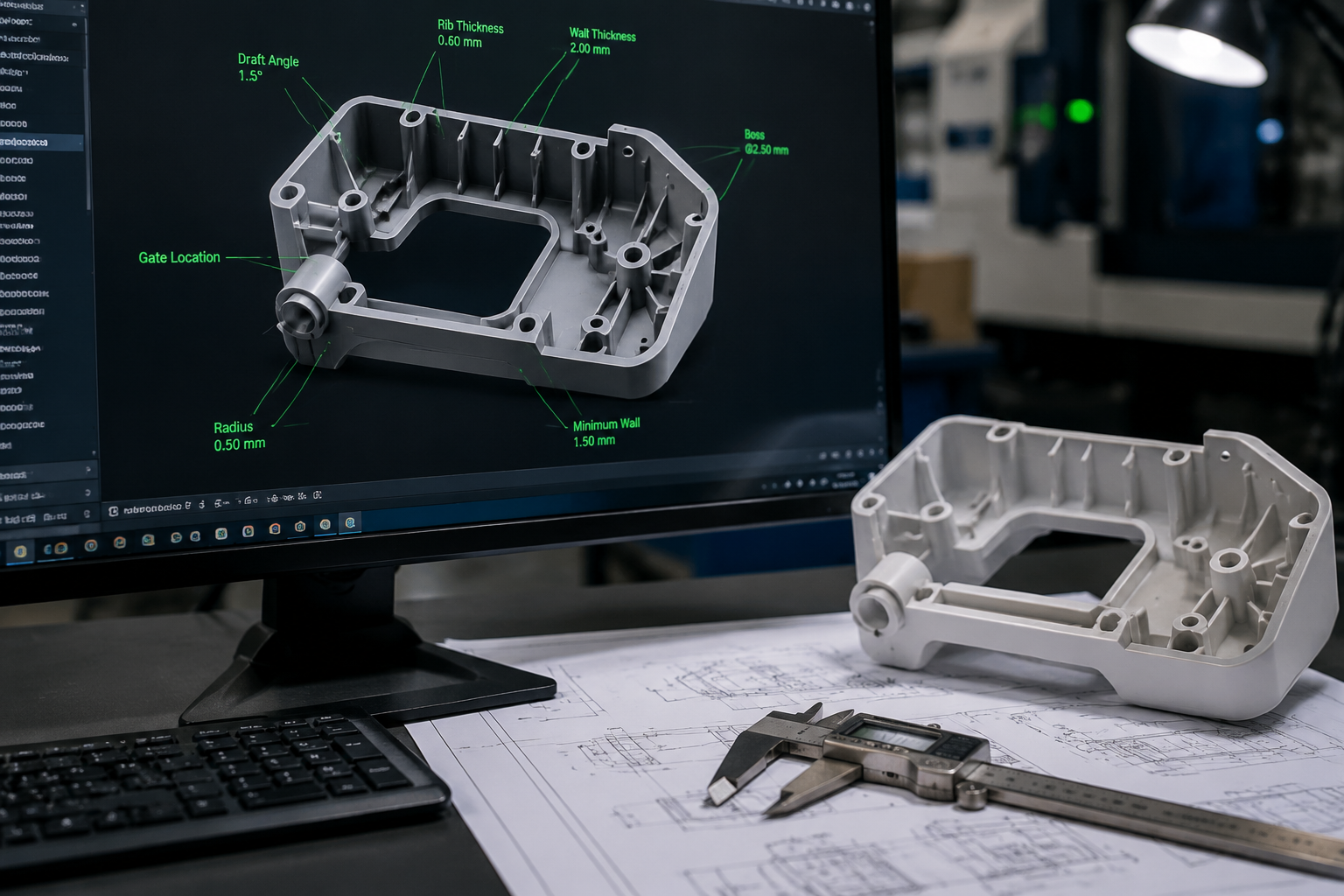
Automation and Robots
Robots take parts out of the machine. They stack them or put them in a bin. This removes the need for a worker to stand there all day. It is faster and cleaner.
Tuning the Cycle
I look at the cooling lines. Better cooling means the plastic hardens faster. I also look at the gate size. A bigger gate fills the mold faster. Every second saved adds up over a year.
| Optimization Area | Benefit |
|---|---|
| Robotic Removal | Lower Labor, 24/7 Operation |
| Cooling Efficiency | Shorter Cycle Time |
| Runner Recycling | Lower Material Waste |
Conclusion
Injection molding lowers costs by using scale, smart design, and automation. It turns high upfront work into low long-term prices. This is the best path for mass production.
My Role
About Me
KENVOX INDUSTRIAL (HONGKONG) CO., LTD is a Hong Kong–based contract manufacturing group (est. 1989) focused on plastic, silicone, and metal tooling and finished parts, with OEM/ODM, design support, and one-stop turnkey project delivery from concept through mold, production, secondary processes, assembly, packaging, and export logistics. The group operates wholly owned and partner facilities in Dongguan, Huizhou, Shenzhen (commercial/engineering), and Vietnam (plastic, silicone, and precision metal), and promotes primarily as a manufacturer platform rather than a generic trading broker. Website: www.kenvox.com.
Services Offered:
- Product & engineering design: Component design, reverse engineering, DFM/DFMA, tooling/fixture/gauge design, and drawing refinement for manufacturability.
- Prototyping: CNC prototypes (plastic/metal), silicone sample molds, silicone overmolding for small plastic prototype runs, and engineering/appearance validation before production tooling.
- Injection mold design & manufacturing: Plastic injection molds (including gas-assisted, insert, precision, and two-shot / overmolding), plus related mold flow analysis and DFM reporting.
- Custom manufacturing — plastic: High- and low-volume injection molding, dual-color injection, overmolding, insert molding; support for clean-room medical molding (up to Class 10,000 where applicable).
- Custom manufacturing — silicone: Compression molding, LSR (liquid silicone) injection, dispensing/epoxy, and related finished silicone parts.
- Custom manufacturing — metal: CNC machining, die casting, stamping (sheet metal), and coordinated metal supply through JV/partner metal operations.
- Secondary processing & assembly: Silk screen and pad printing, laser engraving, painting/UV coating, sand blast texturing, vacuum plating, ultrasonic welding, simple structural assembly, and coordination of anodizing, electroplating, powder coating, and other outsourced finishes.
- Supply chain & project operations: Sourcing of related components (electronics/EMS, packaging, standard parts, wood/glass/textiles via vetted suppliers), warehousing, multi-destination shipping, and testing/certification coordination (e.g. CE, FCC, UL, FDA, LFGB as required by product/market).
Certifications and Quality Assurance:
KENVOX operates under ISO 9001, IATF/TS 16949 (automotive quality), and ISO 14001, with incoming-to-outgoing QC, dedicated QA resources, and ERP-backed documentation and traceability for molds and production.
Team and Communication:
Sales and project staff are positioned for direct English communication with overseas clients; foreign-trade engineers typically bring 10+ years of industry experience, with appointed project leaders per case for faster quotations (streamlined internal approval vs. typical factory hierarchies), online technical reviews, and ongoing follow-up through mold trials (T0/T1…), golden samples, and mass production.
Production Capabilities:
Group scale (figures vary by document/year—use ranges when speaking to customers): roughly 600–1,300+ employees, ~30,000–40,000+ m² manufacturing footprint, 70–80% export orientation. Plastic injection capacity includes 190+ injection machines (about 75–1,000 ton class across the network, with dual-color capability and partner access to ~1,000 ton machines), 1300+ tons/year plastic processing capacity cited for major plastic sites, and 60+ silicone-related machines (compression, transfer, LSR, dispensing). Mold shop highlights include high-speed CNC (e.g. Mikron), EDM / mirror EDM, slow-wire EDM, grinding, and CMM measurement; Huizhou-scale plastic operations cite on the order of ~400 molds/year and ~5,000 T injection parts (site-dependent).
Global Reach:
Primary markets: North America, South America, Western/Eastern Europe, East Asia, Middle East, and Australia, with reference customers/brands including CASIO, BROTHER, BBK, KINPO, LADA, and automotive/industrial names (e.g. VAZ, GAZ). U.S. sales support is referenced (California); European branch is planned rather than fully established. KENVOX targets mid-to-high-end buyers—especially industrial/product design firms, brand owners, contract manufacturers/assemblers, sourcing firms, and regional mold shops subcontracting to China/Vietnam—who value turnkey execution, dual-material molding, medical/clean-room options, and responsive project management over lowest-unit-price-only sourcing.
About him/her
Product and Mold Designer User Profile (Ryan)
Age: 31
Country: USA
Education: Degree in product design or mechanical engineering
Work Experience: 10 years of experience in product and mold design
Ryan is a seasoned designer who works in a mid-sized manufacturing company, specializing in plastic components for consumer electronics. His role involves ensuring that designs meet both aesthetic and functional requirements while being optimized for large-scale production. Kyle is highly proficient with CAD tools and mold design principles, regularly collaborating with engineers and production teams. He seeks to keep up with advancements in mold design, new materials, and manufacturing technologies to improve product quality and reduce costs. His main challenges include calculating mold shrinkage, managing tight project deadlines, and incorporating the latest design techniques.