


How to Choose a High-Quality Medical Silicone Supplier: Which Certification Standards Should You Look For?
Using the wrong silicone in medical parts is dangerous. It can lead to product recalls or patient injuries. You need a supplier who proves their quality with certifications.
To find a high-quality supplier, look for ISO 13485, FDA compliance, and USP Class VI certifications. These standards ensure the silicone is biocompatible, safe for human contact, and produced in a controlled, clean environment.
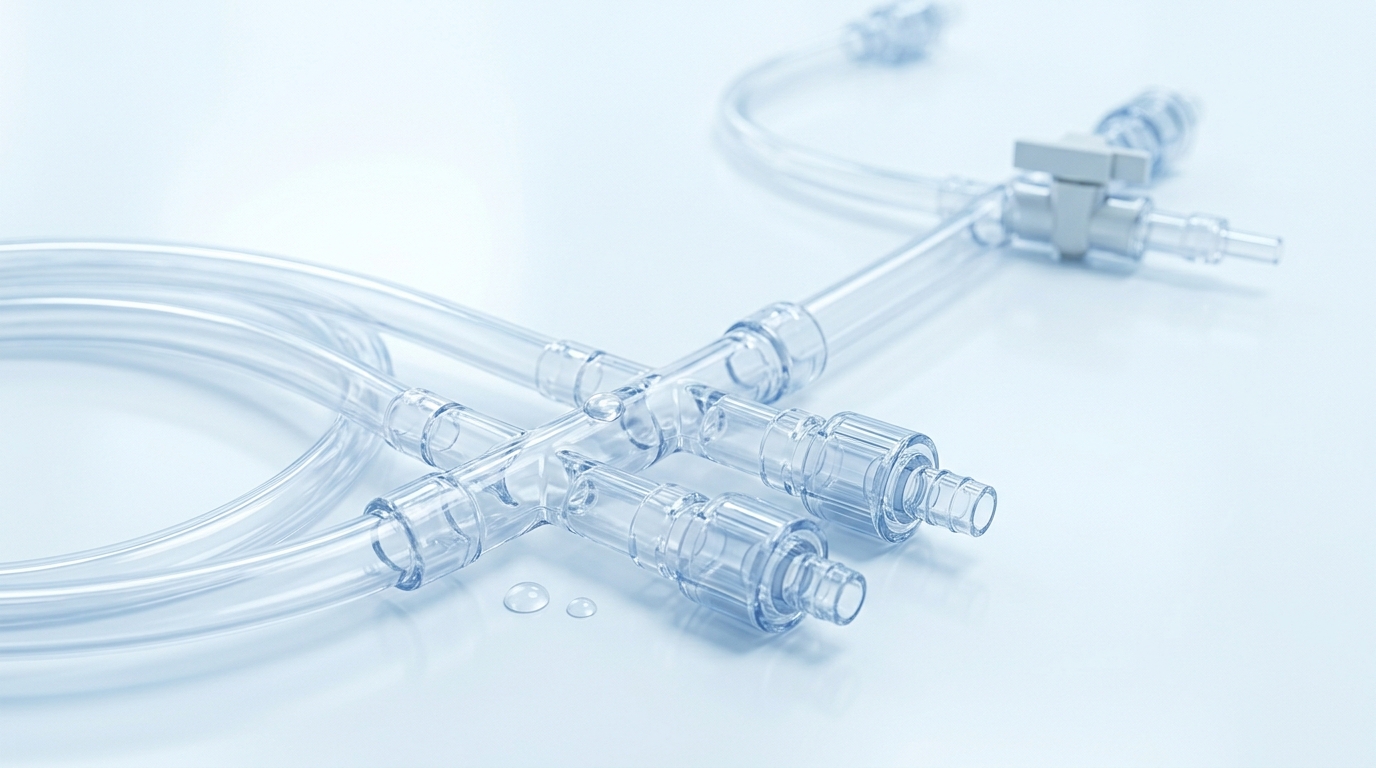
I have seen many designers struggle with this. They pick a supplier based on price and then find out the material fails safety tests. This wastes months of work. I want to help you avoid these traps. I will show you exactly what to look for so your project stays on track and your patients stay safe.
What is the medical-grade silicone certification?
Confusing certificates is common. Picking the wrong one risks your project’s approval. I will show you which ones actually matter for medical safety.
Medical-grade certifications are third-party proofs that silicone is safe for medical use. The most common are ISO 13485 for quality management systems and USP Class VI for biological safety.

I always tell my clients that a general factory certificate is not enough. You must look for specific medical standards. For example, ISO 9001 is a great general quality standard. But for medical devices, you need ISO 13485. This one focuses on the risk management of medical devices. It ensures the supplier tracks every batch of material.
When I review suppliers, I look for the "biocompatibility" report. This proves the silicone does not cause a reaction in the body. The USP Class VI is the gold standard here. It means the material passed the toughest tests for toxicity. If a supplier cannot show you these papers, walk away.
Key Certification Comparison
| Certification | Focus | Why it Matters |
|---|---|---|
| ISO 13485 | Quality Management | Ensures a medical-focused production process. |
| ISO 9001 | General Quality | Shows the company has a basic quality system. |
| USP Class VI | Biological Safety | Proves the material is non-toxic to tissues. |
| ISO 14001 | Environment | Shows the factory manages its waste and pollution. |
What qualifies as medical-grade silicone?
Not all silicone is the same. Using industrial silicone in a medical device is a recipe for disaster. You need to know what "grade" really means.
Medical-grade silicone is formulated to be biocompatible. This means it does not cause an immune response or toxic reaction when it touches human tissue or blood.

In my experience, people often confuse "food grade" with "medical grade." They are not the same. Food grade silicone is safe for a quick touch or for cooking. But medical grade must be much purer. It must be free of volatile organic compounds (VOCs). These are chemicals that can leak out of the silicone and into a patient’s body.
To qualify as medical grade, the silicone must go through a strict refining process. The supplier must remove all catalysts and impurities. I always check if the silicone is "platinum-cured." Platinum curing is cleaner than peroxide curing. Peroxide curing can leave behind by-products that irritate the skin or tissues.
Comparison of Silicone Grades
| Feature | Food Grade | Medical Grade | Industrial Grade |
|---|---|---|---|
| Purity Level | Medium | Very High | Low |
| Biocompatibility | Limited | Certified | None |
| VOC Content | Low | Very Low | High |
| Common Use | Baking molds | Catheters, Implants | Gaskets, Seals |
What is the highest grade of silicone?
You want the best, but "highest grade" is a vague term. Picking the wrong level of purity can waste money or compromise safety.
The highest grade is usually Long-Term Implantable grade. This silicone meets the strictest USP Class VI standards and is safe to stay inside the human body for years.
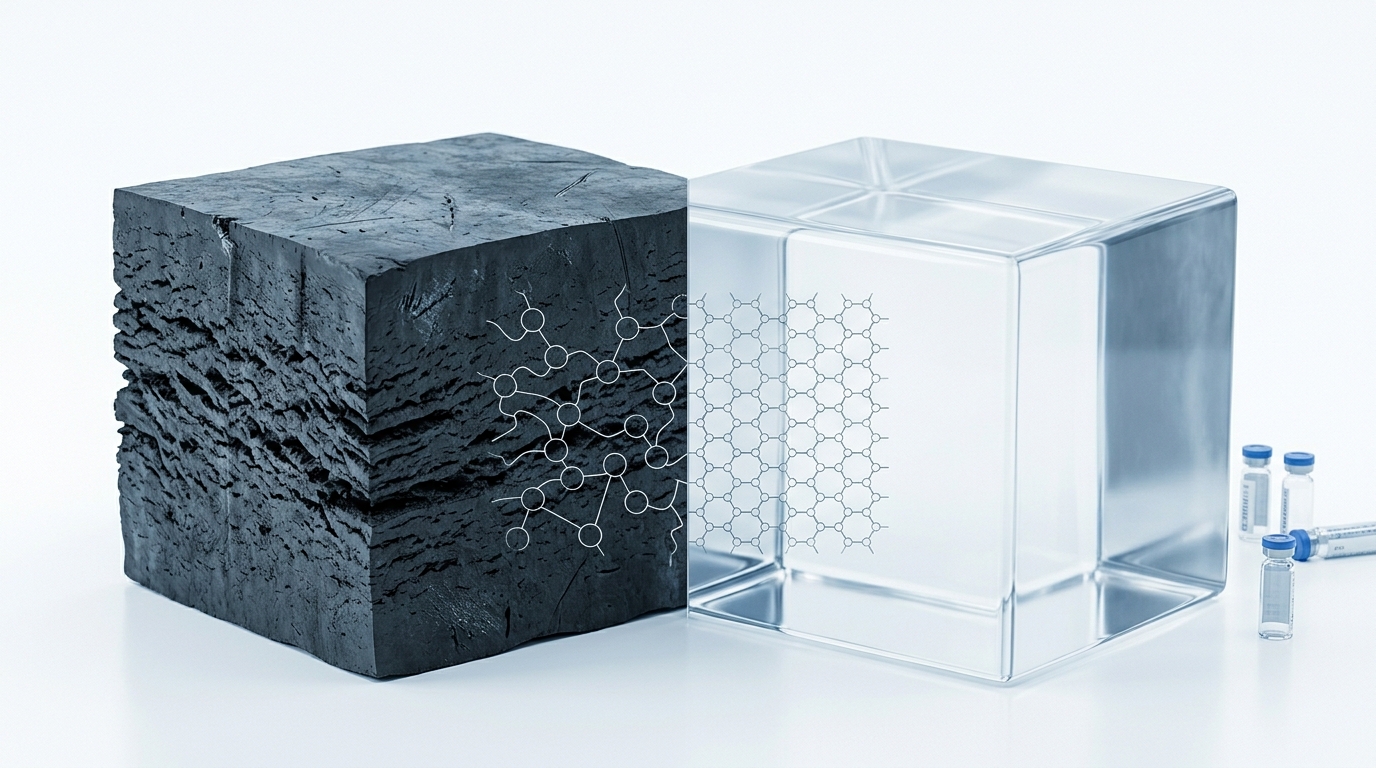
I break this down into three levels for my clients. First is short-term contact. This is for things like skin patches or tools that touch the skin for a few hours. Second is long-term contact. This is for things like catheters that stay in the body for a few days. Third is permanent implantable. This is the top tier.
For implantable grade, the testing is brutal. The material is tested for systemic toxicity and carcinogenicity. It must be perfectly stable. It cannot break down or change shape inside the body. When I work on these projects at KENVOX, we focus on the purity of the mold itself. Even a tiny bit of mold release agent can ruin an implantable part.
Silicone Grade Hierarchy
| Grade Level | Duration of Contact | Example Product | Safety Requirement |
|---|---|---|---|
| Surface Contact | < 24 Hours | Pulse Oximeter strap | Basic Biocompatibility |
| Mucosal Contact | 24h to 30 Days | Intubation tubes | USP Class VI |
| Permanent Implant | > 30 Days | Heart valve, Breast implant | Highest Purity + Sterility |
What silicone is FDA approved?
Everyone asks for "FDA approval," but the FDA does not "approve" raw materials. This misunderstanding often leads to ordering the wrong material.
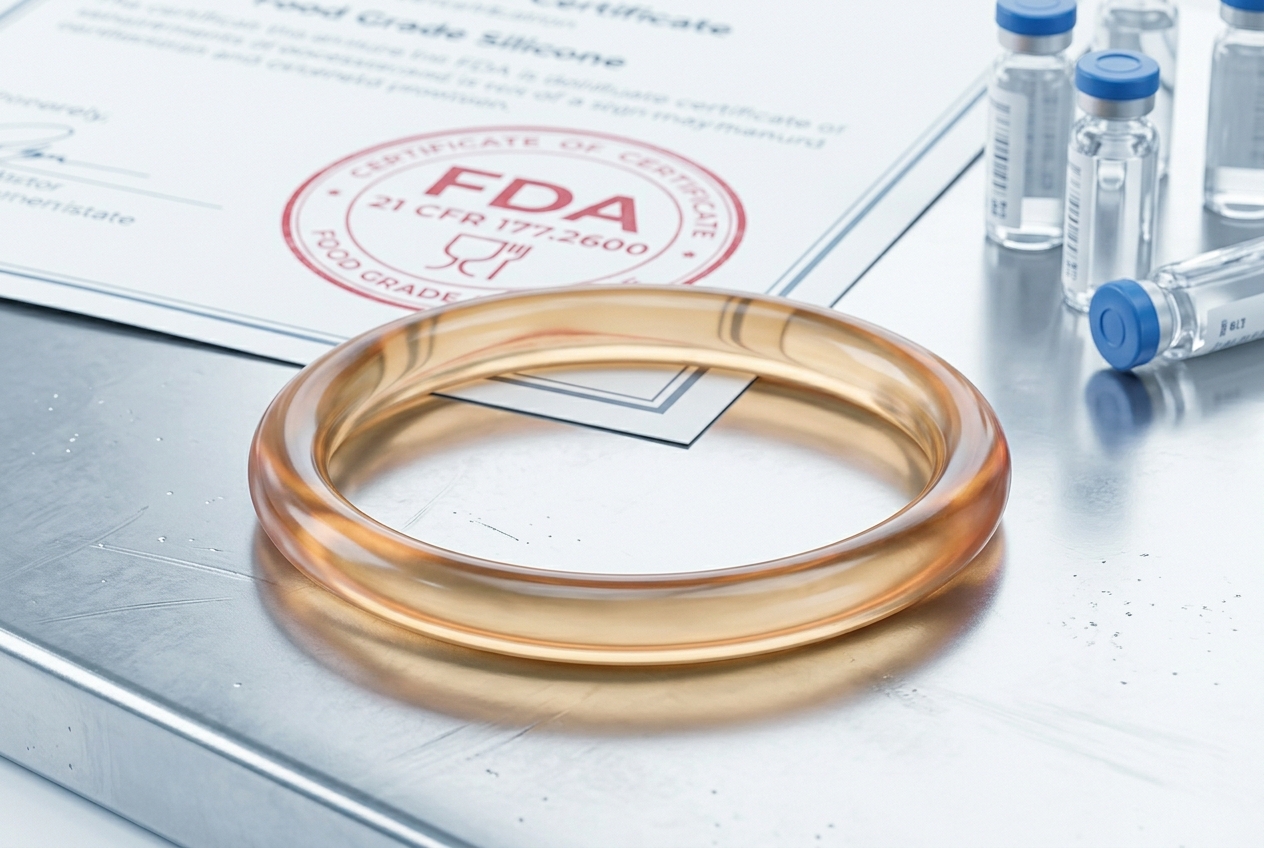
The FDA lists materials as "Generally Recognized as Safe" (GRAS). For silicone, this means the material meets FDA 21 CFR 177.2600 for food and medical device contact.
What silicone is FDA approved?
I often have to explain to designers that the FDA approves the finished device, not the silicone pellets. When a supplier says their silicone is "FDA approved," they usually mean it complies with the FDA’s regulations for materials. I suggest you ask for the Material Safety Data Sheet (MSDS) and a letter of compliance.
Another important thing is the Master File (MAF). Large material makers file a secret report with the FDA. When you submit your device for approval, you can tell the FDA to look at that Master File. This makes your approval process much faster. I always check if my material suppliers have an active MAF.
FDA Compliance Checklist
| Requirement | What it means | How to verify |
|---|---|---|
| 21 CFR 177.2600 | Standard for rubber articles | Check the Material Compliance Letter. |
| GRAS Status | Generally Recognized as Safe | Check the FDA GRAS database. |
| Master File (MAF) | Secret technical data at FDA | Ask supplier for the MAF number. |
| Leachables Test | No chemicals leak out | Request a third-party lab report. |
What is the difference between HCR and LSR?
Choosing between HCR and LSR is a design headache. The wrong choice slows down production or ruins the part’s feel. I can help you decide.
HCR (High Consistency Rubber) is processed via compression molding and is tougher. LSR (Liquid Silicone Rubber) is injection molded, allowing for complex shapes and faster production.
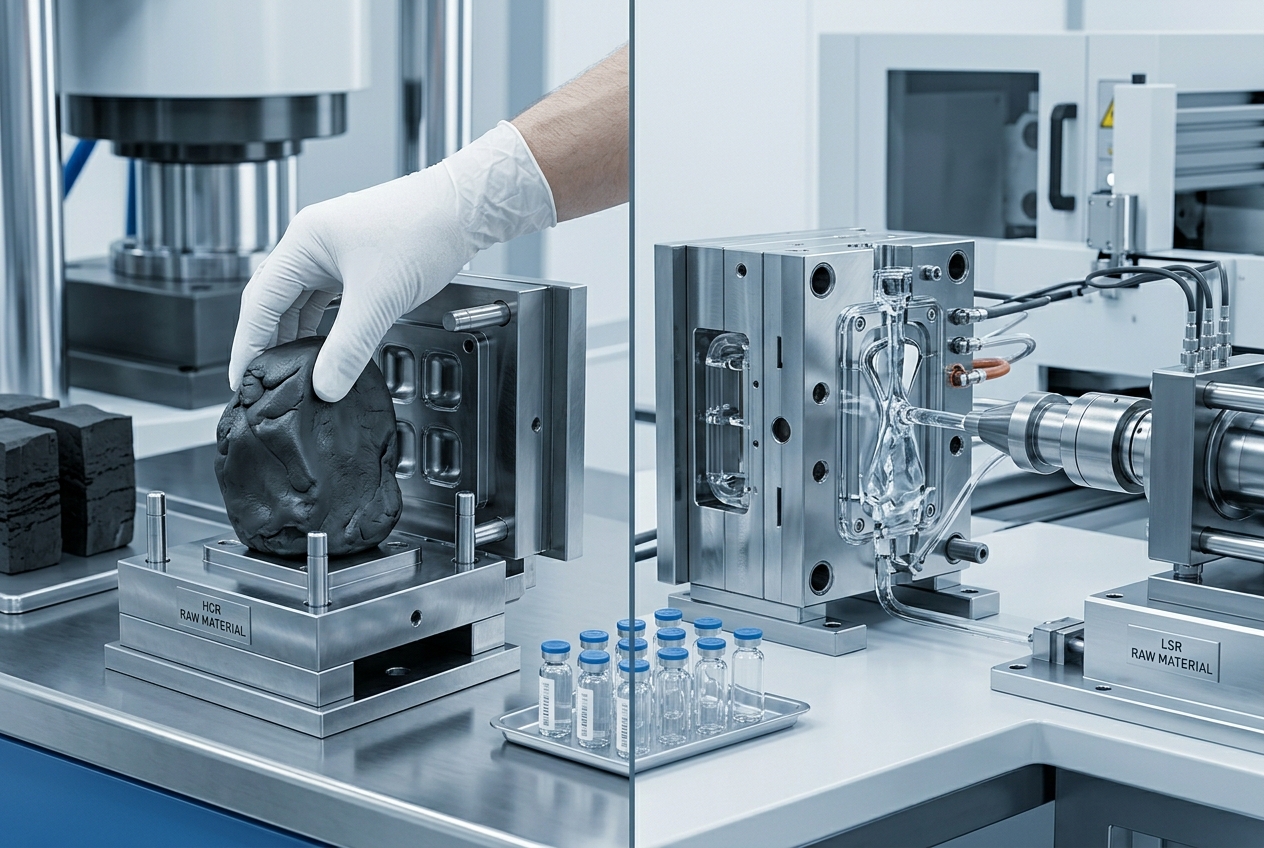
I see this choice often in my design meetings. HCR is like clay. You put a lump of it in a mold and press it. It is great for high-strength parts or simple shapes. But it takes longer to cure. LSR is like a liquid. It is shot into a hot mold at high speed. This is perfect for very complex parts with thin walls.
At KENVOX, we offer both. If you are making a simple medical plug, HCR might be cheaper. But if you are making a complex valve for a medical pump, LSR is the only way to go. LSR also allows for much tighter tolerances. This is critical for medical parts where a fraction of a millimeter matters.
HCR vs LSR Technical Comparison
| Feature | HCR (High Consistency) | LSR (Liquid Silicone) |
|---|---|---|
| Process | Compression / Transfer | Injection Molding |
| Cycle Time | Slow (Minutes) | Fast (Seconds) |
| Complexity | Simple to Medium | Very High |
| Strength | Higher Tear Strength | Better Consistency |
| Waste | Higher Scrap Rate | Very Low Waste |
How to check if silicone is medical grade?
Suppliers often make big claims. If you trust a word of mouth, you risk your reputation. You need a way to verify the facts.
Check for a Certificate of Analysis (CoA) and a Material Safety Data Sheet (MSDS). These documents list the batch number and the specific biocompatibility tests the material passed.
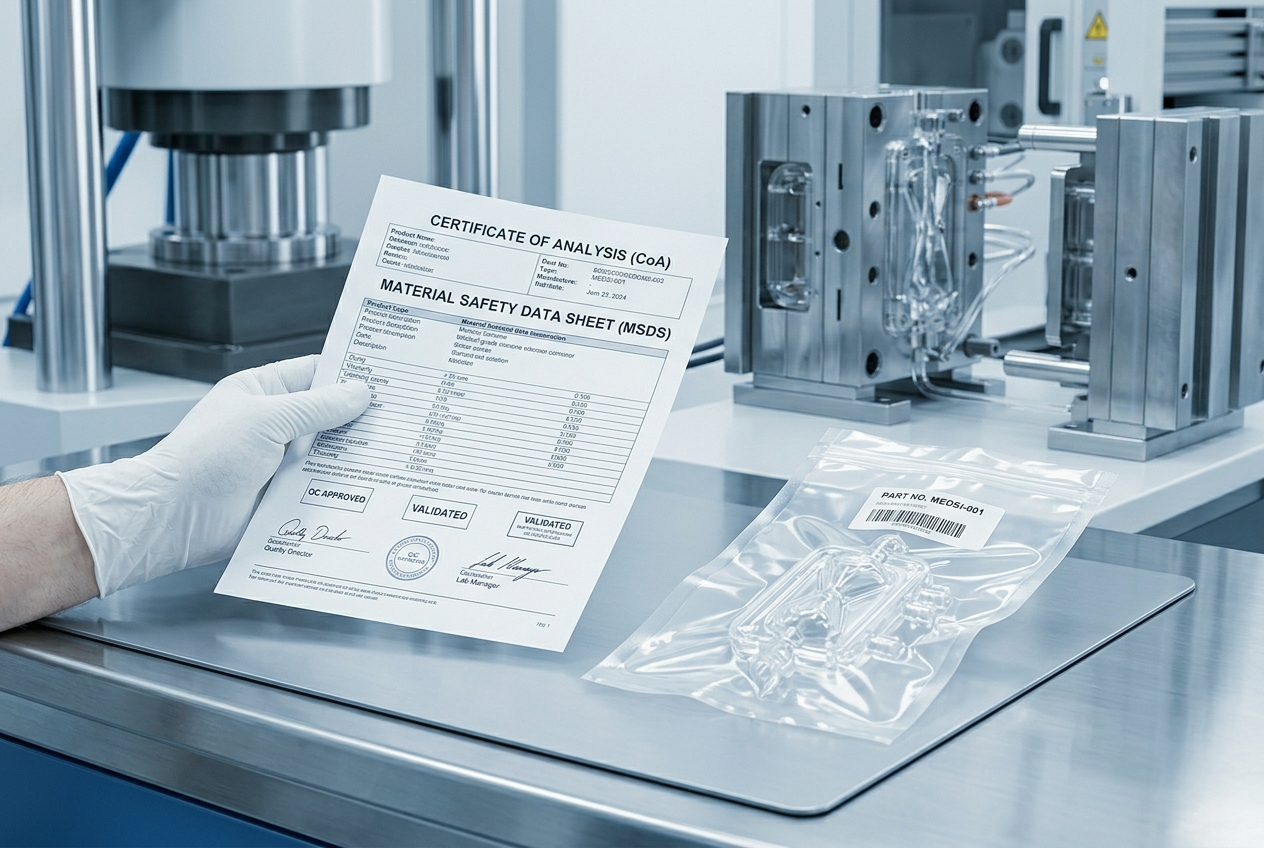
I have a strict process for this. First, I never accept a "yes" as an answer. I ask for the CoA for the specific batch of material being used for my order. The CoA tells me the hardness, the color, and the purity of that exact lot. If the supplier sends a general brochure, that is a red flag.
Second, I look at the cleanroom status. Medical silicone must be molded in a clean environment. I ask for the cleanroom class. A Class 10,000 or Class 100,000 cleanroom is standard for medical parts. This prevents dust and hair from getting trapped in the silicone. Finally, I check the packaging. Medical grade parts should be double-bagged in sterile-ready packaging.
Supplier Verification Checklist
| Step | Action | Goal |
|---|---|---|
| 1. Document Request | Ask for CoA and MSDS | Confirm batch-specific purity. |
| 2. Certification Check | Verify ISO 13485 | Ensure a medical quality system. |
| 3. Facility Audit | Check Cleanroom Class | Prevent contamination. |
| 4. Sample Test | Send part to 3rd party lab | Independent proof of biocompatibility. |
Conclusion
Certifications like ISO 13485 and USP Class VI are key to safety. Choosing a partner like KENVOX ensures your medical parts are safe, precise, and fully compliant.