


End-to-end OEM manufacturing in China and Vietnam gives companies a single accountable partner from product design to final delivery, instead of coordinating a fragmented network of factories, sourcing agents, and logistics providers.
In an end-to-end model, a contract manufacturing partner oversees design for manufacturing (DFM), tooling, production, quality control, and logistics within one integrated supply chain. This unified structure allows product teams to manage cost, risk, compliance, and lead time as a single system rather than navigating disconnected vendors across the global manufacturing sector.
For operations leaders, supply-chain managers, and product development teams, this shift fundamentally changes how hardware businesses scale and is more than a sourcing adjustment. A capable Original Equipment Manufacturer (OEM) partner such as Kenvox operates ISO-based quality systems across integrated plastics, silicone, metal, and assembly operations in both China and Vietnam, transforming scattered manufacturing activities into a controlled production network.
By the end of this guide, you will be able to diagnose fragmentation in your current product sourcing strategy, define what “end‑to‑end” should mean for your products, structure the RFQ‑to‑mass‑production path, design a China+Vietnam footprint, and choose an OEM partner you can trust over multiple product cycles.
This article provides general information about both original equipment manufacturing (OEM) and original design manufacturing and global supply chains and should not be interpreted as legal, tax, or regulatory advice.
What “Truly End-to-End” OEM Manufacturing Really Means
End-to-end OEM manufacturing means a contract manufacturer manages the entire production lifecycle, from engineering preparation and prototyping through tooling, mass production, and logistics.
Before laying out the foundations of what true end-to-end OEM is, let’s clear up key terms:
Defining OEM and ODM
Two key models appear frequently in the global manufacturing industry:
- OEM (Original Equipment Manufacturer): An OEM builds products according to a client’s design specifications and brand requirements. Clients retain full product rights and IP protection.
- ODM (Original Design Manufacturer): An ODM develops and manufactures products based on its own designs, which clients can brand and sell.
Many contract manufacturers, including Kenvox, support both OEM and ODM models depending on product complexity and client needs.
Upstream, Midstream, and Downstream Scope
End-to-end OEM manufacturing spans three major stages of the product lifecycle.
Upstream activities include:
- Design for Manufacturing (DFM)
- Product development and engineering validation
- Digital prototyping and product prototype creation
- Component sourcing and supplier qualification
- Early certification planning
Midstream operations include:
- Tooling and mold manufacturing
- Production lines design
- Process control and component traceability
- Quality systems implementation
- Assembly and packaging
Downstream activities include:
- Export documentation
- Logistics and shipping coordination
- Regional configuration and labeling
- Lifecycle support and repair services
An experienced contract manufacturer clearly defines these responsibilities with documented processes and engineering ownership.
OEM vs Trading Company: Quick Checks
Companies evaluating Asian manufacturing partners must distinguish between true OEM factories and trading companies.
A trading company primarily brokers work between buyers and factories. While this can simplify sourcing in early stages, it often reduces visibility into production and quality systems.
A true OEM contract manufacturer controls engineering, quality control, and production operations directly.
When evaluating suppliers, ask:
- Who designed the molds used for recent projects?
- Can you meet the engineering and quality teams responsible for production?
- Does the manufacturer provide direct DFM feedback or simply forward factory comments?
Clear answers to these questions help confirm whether the partner is a genuine manufacturing organization or an intermediary.
From Fragmented Sourcing to End-to-End OEM in China & Vietnam
Moving from fragmented sourcing to an end-to-end OEM model replaces a chain of loosely connected vendors with a single accountable contract manufacturer responsible for the full manufacturing lifecycle.
Many companies still operate Asian production through a patchwork of factories, joint ventures, sourcing agents, and freight partners. While this structure may appear flexible, it often creates hidden inefficiencies across product development, production, and logistics.
A unified OEM partner changes this dynamic by coordinating engineering, manufacturing, and supply chain execution within a single governance framework.
Mapping the Real Supply Chain
The first step toward an end-to-end model is understanding how your current supply chain actually functions.
Map how each product moves from RFQ (Request for Quotation) to delivered goods. An RFQ is the formal package brands send to contract manufacturers, either in original equipment or original design manufacturing, requesting pricing and technical feasibility for a new product program.
Include every participant in the process:
- Internal design and engineering teams
- Product prototype vendors and digital prototyping partners
- Toolmakers and mold maintenance providers
- Mass production factories and OEM parts suppliers
- Third-party quality inspectors and testing labs
- Freight forwarders, consolidators, and distribution hubs
Most organizations discover far more manual hand-offs than expected.
The Hidden Cost of Fragmentation
Review the past 12–18 months of production activity and quantify the operational disruptions across your manufacturing programs.
These often include:
- Expedited freight or emergency air shipments
- Scrap, rework, and production delays
- Unplanned engineering time
- Customs clearance issues related to HTS codes or documentation
- Tariff-driven cost changes affecting the landed price
Many companies underestimate the financial impact of these disruptions. Collectively, these “chaos costs” can consume several percentage points of margin across the product lifecycle.
Once documented, these costs create a baseline comparison against an integrated contract manufacturing proposal.
Building the Case for an End-to-End OEM Partner
Next, review the most serious operational disruptions experienced during recent product launches.
Typical examples include:
- Missed product launches or engineering delays
- Quality escapes reaching retailers or consumers
- Customs holds caused by classification or regulatory issues
- Tariff shocks affecting landed costs due to evolving US-China relations or reciprocal tariffs
Transform these incidents into a simple risk register documenting:
- Event impact
- Root cause
- Responsible owner
- Preventability through a unified OEM partner
This analysis often shows that many disruptions originate from fragmented ownership of engineering, sourcing, and logistics.
End-to-end contract manufacturing consolidates these responsibilities under one accountable organization.

Upstream & Pre-Production: Getting the Right Product Ready
The upstream stage of manufacturing determines whether a product will scale successfully.
This phase converts industrial design concepts into factory-ready specifications through engineering validation, prototyping, and feasibility analysis.
Treating these activities as structured disciplines significantly reduces risk later in the manufacturing cycle.
Build a Non-Negotiable DFM Brief
DFM (Design for Manufacturing) refers to engineering adjustments made to ensure products can be manufactured efficiently at scale.
A strong DFM brief defines:
- Functional performance requirements
- Environmental operating conditions
- Reliability targets
- Cost and material constraints
- Regulatory requirements such as FDA regulations or RoHS compliance
This document defines the engineering “box” within which the OEM can optimize manufacturing.
Experienced contract manufacturing partners such as Kenvox typically provide standardized DFM templates developed across hundreds of product programs.
Use Design-to-Value Before Freezing the BOM
Before finalizing the BOM (Bill of Materials), manufacturers and engineering teams often conduct design-to-value workshops.
These sessions analyze component geometry, materials, and assembly methods to balance product performance with manufacturing cost.
For example, during plastic injection molding programs, wall thickness, rib placement, and cooling behavior directly affect yield and production speed.
Small design adjustments can dramatically improve manufacturability without changing visible product features.
These improvements become especially important in industries such as:
- consumer electronics
- medical devices
- automotive components
Prove Feasibility Before Cutting Hard Tools
Before committing to production molds or tooling, feasibility reviews confirm that designs perform reliably under real manufacturing conditions.
These reviews typically evaluate:
- Production yields
- Cycle times
- Material performance
- Potential failure modes
Testing often includes prototype builds produced through 3D sampling technology, digital prototyping, or limited pilot production runs.
Confirming feasibility before tooling release significantly reduces risk during ramp-up.
Production & Factory-Centric Services: Quality by Design
Once designs are finalized and tooling is approved, product quality depends on stable production processes rather than inspection alone.
Effective contract manufacturers embed quality control directly into production systems through standardized procedures, trained operators, and traceable documentation.
Kenvox operates these processes within ISO-certified quality systems aligned with global standards such as:
- ISO 9001
- ISO 13485
- IATF 16949
- SA8000
These certifications ensure quality management, medical device compliance, automotive standards, and social responsibility practices across production facilities.
Look for Real Process Control, Not Slogans
During factory audits, evaluate real process control systems rather than marketing claims.
Request documentation such as:
- Process flow diagrams
- Failure Mode and Effects Analysis (FMEA)
- Statistical Process Control (SPC) charts
- Quality control plans
These records reveal how factories manage variation during production.
Critical-to-quality features typically include:
- sealing surfaces and mechanical tolerances
- cosmetic surfaces for consumer products
- electrical performance in PCB assembly
- torque requirements on safety-critical fasteners
Well-designed control plans reduce reliance on final inspection by ensuring processes remain stable during production.
Use Data to Choose Long-Term Partners
Historical production data often provides the clearest picture of manufacturing capability.
Ask suppliers to share metrics such as:
- yield rates
- scrap and rework percentages
- on-time delivery performance
- equipment maintenance records
Factories that can discuss operational challenges openly and demonstrate structured root-cause analysis tend to be more reliable long-term partners.
Contract manufacturers such as Kenvox integrate these metrics into ERP-driven quality dashboards across their China and Vietnam facilities, allowing brands to monitor production performance across sites.
Post-Production: Logistics, After-Sales, and Lifecycle Support
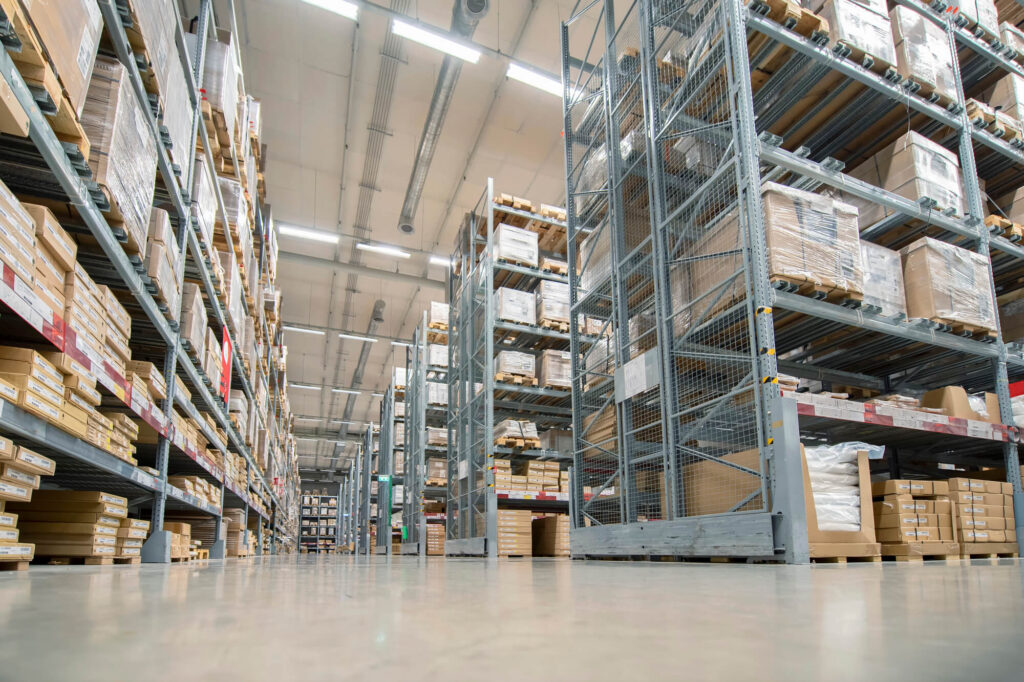
Production is only one stage of the manufacturing lifecycle. Logistics planning, after-sales service, and lifecycle management often determine how reliably customers experience your product once it leaves the factory.
Treating downstream operations as an engineered system, rather than a series of individual shipping decisions, allows companies to build a resilient global supply chain.
When working with a contract manufacturer, these processes should be coordinated as an extension of the production system itself.
Design the Logistics Layer With Intent
Start by selecting Incoterms (International Commercial Terms) that match your internal logistics capabilities.
Incoterms are a set of rules that outline key responsibilities for buyers and sellers in B2B sale agreements concerning goods delivery. They specify the transfer of risk from seller to buyer, manage export/import clearances, and cover transport arrangements and cost allocation. Additionally, two specific Incoterms rules, CIP and CIF, include provisions for insurance.
If your organization does not manage export documentation, freight bookings, and customs procedures in Asia, it may be more effective to use terms that place these responsibilities on the contract manufacturer.
This decision should be made before RFQs are issued so quotes can be compared accurately.
Logistics planning should include:
- Carton design and internal product protection
- Pallet configurations and container optimization
- Barcode standards and tracking labels
- Country-specific regulatory markings
- Documentation for customs clearance using correct HTS codes (Harmonized Tariff Schedule classifications)
Correct classification is especially important because duties, tariffs, and regulatory obligations are tied directly to these codes.
Close the Loop on Returns and Field Failures
Product reliability improves dramatically when companies implement a structured feedback loop between customers, distributors, and factories.
Define how returns and field failures will be managed:
- Who receives returned products
- How failures are analyzed
- How root-cause investigations are documented
- How engineering changes are implemented
Typical failure categories include:
- manufacturing defects
- design limitations
- component failures
- misuse or improper installation
When products are produced in multiple locations, such as China and Vietnam, failure analysis must still feed into a single quality database so trends can be identified across the entire manufacturing network.
Inventory Strategy and Lifecycle Planning
Inventory design is closely tied to supply chain reliability.
Companies typically evaluate several inventory models:
- Regional distribution hubs
- Vendor-managed inventory
- Consignment inventory arrangements
- Direct factory-to-customer shipments
Each approach balances working capital, lead time, and service levels differently.
For example, consignment inventory arrangements allow OEM partners to hold inventory closer to customer markets while brands retain ownership of goods until they are consumed.
Lifecycle planning should also address spare parts availability, repair programs, and software or firmware updates for electronic products.
China vs Vietnam: What End-to-End Manufacturing Looks Like in Each Ecosystem
China and Vietnam represent two of the most important manufacturing hubs in the global supply chain.
Each country offers different advantages within the manufacturing sector, and many companies now design production networks that combine both ecosystems.
Instead of asking whether products should be made in China or made in Vietnam, companies increasingly focus on how both countries can operate together as part of a unified contract manufacturing strategy without the more pronounced cultural and language differences in other regions of the world.
Use Each Country for What It Does Best
China remains the world’s most mature industrial ecosystem.
Its dense supplier networks, advanced manufacturing capabilities, and deep engineering talent make it particularly strong for:
- complex tooling and mold development
- advanced plastic injection molding
- precision machining and metal fabrication
- PCB assembly and electronics manufacturing
- specialized materials, custom products, and component sourcing
China’s supplier clusters allow engineers, material suppliers, and toolmakers to collaborate rapidly during product development.
Vietnam, by contrast, has developed rapidly as a complementary manufacturing hub. The country offers competitive labor costs and growing capabilities across several industries, including:
- electronics assembly
- consumer products
- silicone and rubber molding
- footwear manufacturing and luxury footwear craftsmanship
- textiles and apparel
Vietnam’s footwear sector, for example, produces high-profile products, from designer shoes to athletic footwear, and premium fashion items manufactured by specialized factories sometimes known as K Shoes manufacturers.
These capabilities make Vietnam an attractive location for labor-intensive assembly operations and final product configuration.
Tariffs, Trade Policy, and Supply Chain Diversification
Geopolitical and trade policy factors increasingly influence manufacturing decisions.
Companies must now consider:
- tariffs and reciprocal tariffs
- changing US-China relations
- regional trade agreements such as USMCA
- environmental regulations such as the EU CBAM (Carbon Border Adjustment Mechanism)
Tariffs are taxes imposed on imported goods. They are typically determined by the product’s HTS classification and country of origin.
Many companies adopt a China+1 strategy, maintaining production in China while adding manufacturing capacity in Vietnam or other countries to diversify risk.
This approach helps mitigate exposure to trade disruptions while maintaining access to China’s extensive industrial ecosystem.
Advanced sourcing strategies may also involve:
- tariff engineering (designing products to qualify for lower duty classifications)
- duty drawback programs (recovering duties on exported goods)
- regional trade optimization strategies
Define What “End-to-End” Means in Each Location
Not every factory within an OEM network has identical capabilities.
Understanding site-level capabilities prevents assumptions that can create bottlenecks during production.
For each facility, companies should evaluate:
- Which services are performed in-house
- Which processes rely on subcontractors
- Where tooling is maintained
- Where regulatory testing and certification activities occur
- How quality systems are implemented
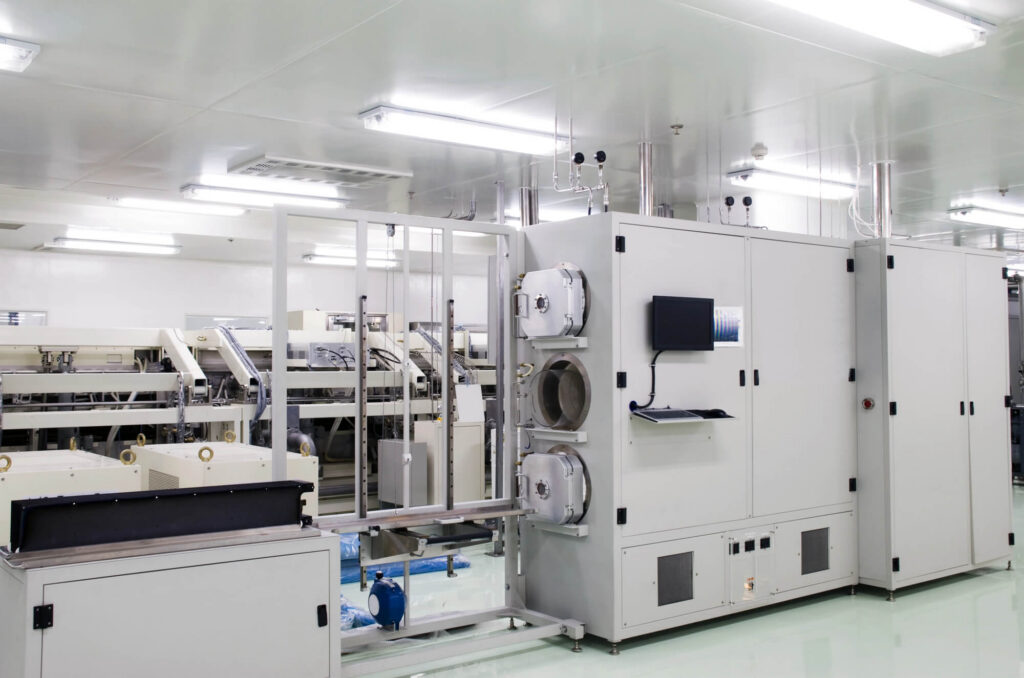
Integrated contract manufacturers operate shared engineering standards and quality systems across their facilities, allowing work to move between sites when necessary.
How Kenvox Executes a China+1 Manufacturing Strategy
Kenvox helps companies implement China+1 manufacturing models by operating coordinated production capabilities in both China and Vietnam.
Instead of forcing companies to choose between the two countries, Kenvox integrates both ecosystems into a single manufacturing platform.
China typically supports:
- complex mold engineering
- advanced materials processing
- early product development and prototyping
Vietnam often supports:
- labor-intensive assembly
- packaging and finishing operations
- high-volume production
Unified project management, shared quality systems, and coordinated supply chain planning allow production to shift between locations when needed.
This structure creates a resilient manufacturing network capable of adapting to changes in tariffs, logistics conditions, or regulatory environments.
How to Evaluate OEM Partners for Quality, Transparency, and Reliability
Selecting the right OEM partner requires a structured evaluation rather than informal impressions.
A systematic scorecard helps companies compare contract manufacturers objectively.
Build a Scorecard You Can Defend
Evaluation scorecards typically include criteria such as:
- engineering capabilities
- quality systems and certifications
- production capacity and flexibility
- pricing transparency
- supply chain stability
- ESG and sustainability performance
Relevant certifications may include:
- ISO 9001 (quality management systems)
- ISO 13485 (medical device manufacturing)
- IATF 16949 (automotive manufacturing standards)
- SA8000 or BSCI (social responsibility and labor compliance)
- RoHS compliance for electronics manufacturing
Scorecards allow leadership teams to compare potential partners using consistent metrics.
Check Operational Transparency
Transparency is critical when evaluating contract manufacturing partners.
Companies should request:
- sample quality records
- control plans and inspection procedures
- production yield data
- root-cause analysis reports
Factories reluctant to share operational data often provide less visibility during actual production programs.
Experienced OEM partners typically maintain detailed production dashboards and engineering documentation for client review.
Due Diligence, Site Audits, and Ongoing Visibility
Even well-qualified OEM partners require structured oversight.
Supplier evaluation should be conducted through a staged due diligence process.
Design a Repeatable Audit Funnel
Many sourcing teams evaluate suppliers using a three-stage audit process.
Stage one focuses on remote screening, which verifies certifications, engineering capabilities, and production capacity.
Stage two involves factory audits, where teams evaluate process controls, measurement systems, equipment maintenance, and workforce training.
Stage three consists of trial production builds, allowing brands to observe how the factory performs under realistic operating conditions.
Factory audits should also examine:
- component traceability systems
- materials management procedures
- workplace safety standards
- regulatory compliance processes
These reviews ensure that manufacturing partners meet both technical and social responsibility standards.
Turn Audits Into Long-Term Governance
Audits should evolve into ongoing governance systems.
Companies often monitor key performance indicators such as:
- defect rates
- on-time delivery
- corrective action closure time
- production yield
Regular business reviews between brands and OEM partners help align production planning, product development, and quality improvements.
Structuring the RFQ → DFM → Prototype → Tooling → Mass Production Flow
Successful product launches follow structured development phases rather than informal handoffs.
This staged approach improves coordination between brands and contract manufacturers.
What to Include in a Serious RFQ
A comprehensive RFQ package should contain:
- engineering drawings and CAD files
- product specifications
- bill of materials
- annual production forecasts
- certification requirements
- defined scope of work for the OEM
Clear RFQs allow manufacturers to evaluate feasibility and prepare accurate quotations.
Phase Gates That Keep Launches on Track
Development projects typically follow several milestone stages:
- RFQ award
- DFM approval
- prototype validation
- tooling release
- pilot production
- mass production approval
Each phase should have clearly defined decision criteria and responsible stakeholders.
Configuration management, controlling revisions of drawings, specifications, and software, is also essential when manufacturing occurs across multiple countries.
Designing a China+Vietnam Footprint and Governance Model
A multi-country manufacturing strategy only works when supported by clear governance structures.
Organizations must define how decisions will be made across engineering, sourcing, and logistics teams.
Decide Which Products Need Dual Manufacturing
Not every product requires production in multiple countries.
Companies should segment their portfolios based on:
- product complexity
- revenue importance
- geographic customer demand
- regulatory exposure
High-volume products with global distribution may benefit from dual-country production capacity.
Establish Governance and Benchmarking
Successful multi-country manufacturing programs rely on structured governance.
This typically includes:
- project teams overseeing individual programs
- functional leaders responsible for quality, sourcing, and logistics
- steering committees capable of making cross-site decisions
Benchmarking production performance across factories helps ensure continuous improvement.

Cost, Risk, and Long-Term OEM Partnership Strategy
Companies evaluating OEM partnerships should consider total landed cost rather than focusing solely on piece price.
Model Total Landed Cost
Comprehensive cost models include:
- labor and overhead
- logistics and freight
- duties and tariffs
- compliance costs
- financing and working capital
Understanding these factors helps companies make more informed sourcing decisions.
Align on Risk Management
Global manufacturing involves operational, geopolitical, and regulatory risks.
Companies should maintain shared risk registers with their contract manufacturing partners covering issues such as:
- tariff changes
- supply disruptions
- regulatory compliance
- sustainability reporting requirements
Regular risk reviews help organizations adapt their supply chain strategies proactively.
Why Now Is the Right Time to Explore an End-to-End OEM Partner
Many companies still manage Asian manufacturing through fragmented supplier networks.
While this model may work initially, it often creates hidden operational costs and coordination challenges as product portfolios expand.
An integrated OEM manufacturing partner in China and Vietnam provides:
- unified engineering and production management
- consistent quality systems
- coordinated logistics and supply chain planning
By consolidating manufacturing operations under one accountable partner, companies gain clearer visibility into cost, risk, and production performance.
Organizations exploring this model can evaluate how an end-to-end OEM structure might improve product launches, reduce supply chain friction, and support long-term growth.