


What Certifications and Tolerances are Critical for Custom LSR Medical Molding?
Are you struggling with defective medical parts or failed regulatory audits? Choosing the wrong liquid silicone rubber (LSR) molder can delay your launch and cost you thousands of dollars.
Critical certifications for custom LSR medical molding include ISO 13485, FDA registration, and Class 7 or 8 cleanroom compliance. Crucial tolerances depend on part size, but precision medical LSR molding regularly achieves flash-free tolerances as tight as ±0.05mm to ±0.10mm for critical dimensions.
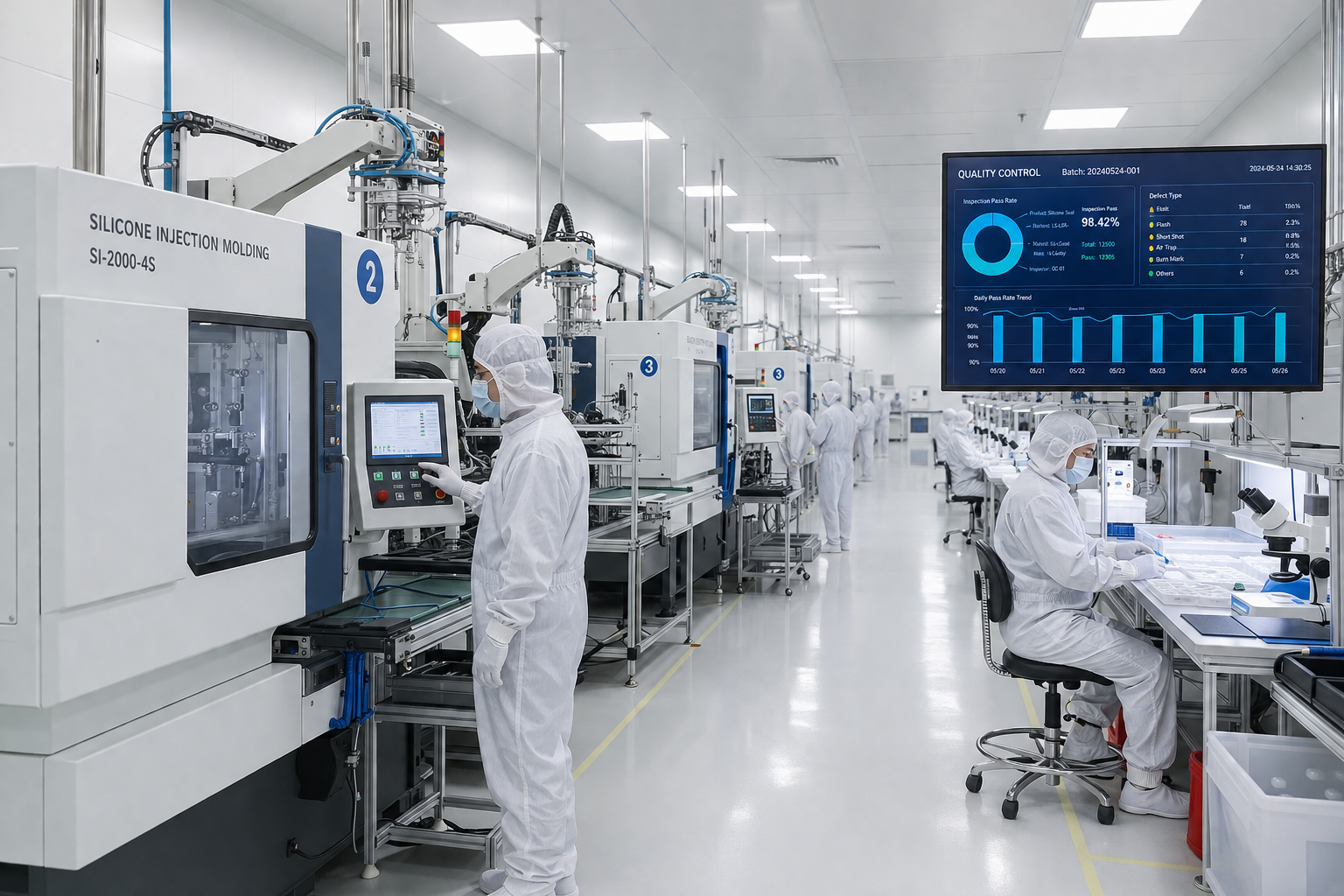
Navigating the strict world of medical device manufacturing is incredibly tough. I have spent years helping engineers bring complex healthcare products to life, and I know that small mistakes in material choice or mold design can ruin a project. Let us dive deep into the specific criteria, checklists, and risk mitigation strategies you need to know before you sign your next manufacturing contract.
What Are the Key Evaluation Criteria for Technical Expertise, Quality Standards, and Manufacturing Capabilities?
Are you unsure if your manufacturing partner can actually handle high-precision medical parts? Standard commercial molding shops often lack the clean environment and technical control needed for strict medical applications.
Evaluate your molder by verifying their ISO 13485 certification, checking their cleanroom classifications, and auditing their automated LSR dosing systems. They must prove they can control flash and maintain material purity.
Technical and Quality Standards Breakdown
When I review a potential manufacturing site for a complex electromechanical or medical project, I look closely at their technical capabilities. Medical LSR requires special care because the liquid material flows easily into the tiniest gaps, which causes flash if the mold is not perfect. You need a partner who understands cold runner systems, vacuum venting, and automated dosing.
The quality management system must be robust. For medical devices, ISO 13485 is not optional. It ensures every batch of raw material is tracked from the supplier to the final shipped part. Furthermore, look at the physical environment. A cleanroom environment prevents dust, skin flakes, and airborne particles from embedding into the curing silicone.
The table below shows the key criteria you should evaluate during your selection process:
| Evaluation Area | Critical Requirement | Why It Matters for Medical LSR |
|---|---|---|
| Quality Management | ISO 13485 Certification | Ensures full traceability and strict risk management for medical devices. |
| Production Environment | Class 7 or Class 8 Cleanroom | Prevents airborne contamination and bioburden on sensitive silicone parts. |
| Equipment Accuracy | Closed-loop LSR Dosing Systems | Guarantees the perfect 1:1 mixing ratio of platinum-cure liquid silicone. |
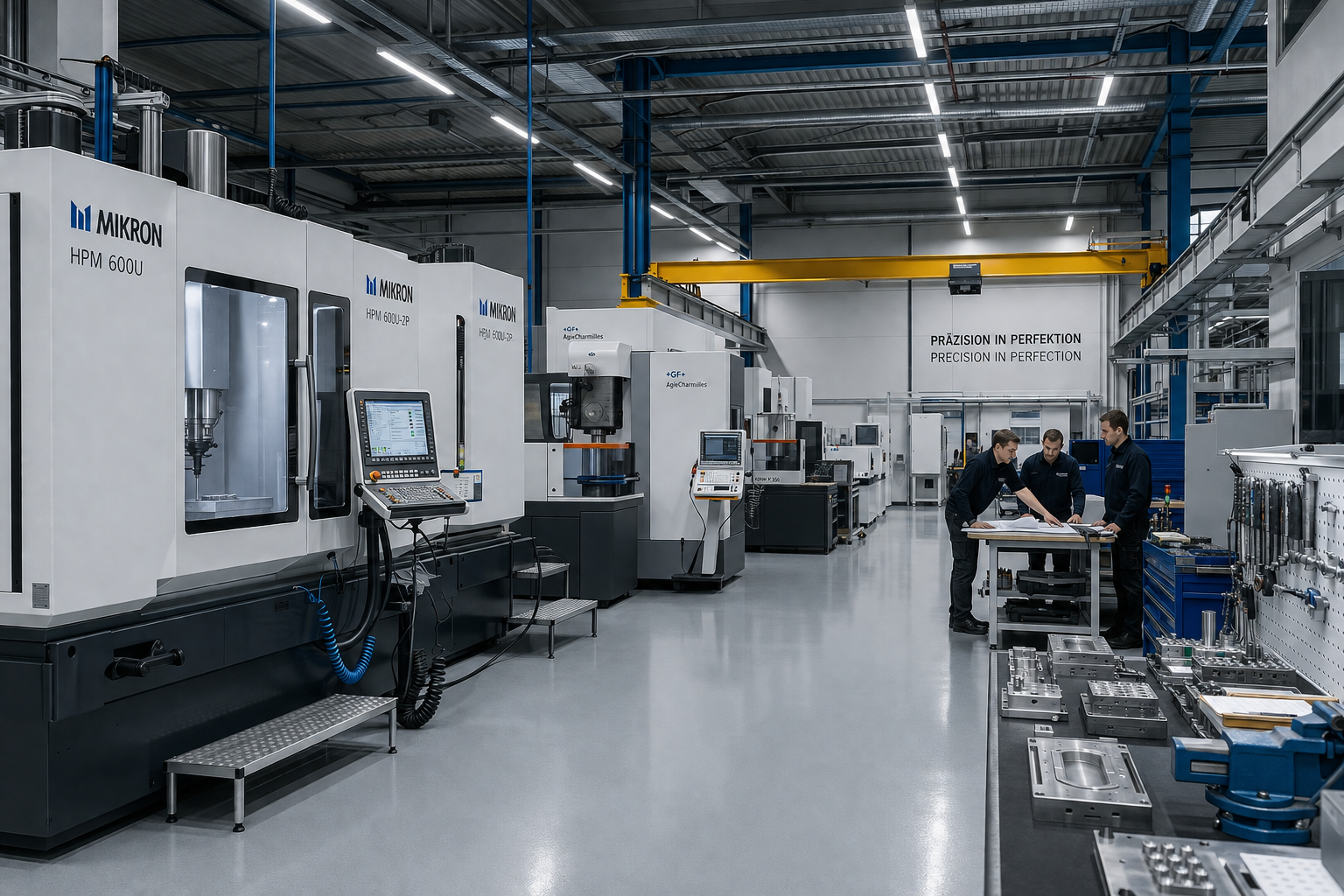
| Tooling Capability | High-Precision Micron-Level CNC | Prevents parting line flash by ensuring perfectly sealed mold surfaces. |
| Material Compliance | USP Class VI & ISO 10993 | Guarantees the silicone material is biocompatible and safe for human tissue. |
What is the Due Diligence Checklist to Verify Before Signing a Contract?
Are you ready to sign a contract based only on a cheap price quote? Doing this without verifying the factory’s actual workshop floor can lead to sudden delivery delays and bad parts.
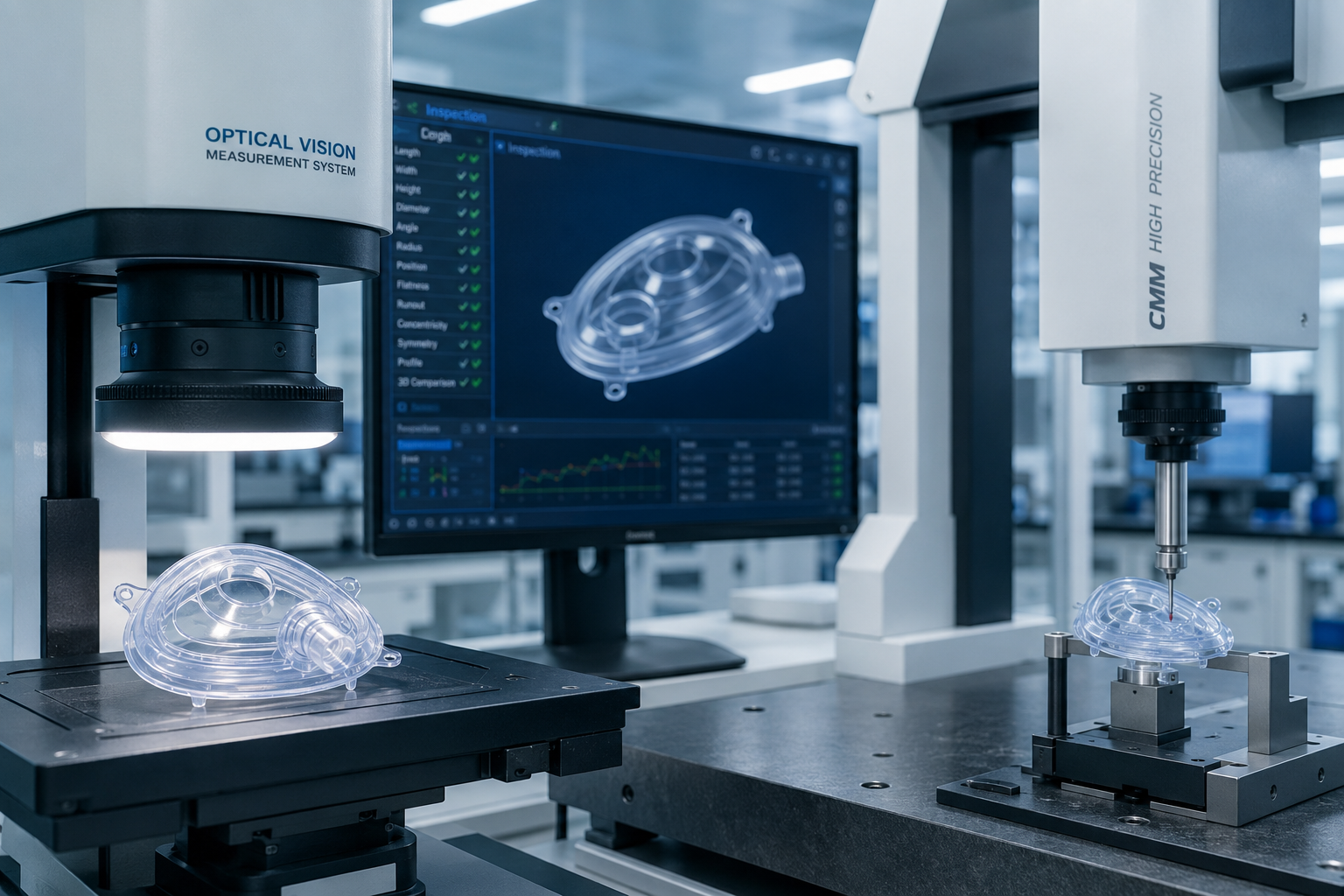
Your due diligence checklist must include verifying raw material traceability, inspecting active cleanroom compliance certificates, auditing inspection equipment like CMMs, and checking reference projects for similar medical or electromechanical assemblies.
Essential Verification Steps
I always tell my clients that a beautiful website does not manufacture your product. You must perform deep due diligence before you commit to full-scale production. First, request a copy of their valid ISO 13485 and ISO 9001 certificates. Check the expiration dates and the scope of the certification to make sure it covers silicone injection molding.
Next, look at their quality control lab. Precision LSR parts have very low durometers, meaning they are soft and flexible. You cannot measure soft silicone accurately with standard hand calipers because the tool deforms the part. The manufacturer must use non-contact vision measurement systems or specialized coordinate measuring machines (CMM).
Use this checklist during your next supplier audit:
Certifications and Environment
- Verify active ISO 13485 and IATF 16949 certificates are valid.
- Check recent cleanroom particle count logs and environmental records.
- Confirm the factory has an active FDA registration if selling in the US.
Equipment and Tooling
- Confirm they use automated liquid injection molding (LIM) machines.
- Review their in-house mold shop equipment like high-speed CNC and mirror EDM.
- Check if they have automated vision inspection systems for final quality checks.
Supply Chain and Track Record
- Audit their raw material storage to ensure they separate medical silicone from industrial materials.
- Review case studies or request customer references for similar complex assemblies.
- Check their formal Design for Manufacturability (DFM) process and engineering feedback timeline.
What Are Risk Mitigation and Long-Term Partnership Strategies for Electromechanical Projects?
Are your projects suffering from unexpected supply chain disruptions and costly engineering design changes? Managing complex medical products with moving parts, sensors, and silicone seals requires a long-term strategic relationship.
Mitigate risks by involving your molder early for DFM feedback, starting with a small pilot production run, maintaining a safety stock of raw materials, and establishing clear open communication channels.
Long-Term Risk Management
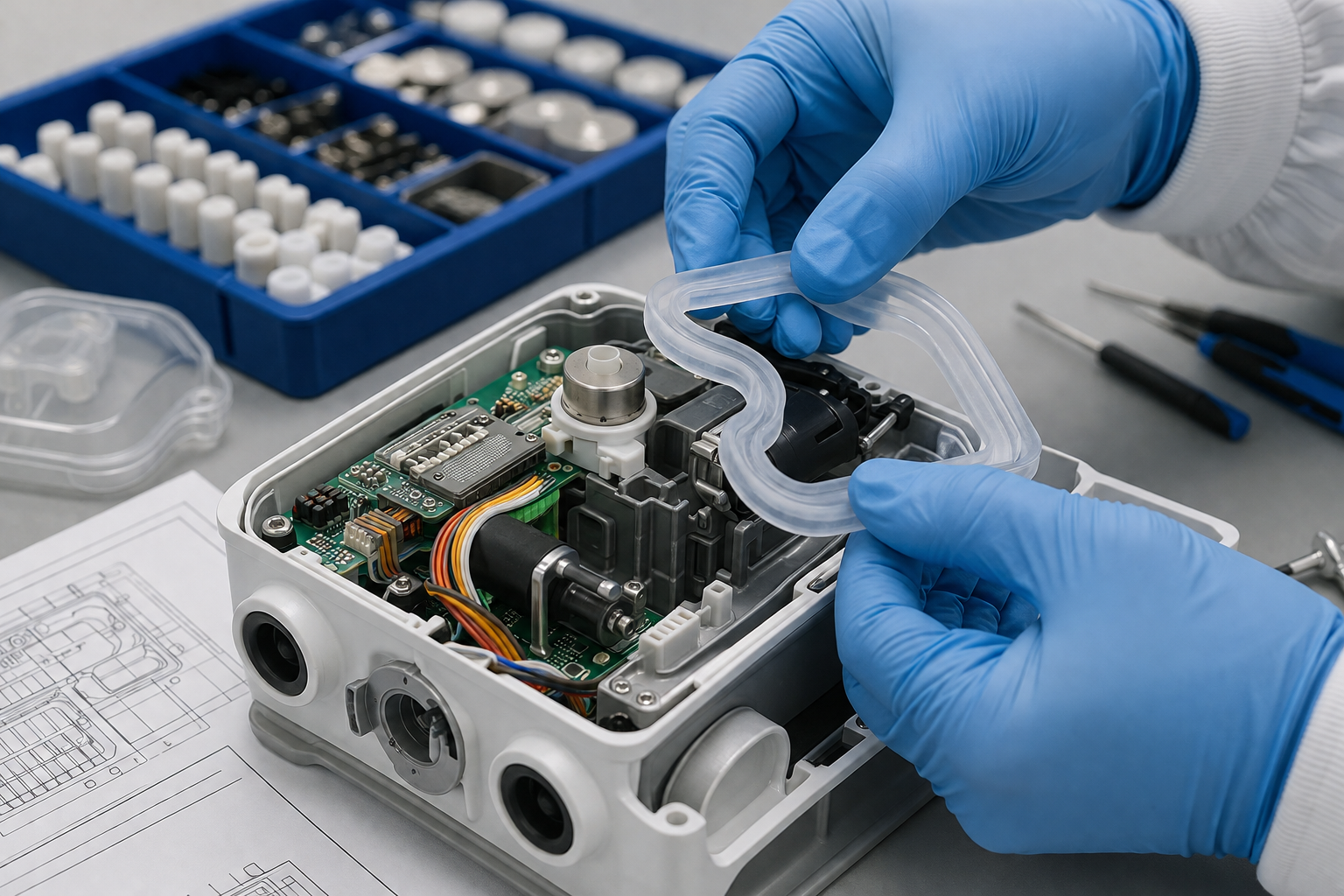
In my experience, the best way to cut total cost of ownership is through early collaboration. When you combine custom LSR molding with electromechanical projects, assembly gets complicated. You might have a silicone seal overmolded onto a plastic housing that holds a circuit board and a motor. If you bring the manufacturer into the design phase early, they can give you valuable Design for Manufacturability (DFM) and Design for Assembly (DFA) feedback. This prevents expensive mold modifications later.
Another key strategy is the pilot run. Never jump straight from a prototype mold to high-volume mass production. Run a small pilot batch of a few hundred parts. This tests the injection process, the assembly fixtures, and the quality control test methods under real production speeds. It also lets both engineering teams align before spending big money.
Finally, protect your supply chain. Ensure your partner has strong relationships with top silicone material suppliers like Shin-Etsu, Dow Corning, or Momentive. Keep a safety stock of critical components and materials in their warehouse to absorb sudden market shortages or shipping delays.
Conclusion
Choosing a certified, precise LSR molding partner reduces risks and ensures high-quality medical devices. Always verify certifications, check tolerances, and perform thorough due diligence before signing a production contract.
My Role
About me
Brand Name: KENVOX
Slogan: Just show us your design or idea, Kenvox will return you a perfect finished product!
Website: https://www.kenvox.com/
Our Mission:
KENVOX, originated from Hong Kong, China, is a comprehensive manufacturing group that combines design, plastic, silicone, and hardware tooling with finished parts into one integrated package. Since 1989, we have built a turnkey contract-manufacturing platform: Dongguan plastic and silicone sites, Shenzhen plastic/mold and commercial operations (Kenvox Technology), Huizhou plastic and new-energy manufacturing, Vietnam plastic and silicone plants plus a precision metal JV, together with Hong Kong corporate registration and logistics, a United States sales office in Irvine, California, and plans for a European sales branch. KENVOX maintains a strong sourcing and project team so clients can move from only a concept—an idea or sketch—through engineering, prototyping, mold making, injection and silicone production, metal processing, surface treatment, assembly, packaging, and export. From design to delivery, we provide one-stop turnkey service for OEM/ODM and new product development worldwide.
About Me
KENVOX INDUSTRIAL (HONGKONG) CO., LTD is a Hong Kong–based contract manufacturing group (est. 1989) focused on plastic, silicone, and metal tooling and finished parts, with OEM/ODM, design support, and one-stop turnkey project delivery from concept through mold, production, secondary processes, assembly, packaging, and export logistics. The group operates wholly owned and partner facilities in Dongguan, Huizhou, Shenzhen (commercial/engineering), and Vietnam (plastic, silicone, and precision metal), and promotes primarily as a manufacturer platform rather than a generic trading broker. Website: www.kenvox.com.
Services Offered:
- Product & engineering design: Component design, reverse engineering, DFM/DFMA, tooling/fixture/gauge design, and drawing refinement for manufacturability.
- Prototyping: CNC prototypes (plastic/metal), silicone sample molds, silicone overmolding for small plastic prototype runs, and engineering/appearance validation before production tooling.
- Injection mold design & manufacturing: Plastic injection molds (including gas-assisted, insert, precision, and two-shot / overmolding), plus related mold flow analysis and DFM reporting.
- Custom manufacturing — plastic: High- and low-volume injection molding, dual-color injection, overmolding, insert molding; support for clean-room medical molding (up to Class 10,000 where applicable).
- Custom manufacturing — silicone: Compression molding, LSR (liquid silicone) injection, dispensing/epoxy, and related finished silicone parts.
- Custom manufacturing — metal: CNC machining, die casting, stamping (sheet metal), and coordinated metal supply through JV/partner metal operations.
- Secondary processing & assembly: Silk screen and pad printing, laser engraving, painting/UV coating, sand blast texturing, vacuum plating, ultrasonic welding, simple structural assembly, and coordination of anodizing, electroplating, powder coating, and other outsourced finishes.
- Supply chain & project operations: Sourcing of related components (electronics/EMS, packaging, standard parts, wood/glass/textiles via vetted suppliers), warehousing, multi-destination shipping, and testing/certification coordination (e.g. CE, FCC, UL, FDA, LFGB as required by product/market).
Certifications and Quality Assurance:
KENVOX operates under ISO 9001, IATF/TS 16949 (automotive quality), and ISO 14001, with incoming-to-outgoing QC, dedicated QA resources, and ERP-backed documentation and traceability for molds and production.
Team and Communication:
Sales and project staff are positioned for direct English communication with overseas clients; foreign-trade engineers typically bring 10+ years of industry experience, with appointed project leaders per case for faster quotations (streamlined internal approval vs. typical factory hierarchies), online technical reviews, and ongoing follow-up through mold trials (T0/T1…), golden samples, and mass production.
Production Capabilities:
Group scale (figures vary by document/year—use ranges when speaking to customers): roughly 600–1,300+ employees, ~30,000–40,000+ m² manufacturing footprint, 70–80% export orientation. Plastic injection capacity includes 190+ injection machines (about 75–1,000 ton class across the network, with dual-color capability and partner access to ~1,000 ton machines), 1300+ tons/year plastic processing capacity cited for major plastic sites, and 60+ silicone-related machines (compression, transfer, LSR, dispensing). Mold shop highlights include high-speed CNC (e.g. Mikron), EDM / mirror EDM, slow-wire EDM, grinding, and CMM measurement; Huizhou-scale plastic operations cite on the order of ~400 molds/year and ~5,000 T injection parts (site-dependent).
Global Reach:
Primary markets: North America, South America, Western/Eastern Europe, East Asia, Middle East, and Australia, with reference customers/brands including CASIO, BROTHER, BBK, KINPO, LADA, and automotive/industrial names (e.g. VAZ, GAZ). U.S. sales support is referenced (California); European branch is planned rather than fully established. KENVOX targets mid-to-high-end buyers—especially industrial/product design firms, brand owners, contract manufacturers/assemblers, sourcing firms, and regional mold shops subcontracting to China/Vietnam—who value turnkey execution, dual-material molding, medical/clean-room options, and responsive project management over lowest-unit-price-only sourcing.