


Custom Silicone O-Ring Manufacturer: Design, Material & Production Guide?
Your project is late, and the seal just failed. This delay costs money and trust. I have been there, and I know the stress of a bad part.
A custom silicone o-ring is a high-performance seal for extreme temperatures and chemicals. We help you choose the right material and design to prevent leaks and ensure long-term durability.
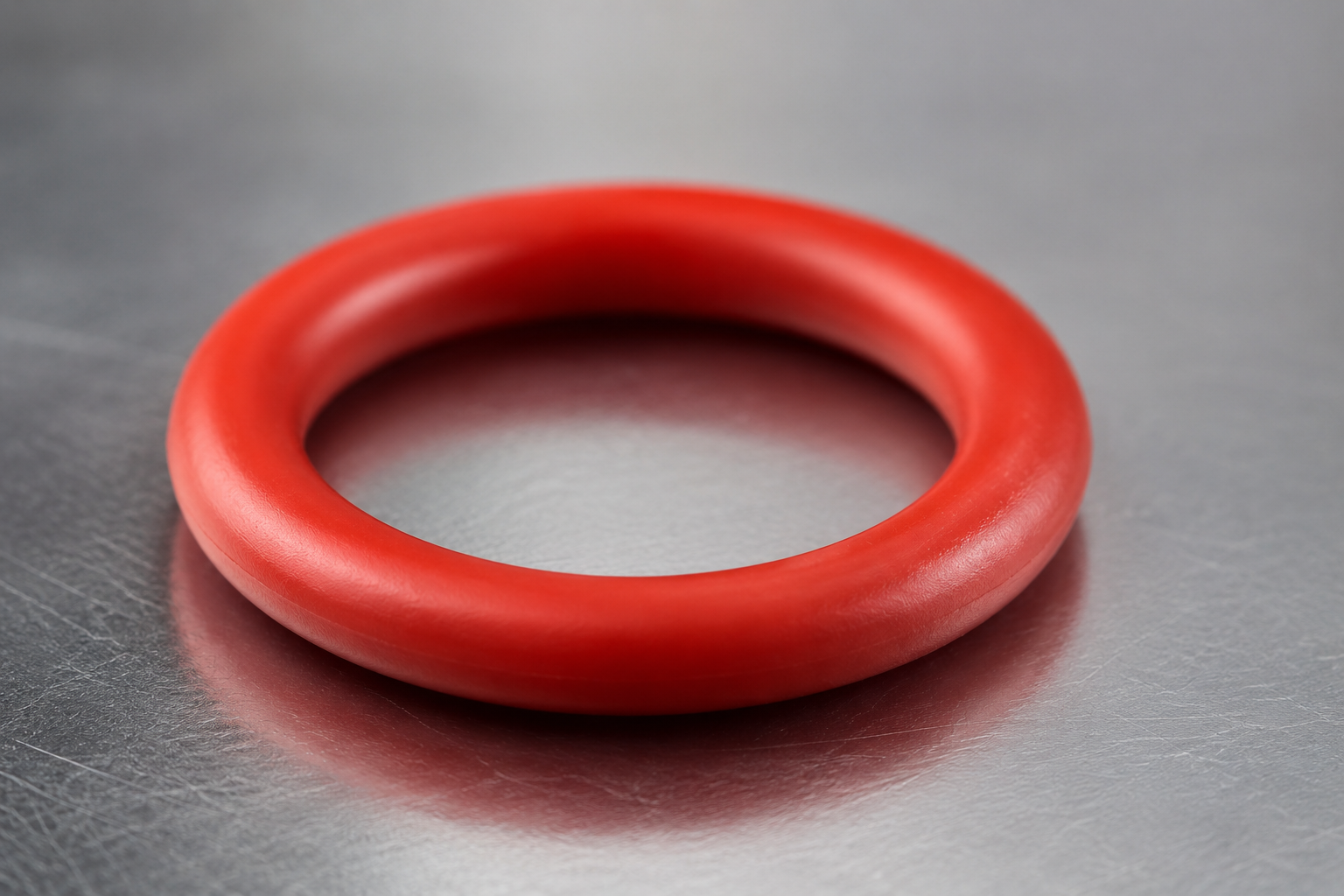
Choosing the right o-ring is not just about size. It is about material and process. I will show you how to make the best choice.
What are silicone o-rings, and why choose silicone material?
A failing seal ruins a product. You need a material that lasts. I learned this early in my career.
Silicone o-rings are elastic rings used to seal connections. They are made from silicone, a polymer that resists heat and cold. They stay flexible and do not break down easily.
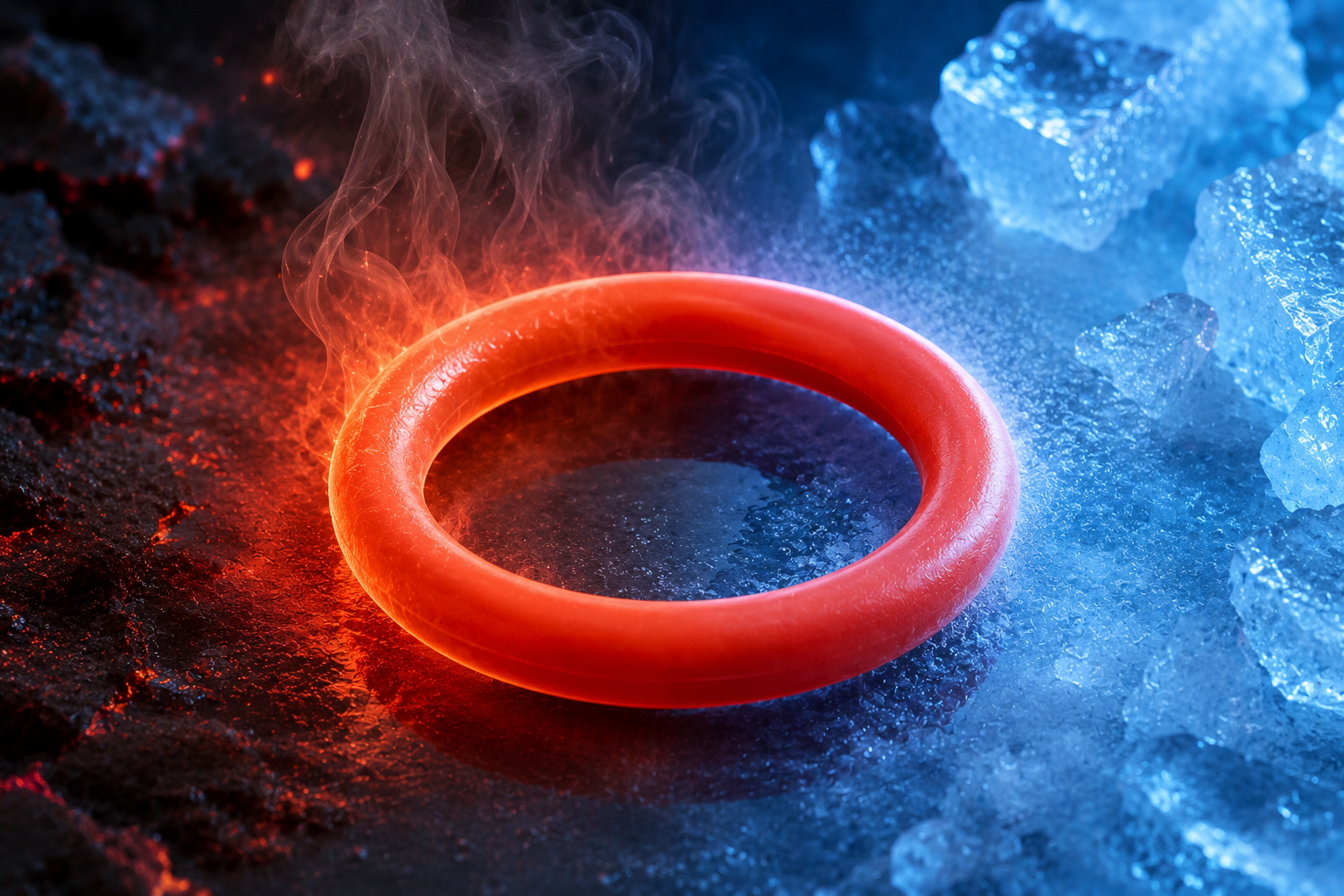
The Advantages of Silicone in Sealing
Silicone is popular because it is stable. It works in a wide range of temperatures. It is also safe for food and medical use.
Temperature Resistance
Silicone can handle high heat. It also stays soft in freezing cold. This makes it great for engines and medical tools.
Chemical and Weather Resistance
Silicone resists UV light and ozone. It does not age quickly. It is also good against some chemicals, but not all.
Material Selection: VMQ, FMVQ, EPDM, and Hardness (Shore A 20-80)
Picking the wrong material leads to leaks. I have seen it happen many times.
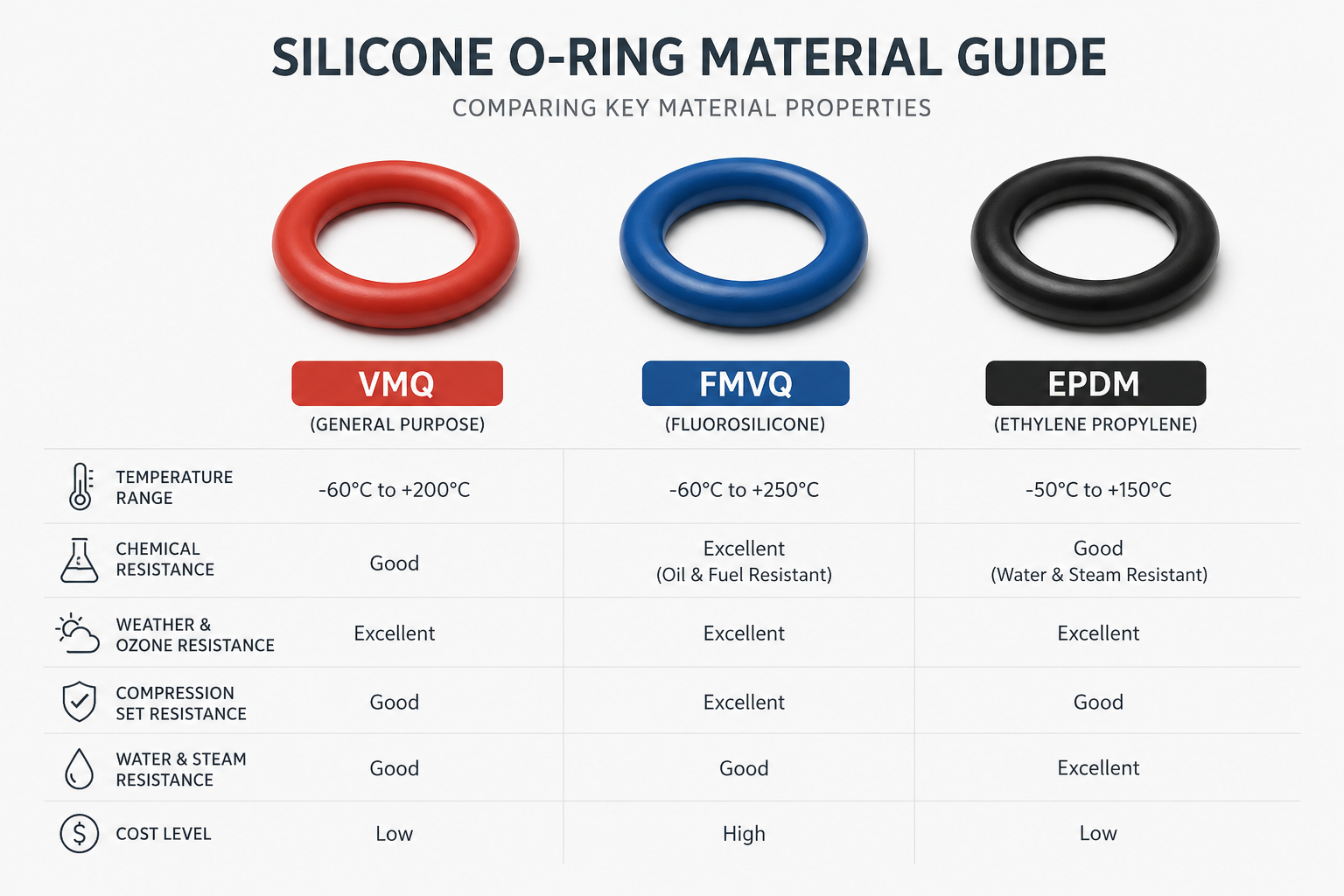
There are different types of silicone. VMQ is standard. FMVQ is for fuel. EPDM is for water and steam. Hardness matters too.
Choosing the Right Hardness
Hardness is measured in Shore A. Soft o-rings seal rough surfaces. Hard o-rings resist high pressure.
| Material | Best Use | Temperature Range | Hardness (Shore A) |
|---|---|---|---|
| VMQ (Silicone) | General use, food | -60°C to +200°C | 20 – 80 |
| FMVQ (Fluorosilicone) | Fuel and oil | -60°C to +175°C | 40 – 70 |
| EPDM | Water, steam, brake fluid | -50°C to +150°C | 40 – 80 |
Understanding Hardness Selection
You must match hardness to the application. Soft o-rings (20-30 Shore A) are good for low pressure. They fill gaps well. Medium hardness (40-60 Shore A) is standard. High hardness (70-80 Shore A) is for high-pressure systems. It resists "extrusion," where the o-ring gets pushed out of place.
Dimensions and Specifications: Standard vs. Custom and Tolerance Control
A leak often starts with a bad fit. Precision is key. I focus on this every day.
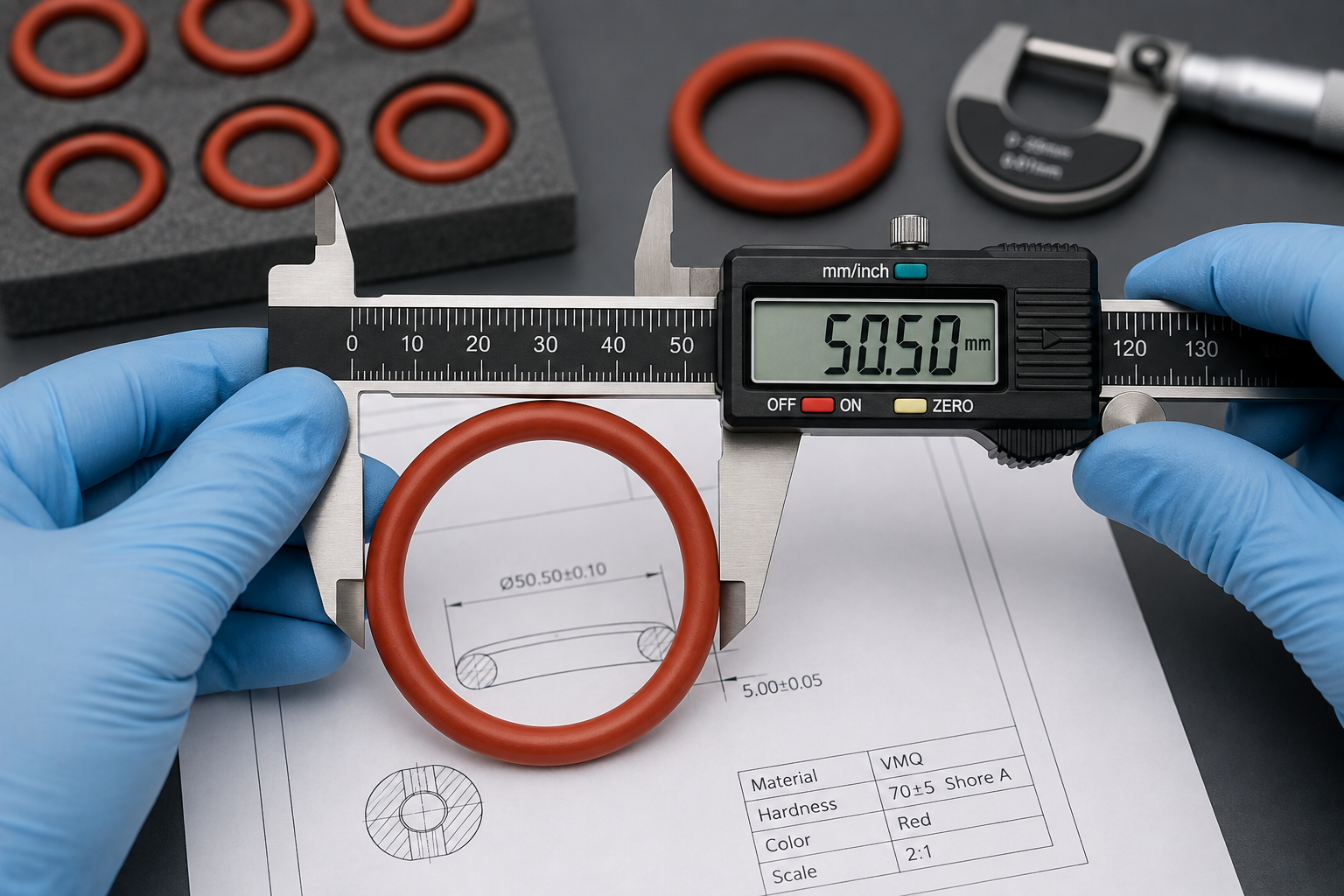
Most o-rings follow standard sizes like AS568. Custom sizes are for unique designs. Tolerance is how much the size can vary.
Standard vs. Custom Dimensions
Standard o-rings are easy to buy. They follow global charts. Custom o-rings are made for your specific mold. This is my specialty at Kenvox.
Tolerance Control in Manufacturing
Tolerance is the allowed error. For o-rings, it is usually small. Tight tolerance ensures a perfect seal.
Production Process: Compression vs. Injection Molding and Mold Design
How the o-ring is made affects its quality. I have used both methods.
Compression molding uses a heated mold. Liquid silicone is put in and squeezed. Injection molding is faster. Silicone is injected into the mold.
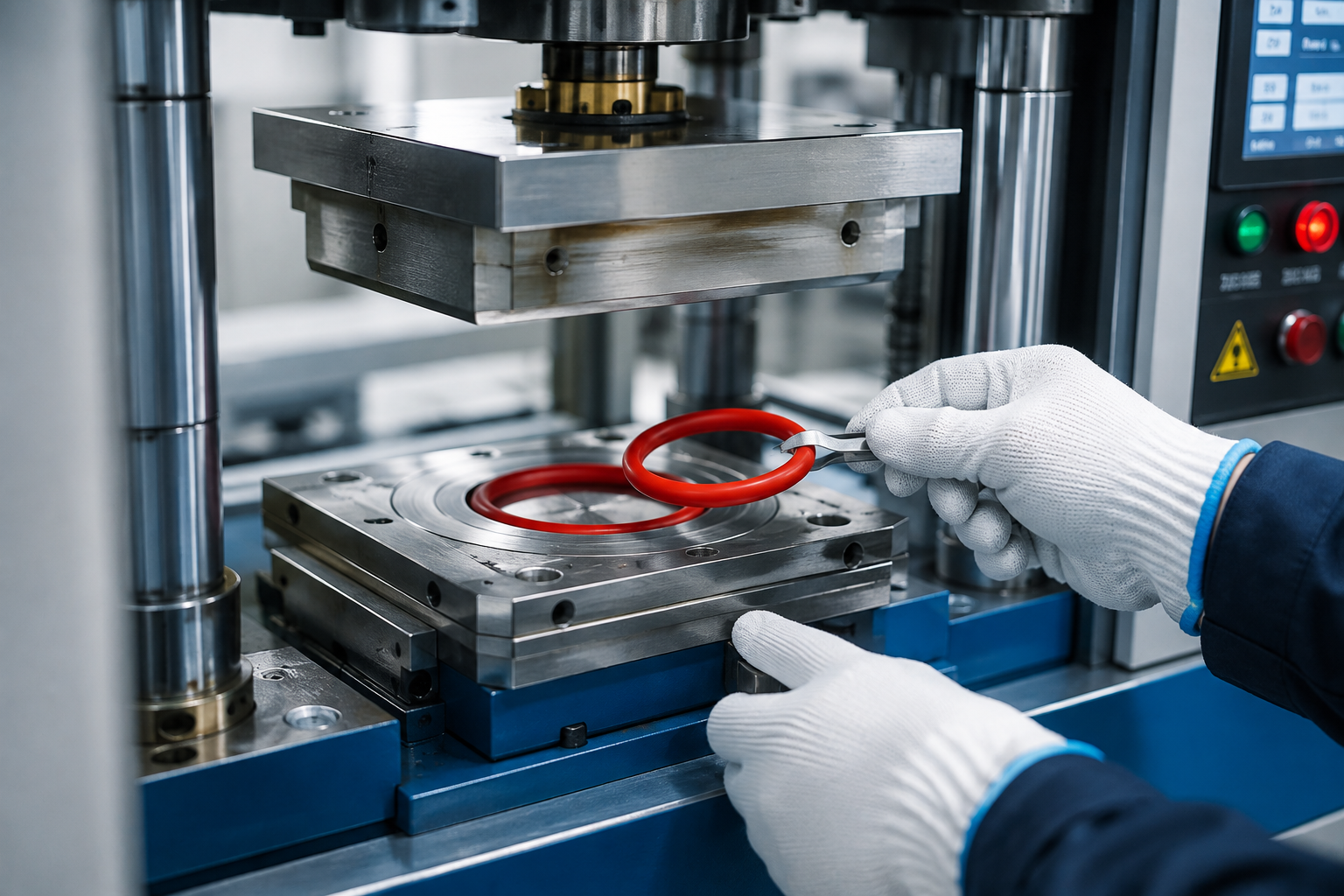
Key Mold Design Points
Good molds make good o-rings. The mold must be precise. It must also be easy to clean.
Compression Molding Pros and Cons
It is slower but cheaper for small runs. The tool is simple. It is great for large o-rings.
Injection Molding Pros and Cons
It is very fast. It is better for complex shapes and large volumes. The tool is more expensive.
Application Fields: Automotive, Medical, Electronics, and Food-Grade Sealing
O-rings are everywhere. I work with clients in many industries.
Cars need seals for engines. Medical tools need safe seals. Electronics need to stay dry. Food machines need clean seals.
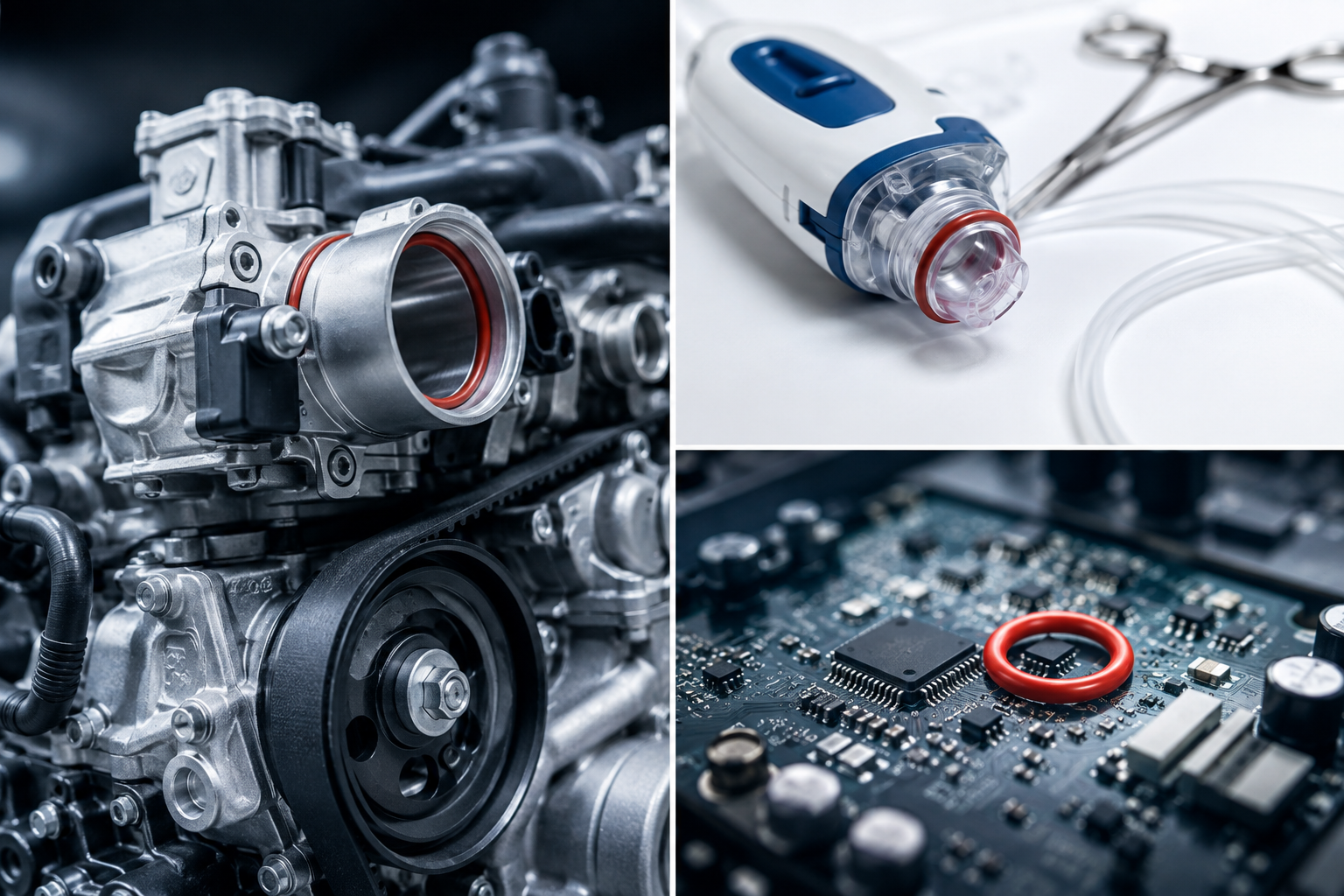
Industry-Specific Requirements
Each industry has rules. Medical seals must be very clean. Food seals must be non-toxic.
Automotive and Electronics
In cars, seals face heat and oil. In electronics, they stop dust and water.
Medical and Food Grade
These seals must be biocompatible. They often need special certifications.
Quality Certifications: FDA, USP Class VI, and ISO 3601
Trust is built on standards. I make sure we meet them.
FDA means it is safe for food. USP Class VI means it is safe for medical contact. ISO 3601 is the standard for o-ring sizes.
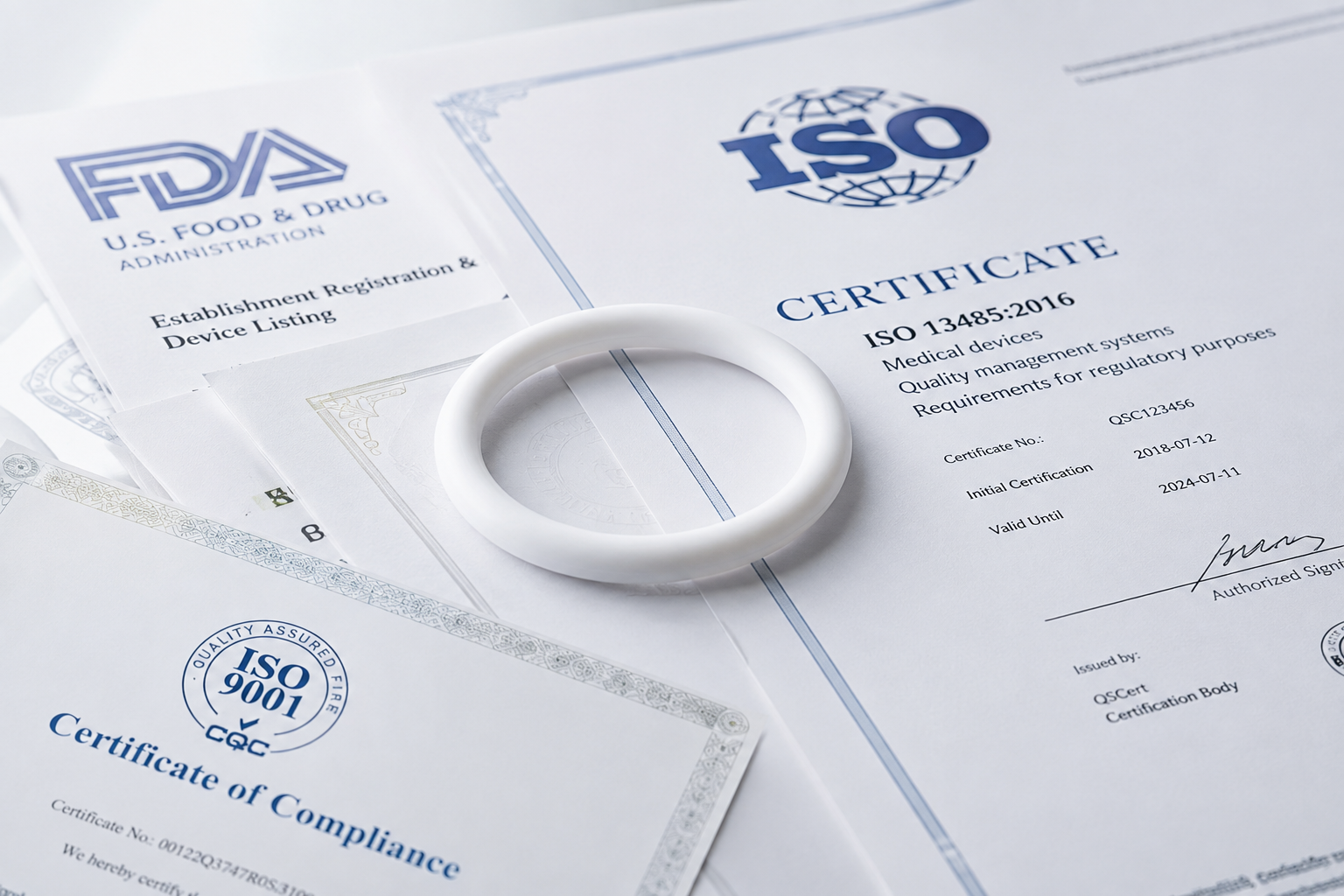
Understanding International Standards
These are not just logos. They are promises of safety and quality.
FDA and USP Class VI
FDA approval is required for food contact. USP Class VI is a tougher medical standard. It tests for tissue reaction.
ISO 3601 and Quality Management
ISO 3601 defines the dimensions. ISO 9001 defines how we manage quality. This ensures every o-ring is the same.
Why Choose Kenvox: Our Advantages, Cases, and Contact
You need a partner, not just a supplier. I am part of that team at Kenvox.
We have over 30 years of experience. We design and make molds. We deliver finished products. We are in Hong Kong and China.
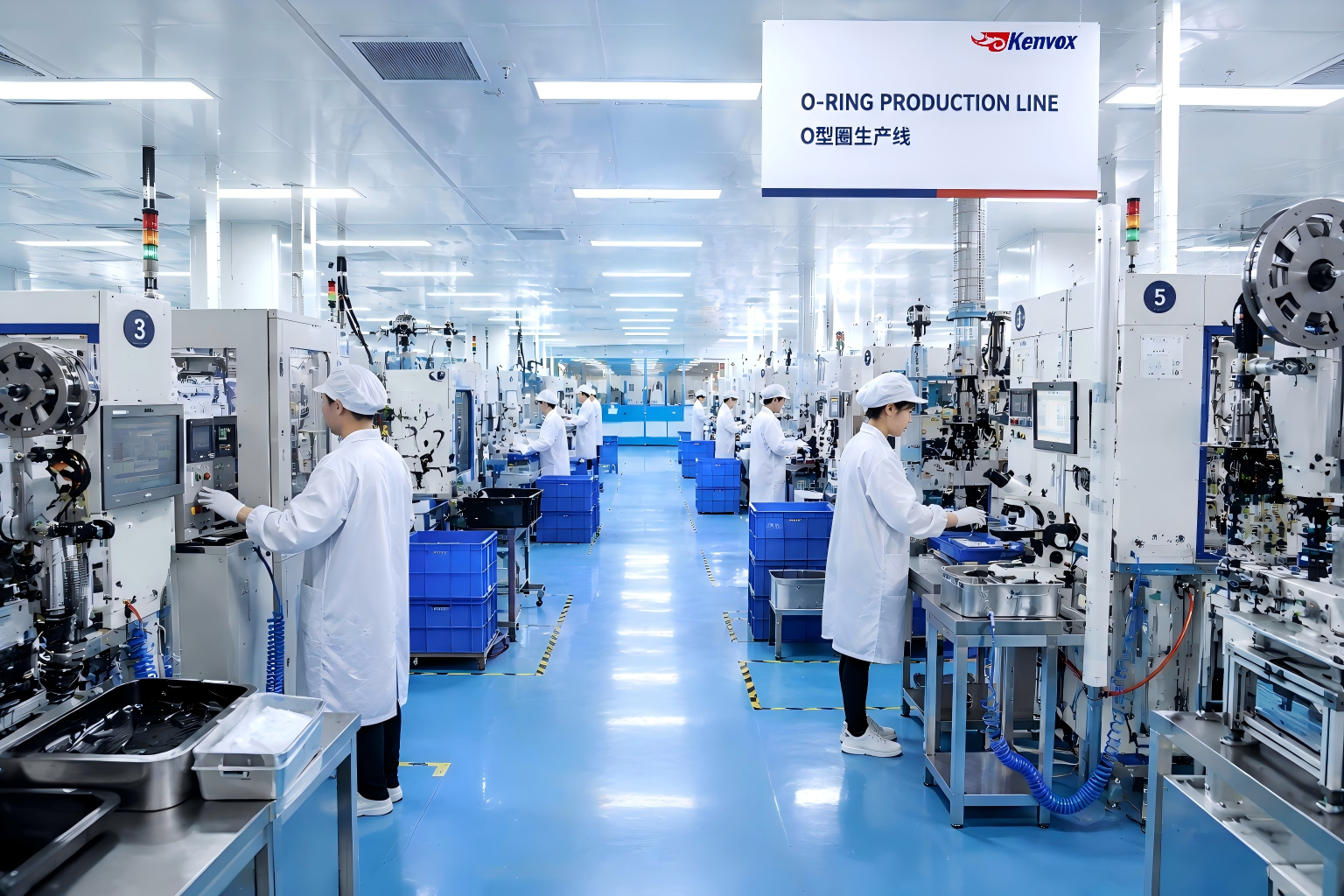
Our Manufacturing Excellence
We have advanced machines. We have a large team. We handle everything from design to shipping.
Case Study: Success in Medical Sealing
A client needed a complex medical seal. We designed the mold. We chose USP Class VI silicone. We delivered on time. They were happy.
One-Stop Turnkey Solution
You give us an idea. We give you a product. We handle the mold, the material, and the packing. Just show us your design.
Frequently Asked Questions (FAQ)
Here are answers to common questions about silicone o-rings.
What is the difference between VMQ and EPDM?
VMQ (Silicone) is better for high heat and food use. EPDM is better for water and brake fluid. VMQ is more flexible.
Can silicone o-rings be used for high-pressure applications?
Yes, but you need high hardness. Usually 70-80 Shore A. You also need a proper groove design to prevent extrusion.
How do I choose the right o-ring size?
Measure the groove depth and diameter. Use the AS568 standard if possible. If you have a custom design, send us your drawing.
What certifications do Kenvox o-rings have?
We provide FDA, USP Class VI, and ISO 3601 certifications. We can also help with other standards like REACH or RoHS.
Conclusion
Choose the right material and process for a perfect seal. We help you design and manufacture custom silicone o-rings with precision.
Need custom seals? Get a free quote!
Choose the right material and process for a perfect seal. We help you design and manufacture custom silicone o-rings with precision. Contact us today for a free design review and rapid quote.