


What Are Silicone Molds and How Are They Used in Manufacturing?
Your design looks perfect on screen, but steel tooling takes weeks. Silicone molds bridge that gap—fast, flexible, and far cheaper than hard tooling for early validation.
Silicone molds are flexible rubber cavities used to cast prototypes and low-volume parts from resin, wax, or similar materials. In manufacturing, they act as a fast bridge between design validation and permanent steel or aluminum tooling—not a replacement for mass production.
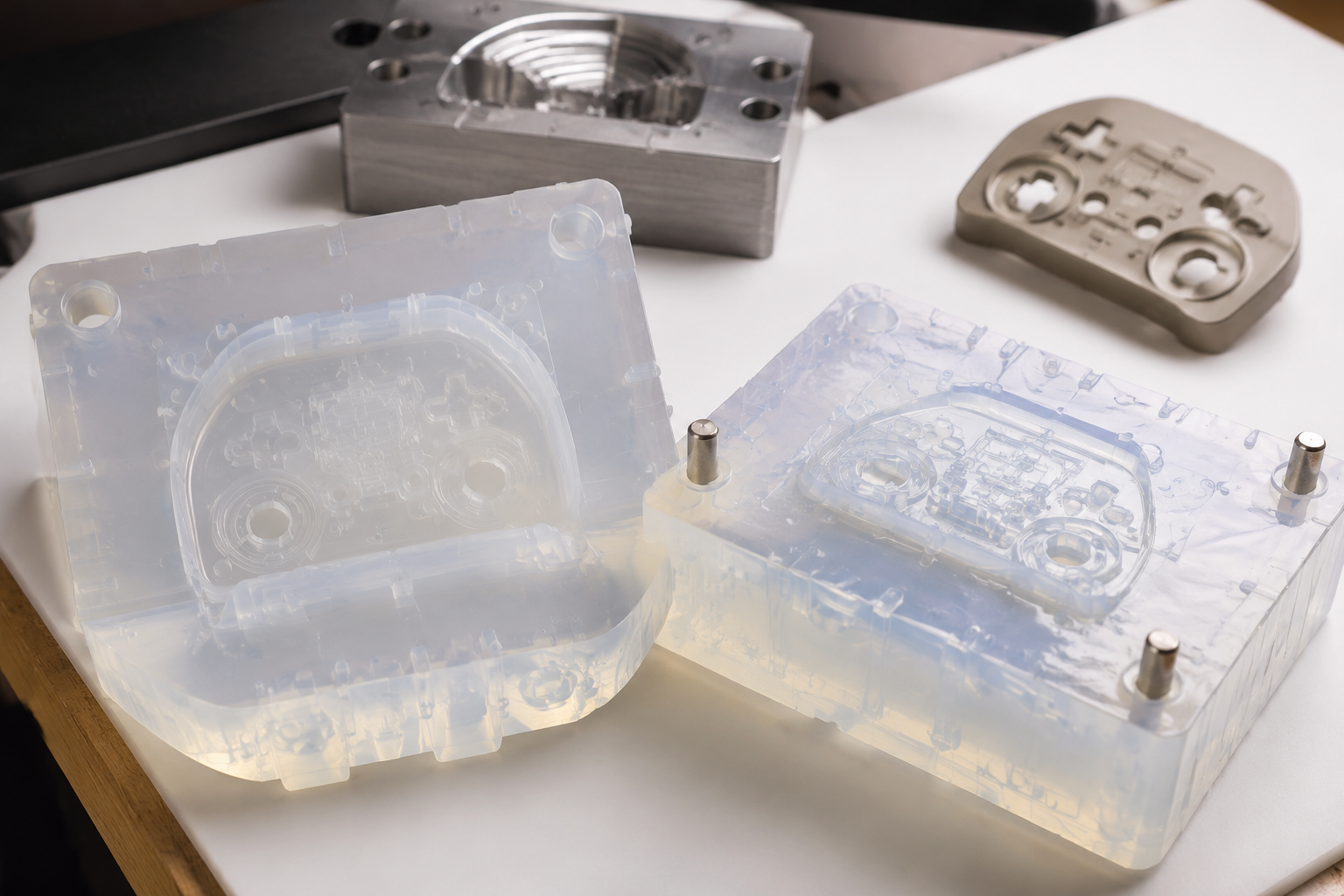
If you have ever waited on a T1 steel mold only to find a fit issue on the first shot, you already know why silicone tooling exists. The real question is not what silicone molds are—it is when they earn their place in your process, and when they quietly cost you more than they save. Read on before you commit budget to the wrong tool.
What are silicone molds used for?
Parts fail in the field, not in CAD. Silicone molds let you test fit, finish, and function before locking into hard tooling.
Silicone molds are used to cast resin, wax, or similar materials into prototypes and low-volume parts—typically dozens to a few thousand units—for design validation, market testing, and pre-production runs before investing in injection or die-cast tooling.
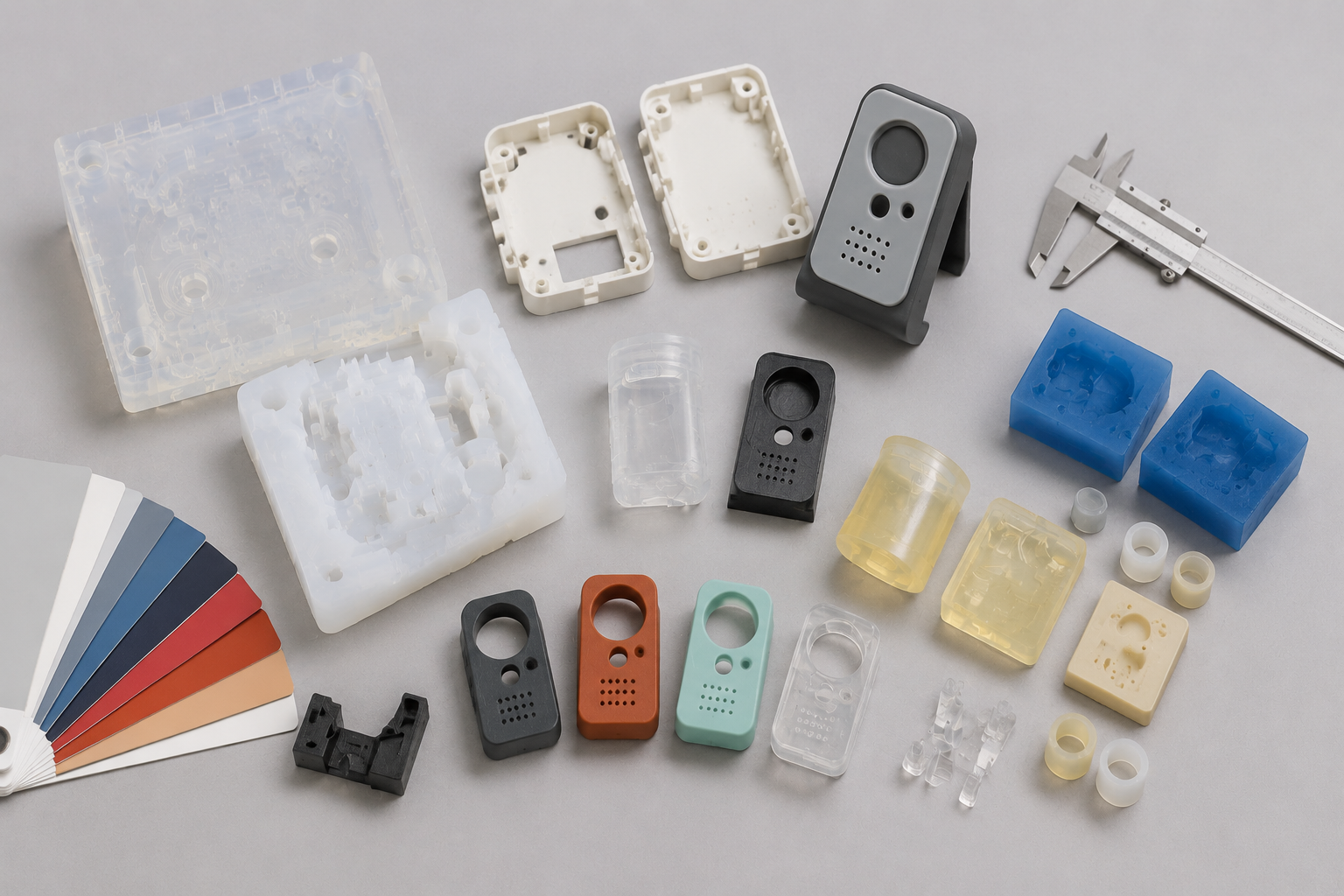
Silicone molding is not a shortcut around good engineering. It is a controlled step that answers specific questions before capital gets committed.
Common Applications by Stage
| Stage | Typical Use | What You Learn |
|---|---|---|
| Concept validation | 5–50 resin cast parts | Basic form, ergonomics, assembly logic |
| Engineering validation | 50–500 parts | Fit, tolerance stack-up, material behavior |
| Pre-production / pilot | 500–3,000 parts | Market test, packaging fit, field trials |
Where Silicone Molding Wins—and Where It Stops
| Scenario | Silicone Mold | Hard Tooling (Steel/Aluminum) |
|---|---|---|
| Lead time | Days to 1–2 weeks | 4–12+ weeks |
| Unit cost at low volume | Low setup, moderate per-part cost | High setup, low per-part cost at scale |
| Detail reproduction | Excellent for fine surface texture | Excellent, repeatable at volume |
| Undercuts | Handles simple undercuts via flexibility | Requires slides, lifters, or redesign |
| Production ceiling | Dozens to a few thousand parts | Tens of thousands to millions |
Practical rule for designers like Ryan: use silicone molds to prove the design. Move to injection molding or die casting only after fit, finish, and function are confirmed. That sequence cuts rework, protects budget, and scales with confidence.
How are silicone molds manufactured?
A master pattern sits ready—but no cavity yet. Silicone molding turns that single pattern into a reusable flexible tool in days, not months.
Silicone molds are made by pouring mixed liquid silicone over a master pattern, curing it to form a solid rubber cavity, then demolding to capture fine detail and simple undercuts for repeated casting.
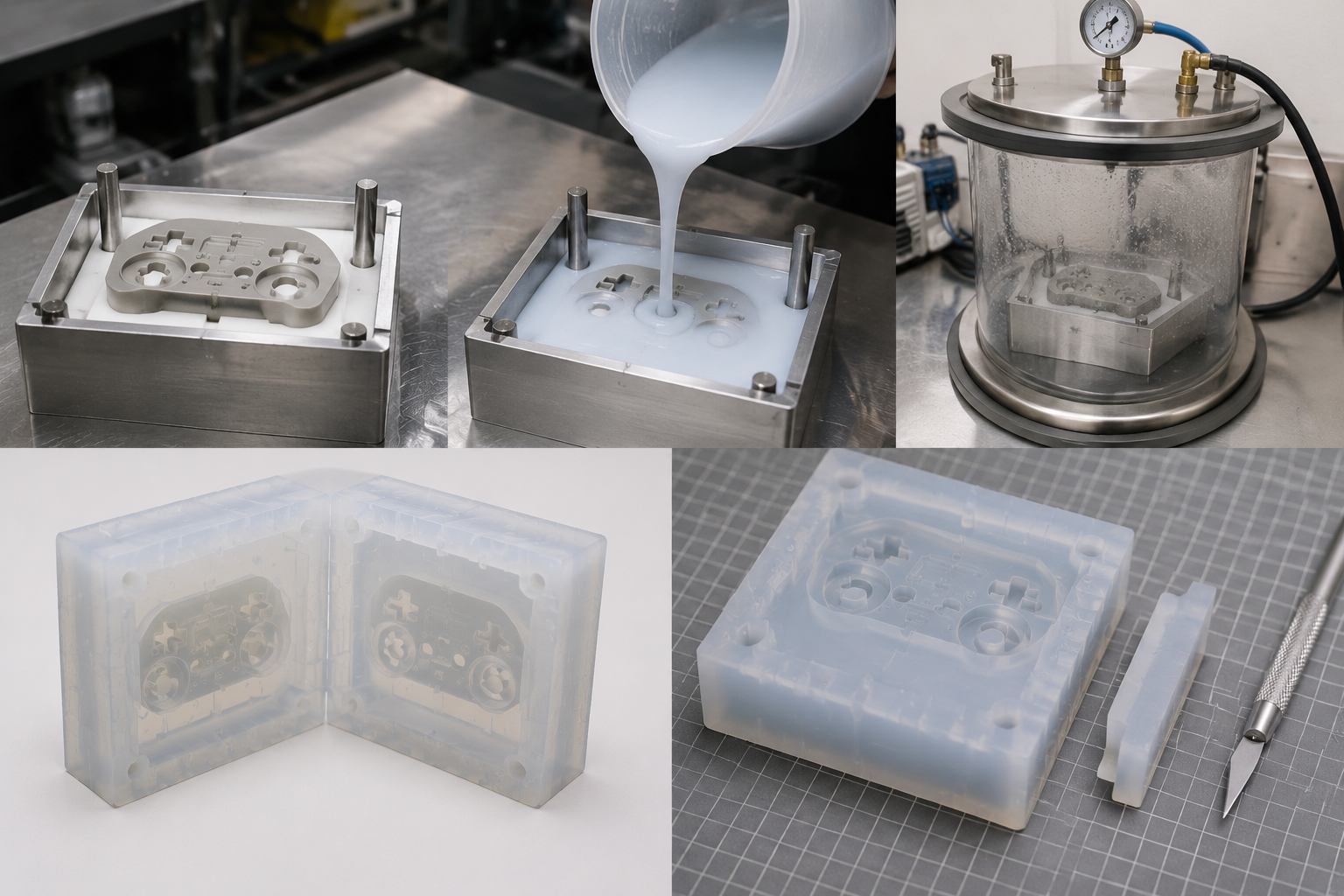
The process is straightforward in principle. Execution quality—on the master, the silicone grade, and the demold strategy—determines whether your cast parts match what hard tooling will eventually produce.
Step-by-Step Process
| Step | Action | Key Consideration |
|---|---|---|
| 1. Master creation | CNC, 3D print, or machined pattern | Surface finish on master = surface finish on casts |
| 2. Mold box setup | Pattern positioned, parting line defined | Parting strategy affects undercut handling |
| 3. Silicone pour | Two-part silicone mixed and poured | Degas to avoid bubbles; pot life is limited |
| 4. Cure | Room-temp or oven cure per grade spec | Under-cure weakens mold; over-cure can distort |
| 5. Demold & trim | Cavity released, gates and vents cut | Flash control starts here |
| 6. Casting | Resin, wax, or urethane poured into cavity | Shrinkage differs from injection—account for it |
Silicone Grade Selection
| Grade | Best For | Notes |
|---|---|---|
| General-purpose RTV | Prototypes, appearance models | Cost-effective; not food- or skin-contact rated |
| High-tear-strength | Higher pull counts, deeper undercuts | Extends mold life at low volume |
| Food-grade (FDA/LFGB) | Kitchenware, food-contact prototypes | Requires certified silicone and controlled process |
| Medical-grade | Biocompatible prototype parts | Stricter material and environment controls |
At KENVOX, silicone sample molds sit alongside CNC prototypes and LSR production capability—so the same engineering team that validates your design can also guide the transition to compression molding or liquid silicone injection when volume justifies it.
Is silicone mold harmful?
Uncured silicone on the bench makes every designer pause. Finished molds, used correctly, tell a very different safety story.
Cured silicone molds are generally inert and safe when the correct grade is selected. Risk concentrates in uncured mixing and casting—not in the finished mold—especially if food- or medical-grade material is used where required.

Safety questions usually mix two different things: the mold material itself, and the chemicals involved while making it. Separating those keeps your risk assessment accurate.
Risk by Phase
| Phase | Primary Risk | Mitigation |
|---|---|---|
| Mixing uncured silicone | Skin/eye irritation, VOC exposure | Gloves, ventilation, SDS compliance |
| Curing | Heat release, fume exposure in enclosed spaces | Adequate airflow; follow cure temperature spec |
| Casting resins/urethanes | Isocyanates, solvents, sensitizers | PPE, local exhaust, approved materials only |
| Finished cured mold | Low risk if correct grade used | Match grade to end use (food, medical, industrial) |
Grade vs. End-Use Requirement
| End Use | Required Silicone Grade | Finished Mold Safety |
|---|---|---|
| Industrial prototype | General RTV | Safe for workshop use; not for food contact |
| Consumer product (skin contact) | Skin-safe / certified grade | Verify biocompatibility data from supplier |
| Food-contact application | FDA or LFGB food-grade silicone | Mold and process must both meet standard |
| Medical device prototype | Medical-grade LSR or certified RTV | Document material traceability for regulatory path |
Bottom line: a cured silicone mold is not inherently harmful. Specify the right grade for the application, control exposure during production, and treat uncured chemistry with the respect it deserves.
Ready to Validate Your Design Before Hard Tooling?
Have a part that needs fit, finish, or function testing before you commit to steel? KENVOX can support you from silicone sample molds and CNC prototypes through to injection molding, LSR, and full production—one engineering team, one project path.
Send us your 3D files (STEP/IGES/STL) and target quantity. Our project engineers will review DFM, recommend silicone vs. hard tooling, and return a clear quote with lead time—typically within 1–2 business days.
👉 Request a Quote · Start a Prototype / Sample Mold Inquiry
No minimum drama. Tell us your timeline, material, and end-use—we will tell you the smartest next step.
Conclusion
Use silicone molds to validate early, prove the design, then graduate to hard tooling. Smart bridge—not final destination.